


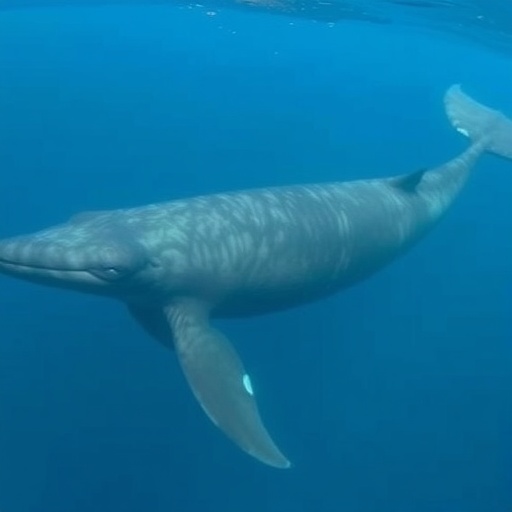
In a groundbreaking study illuminating the secret lives of one of the ocean’s most elusive giants, researchers have revealed unprecedented insights into the critically endangered Rice’s whale (Balaenoptera ricei) through detailed hormonal analyses of their baleen plates. These analyses unravel the intricate balance of stress and reproductive cycles these majestic marine mammals undergo, offering a new window into their complex life history. With an estimated population of just 50 adult individuals remaining, the findings bring urgent attention to the vulnerabilities facing this scarcely known species.
Baleen whales possess a unique anatomical feature: baleen plates that function not just in feeding but also act as natural archives of physiological data. These keratinous plates grow continuously, embedding hormonal markers over time that reflect an individual’s reproductive status and exposure to stressors. By sampling these layers, scientists can effectively read the historical hormonal profile of these whales, similar to dendrochronological analysis of tree rings but at a biochemical level. This novel approach provides a continuous record of individual health and reproductive events across their lifespan.
The research team, led by scientists funded by the U.S. National Science Foundation and supported by institutions such as George Mason University and the Smithsonian-Mason School of Conservation, analyzed baleen samples retrieved from multiple Rice’s whale specimens, including the holotype individual that washed ashore in 2019. This whale’s death was attributed to hemorrhaging and starvation linked to ingestion of plastic debris, a stark indicator of the anthropogenic threats they face. The incorporation of such specimens was critical in piecing together the physiological struggles faced throughout the animals’ lives.
By employing state-of-the-art endocrine assay techniques, the team quantitatively measured hormone concentrations such as cortisol and progesterone along the length of the baleen plates. Cortisol, widely recognized as the primary stress hormone, fluctuates in response to environmental pressures, while progesterone levels offer insights into the reproductive maturity and cycles of female whales. These hormonal signals collectively reveal patterns of stress intertwined with reproductive milestones, yielding a nuanced narrative of survival amidst ecological challenges.
The chronologically aligned hormone data facilitated a retrospective timeline of the whale’s reproductive history and stress events, capturing episodes such as pregnancies, calving intervals, and periods of increased environmental or anthropogenic stress. This temporal depth is unprecedented, providing a timeline without the need for continuous observation or tagging, tools notoriously difficult for studying elusive marine giants in open ocean environments.
Crucially, the study results underscore the profound impact of plastic pollution on Rice’s whales, highlighted by the holotype’s cause of death related to plastic ingestion. This finding echoes broader concerns about marine pollution’s direct and indirect effects on cetacean physiology and survival. The hormonal stress markers correspond with periods of heightened exposure to such deleterious conditions, suggesting cumulative physiological tolls that may impair reproductive success and overall population viability.
Beyond elucidating individual health histories, the research offers population-level implications by establishing a baseline understanding of natural hormonal variation versus stress-induced aberrations. This differentiation is paramount for conservation efforts—allowing scientists and policymakers to distinguish between normal physiological processes and detrimental environmental impacts, thereby informing targeted interventions to mitigate stressors like noise pollution, vessel strikes, and contaminant exposure.
This pioneering hormonal archive approach holds promise for extending to other baleen whale species, including more abundant but still threatened populations. The methodology can revolutionize whale conservation biology by enabling longitudinal studies of health and reproduction without necessitating continuous field monitoring. Moreover, it opens avenues for assessing the effects of climate change on marine mammal physiology, as changing oceanographic conditions are expected to influence stress levels and reproductive success.
The implications of this study stretch beyond academic novelty. The detailed hormonal insights provide evidence-based justifications for enhancing marine protected areas, implementing stricter controls on ocean pollution, and amplifying efforts to reduce whale entanglements and ship collisions. Given Rice’s whale’s critical status, such scientifically grounded conservation strategies are urgently needed to prevent extinction and promote population recovery.
While much remains to be learned about the behavior and ecology of the Rice’s whale, this study establishes a crucial foundation. By integrating biochemical, ecological, and conservation science, it paints a holistic picture of the species’ life history under contemporary environmental pressures. This fusion of disciplines signals a shift towards more integrative and effective approaches in marine mammal research and conservation.
The authors, who have declared no competing interests, call for continued funding and research to expand hormonal analyses across broader datasets and geographic ranges, which will enrich understanding and conservation management. The potential application of these findings to other critically endangered cetaceans holds promise for global efforts to conserve ocean biodiversity in the face of unprecedented anthropogenic threats.
Published in PLOS One, this work represents a vital intersection of molecular biology and conservation science, providing tools to decode the silent stories of whales hidden in their baleen. As the world grapples with biodiversity loss, such innovative research offers hope and tangible pathways to safeguard one of nature’s most enigmatic ocean dwellers.
The story of the Rice’s whale, as told through the lens of hormones embedded in baleen, is a dramatic testament to the intricate connections between marine biology, environmental health, and the urgent need for human stewardship of the oceans. It exemplifies how science can unearth hidden narratives and guide efforts to preserve endangered species on the brink.
News Publication Date: 13-May-2026
Web References: http://dx.doi.org/10.1371/journal.pone.0347749
Cite Scienmag News
Alan Morgan. (May 13, 2026). New Hormone Analysis of Baleen Reveals Life Story of Critically Endangered Rice’s Whale with Only 50 Adults Left. Scienmag. https://scienmag.com/new-hormone-analysis-of-baleen-reveals-life-story-of-critically-endangered-rices-whale-with-only-50-adults-left/
Alan Morgan. "New Hormone Analysis of Baleen Reveals Life Story of Critically Endangered Rice’s Whale with Only 50 Adults Left." Scienmag, 13 May 2026, https://scienmag.com/new-hormone-analysis-of-baleen-reveals-life-story-of-critically-endangered-rices-whale-with-only-50-adults-left/. Accessed 3 September 2026.
Alan Morgan. "New Hormone Analysis of Baleen Reveals Life Story of Critically Endangered Rice’s Whale with Only 50 Adults Left." Scienmag. May 13, 2026. https://scienmag.com/new-hormone-analysis-of-baleen-reveals-life-story-of-critically-endangered-rices-whale-with-only-50-adults-left/


