


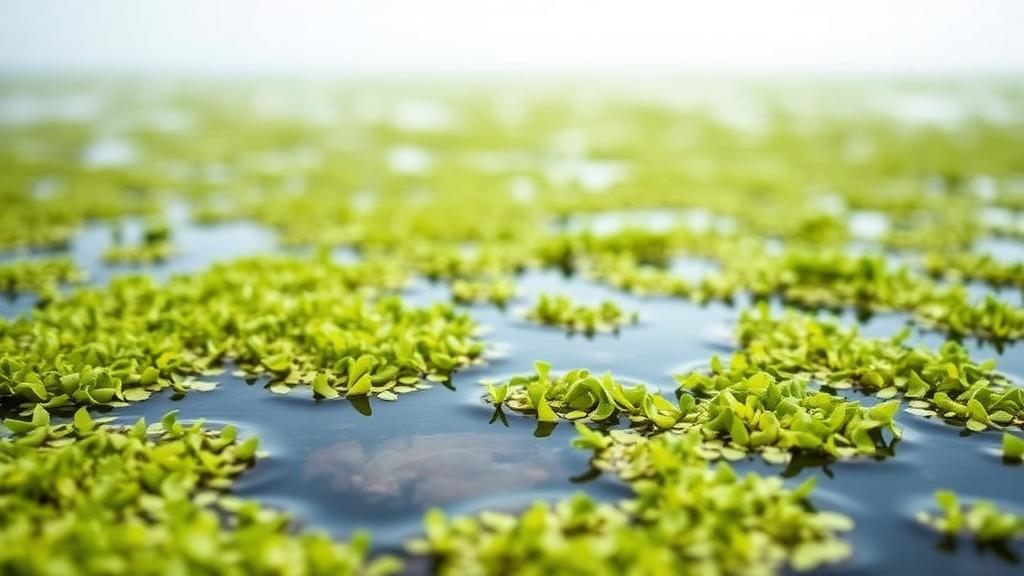
Lakes have long been recognized as one of the planet’s most significant natural sources of methane, the second most potent greenhouse gas after carbon dioxide. In fact, the methane escaping from the world’s lakes each year is roughly equivalent to the emissions produced by the entire agricultural sector. Yet a new study from the University of Liège, published in Nature Communications, reveals that a remarkable biological mechanism operating at the microscopic scale may be doing far more to restrain these emissions than scientists had previously appreciated. Across 79 African lakes, bacteria living on the surfaces of microalgae have been shown to break down methane at rates that scale dramatically with the abundance of the algae themselves, effectively transforming polluted, algae-rich waters into sites of intense natural methane consumption.
The research, led by Alberto Borges, an oceanographer and head of the CO2 Lab at the University of Liège, represents the largest investigation of its kind ever conducted. The team carried out 503 individual measurements spanning lakes that range from oligotrophic systems with very low algal biomass and strikingly clear waters to hypereutrophic lakes whose waters are rendered green by dense blooms of phytoplankton, the community of microscopic algae suspended in the water column. This extraordinary gradient of lake types allowed the researchers to test, at continental scale, what actually controls the fate of methane once it is produced in lake sediments and diffuses upward through the water.
To understand why this finding matters, it helps to consider the underlying chemistry and microbiology of methane in freshwater systems. Methane emissions from a lake, as Borges explains, are the result of a balance between two opposing processes. On the production side, methanogenesis occurs in the oxygen-free sediments at the bottom of the lake, where archaeal microorganisms decompose organic matter and release methane as a metabolic byproduct. On the loss side, microbial oxidation takes place in the water column, where a specialized group of bacteria known as methanotrophs consume methane as their preferred substrate, using it both as a source of energy and as the raw material for building their own biomass. The net emission that reaches the atmosphere is simply what remains after this microbial consumption has had its effect.
The central discovery of the new study is that methane oxidation increases sharply with the amount of microalgae present in the water. The surfaces of these algae are colonized by communities of bacteria, and among them are methanotrophs that exist in a mutually beneficial relationship with their algal hosts. The methanotrophs supply the algae with carbon dioxide, which the algae use for photosynthesis, while the algae in turn produce the oxygen that the bacteria require to oxidize methane. This tight metabolic coupling means that the more abundant the microalgae become, the more abundant the methanotrophic bacteria become as well, and the more intense the oxidation of methane turns out to be. In the most productive lakes studied, oxidation rates reached levels tens of thousands of times higher than those measured in the poorest lakes.
The scale of this consumption is far from trivial. According to the study, oxidation is the main fate of methane dissolved in the surface waters of the lakes examined, eliminating more than 70 percent of it. That is substantially more methane than ultimately escapes into the atmosphere, which means that without this bacterial activity, lake emissions would be considerably higher than current estimates suggest. The finding reframes the way scientists think about the greenhouse gas budget of inland waters, because a process that was often treated as a secondary detail in methane cycling turns out to be the dominant control on how much methane actually reaches the air.
The study also uncovered a second, geographically distinct source of intense methane oxidation. Lakes bordered by the flooded forests of the Congo Basin were characterized by particularly high levels of oxidation, fueled by an influx of bacteria originating from the submerged forest soils. This suggests that the connection between terrestrial ecosystems and lake methane dynamics extends beyond the simple delivery of organic carbon. Flooded forests appear to seed adjacent waters with methanotrophic communities, adding another layer of biological control to the methane budget of these tropical systems and highlighting the importance of riparian and wetland vegetation in regulating greenhouse gas fluxes.
What makes the result especially consequential is how it interacts with the ongoing global problem of eutrophication, the enrichment of waters with nutrients that drives excessive algal growth. Earlier work by the same team had shown that as phytoplankton biomass increases, methane production in the sediments increases as well, because algal detritus sinking to the lake bottom serves as a rich feedstock for the methane-producing microorganisms living there. On its own, that relationship painted a worrying picture: the greener and more polluted a lake becomes, the more methane it should emit. The new study demonstrates that the reality is more nuanced, because two opposing effects occur simultaneously in eutrophic waters.
As pollution drives phytoplankton to proliferate, methane production in the sediments rises, but the methanotrophic bacteria attached to the algae multiply in parallel and consume an increasing share of that methane. Crucially, in the lakes studied, the increase in oxidation can outweigh the increase in production. In the absence of these algae-associated bacteria, methane emissions into the atmosphere would be much higher than what is actually observed. The bacteria therefore act, in Borges’s words, as natural and welcome filters that partially mitigate the effect of lake pollution on global warming. It is an important piece of the puzzle that was missing, and one that will allow researchers to better predict the future trajectory of methane emissions from lakes as eutrophication continues to spread across the tropics and beyond.
The implications extend well beyond African lakes. Tropical and subtropical freshwaters are among the most productive ecosystems on Earth, and many are experiencing accelerating nutrient loading from agriculture, urbanization, and wastewater discharge. If the coupling between phytoplankton and methanotrophs documented here proves to be a general feature of productive lakes, then global methane budgets for inland waters may need to be revised downward, and the models used to project future emissions will need to incorporate algal-bacterial symbiosis as a first-order control rather than a footnote. Conversely, any environmental change that disrupts this symbiosis, such as shifts in nutrient regimes, light availability, or water chemistry, could tip the balance back toward greater emissions.
For now, the study stands as a vivid reminder that the climate system is shaped not only by vast physical processes but also by intimate partnerships between microscopic organisms. On the surface of a single algal cell drifting in a green African lake, a bacterium consumes methane and exhales carbon dioxide that the alga immediately recycles into oxygen and organic matter. Multiplied across hundreds of lakes and billions of microbial encounters, this quiet exchange removes the majority of the methane that would otherwise warm the planet. Understanding and protecting such natural filters may prove to be an essential part of anticipating how freshwater ecosystems will respond to a changing, increasingly nutrient-rich world.
Subject of Research: Methane oxidation by algae-associated methanotrophic bacteria in African lakes
Article Title: In African lakes, microbes living on algae reduce a powerful greenhouse gas
Article References: In African lakes, microbes living on algae reduce a powerful greenhouse gas. (n.d.). Original publication
Image Credits: AI Generated
DOI: Not provided
Keywords: methane, methanotrophs, microalgae, African lakes, eutrophication, greenhouse gases, phytoplankton, Nature Communications, University of Liège, Congo Basin, biogeochemistry, freshwater emissions
Cite Scienmag News
Marcus Vaughn. (September 30, 2026). Algae-Dwelling Bacteria Act as Natural Filters Against Lake Methane Emissions. Scienmag. https://scienmag.com/algae-dwelling-bacteria-act-as-natural-filters-against-lake-methane-emissions/
Marcus Vaughn. "Algae-Dwelling Bacteria Act as Natural Filters Against Lake Methane Emissions." Scienmag, 30 September 2026, https://scienmag.com/algae-dwelling-bacteria-act-as-natural-filters-against-lake-methane-emissions/. Accessed 4 October 2026.
Marcus Vaughn. "Algae-Dwelling Bacteria Act as Natural Filters Against Lake Methane Emissions." Scienmag. September 30, 2026. https://scienmag.com/algae-dwelling-bacteria-act-as-natural-filters-against-lake-methane-emissions/


