


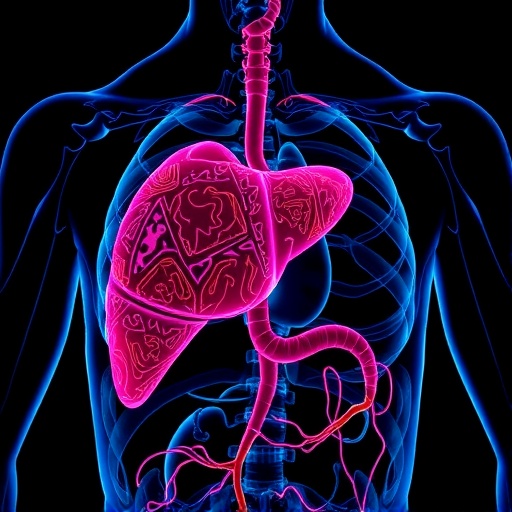
In a groundbreaking meta-analysis published in BMC Cancer, researchers Ma, Chen, and Xu illuminate the clinicopathological significance of AKT and its phosphorylated form (p-AKT) in hepatocellular carcinoma (HCC), shedding light on their pivotal roles in tumor progression and metastasis. This comprehensive study, analyzing data from 17 studies encompassing 1595 patients, provides robust evidence that could revolutionize our understanding of HCC biology and open new pathways for therapeutic interventions.
AKT, a serine/threonine-specific protein kinase, is a critical component of the PI3K/AKT/mTOR signaling pathway, which regulates diverse cellular processes including growth, proliferation, and survival. Its phosphorylated form, p-AKT, represents the activated state of this kinase, directly mediating downstream signaling events. Despite numerous studies investigating AKT and p-AKT expression in various cancers, their exact roles in HCC have remained ambiguous due to inconsistent immunohistochemical findings. This meta-analysis addresses this gap by integrating these disparate results to establish definitive clinicopathological correlations.
One of the pivotal revelations from this analysis is the strong association between AKT overexpression and advanced TNM stage, a crucial indicator of tumor progression in HCC. The odds ratio (OR) of 3.698 signifies that patients exhibiting elevated AKT levels are nearly four times more likely to have advanced tumor stages. This correlation highlights AKT’s potential role as a biomarker for tumor aggressiveness, making it a prime candidate for targeted therapy development.
Furthermore, the study elucidates the link between AKT overexpression and vascular invasion, a hallmark of cancer metastasis associated with poor prognosis. With an OR of 4.121, the data compellingly suggest that AKT plays an instrumental role in facilitating the invasive capacity of HCC cells, enabling them to disrupt vascular integrity and spread beyond the primary tumor site.
Lymph node metastasis, another critical factor influencing patient outcomes, also demonstrates a significant association with AKT expression (OR = 2.958). This finding underscores AKT’s contribution not only to local tumor progression but also to systemic dissemination, emphasizing the need for therapies that can inhibit this kinase to potentially impede metastatic spread in HCC patients.
The integrity of the tumor capsule, often a protective barrier limiting cancer expansion, inversely correlates with AKT expression. The meta-analysis reports an OR of 2.491 indicating that increased AKT levels are linked with compromised capsule integrity, facilitating tumor invasion into surrounding tissues. This mechanistic insight provides a deeper understanding of how AKT expression could influence tumor biology at the structural level.
Portal vein cancer thrombus (PVCT), a severe complication of HCC associated with worsened survival, shows an astonishing correlation with AKT overexpression (OR = 6.919). This dramatic OR reflects an almost sevenfold increase in PVCT likelihood among patients with heightened AKT expression, underscoring AKT’s critical involvement in vascular complications and aggressive disease phenotypes.
Turning to p-AKT, the activated form of AKT, the study delineates distinct clinicopathological correlations that further clarify its biological significance. p-AKT expression in HCC correlates strongly with higher tumor grades (OR = 2.789), indicating that activated AKT signaling is intricately linked with cellular dedifferentiation and malignancy severity, thereby serving as a potential marker for tumor aggressiveness.
Moreover, p-AKT association with TNM stage progression (OR = 3.058) mirrors the observations made for total AKT expression, reinforcing the idea that AKT activation is a driving force behind tumor advancement. This relationship supports therapeutic strategies aiming to curtail AKT phosphorylation as a means to control tumor growth and metastasis.
Tumor size exceeding 5 cm, an established negative prognostic factor, also associates with p-AKT expression (OR = 2.507). This suggests that active AKT signaling may contribute not only to tumor evolution but also to volumetric expansion, which complicates surgical interventions and diminishes patient survival rates.
Intriguingly, p-AKT levels correlate with the presence of portal vein cancer thrombus (OR = 4.280) as well as with a history of liver cirrhosis (OR = 1.933). The link to cirrhosis is particularly noteworthy as it bridges tumor biology with underlying hepatic pathology, highlighting how chronic liver disease may potentiate oncogenic signaling via AKT phosphorylation, thus fostering an environment conducive to tumor progression.
The authors employed rigorous statistical methodologies, including random-effects modeling to address significant heterogeneity and subgroup analyses based on antibody threshold variations during immunohistochemical assessment. These robust analytical techniques enhance the credibility of the findings and suggest that the selection of detection antibodies could impact p-AKT measurement, a nuance that warrants further investigative focus.
Collectively, this study positions AKT not merely as a passive marker but as an active driver of malignant features in HCC, including metastatic potential and vascular involvement. Concurrently, p-AKT serves a dual role, signaling both aggressive tumor characteristics and the interplay with hepatic disease like cirrhosis, thus offering a more nuanced target for clinical intervention.
These revelations have far-reaching implications for clinical management of HCC. The integration of AKT and p-AKT expression profiles in diagnostic workflows could refine prognostic stratification, enabling personalized treatment regimens. Moreover, targeted inhibition of AKT signaling might emerge as a formidable strategy to mitigate tumor progression, metastasis, and vascular complications in this challenging malignancy.
Future research should focus on elucidating the molecular mechanisms underpinning AKT and p-AKT’s influence on tumor microenvironment remodeling and immune evasion in HCC. Additionally, developing selective inhibitors with minimal off-target effects remains a pressing priority, given AKT’s central role in normal cellular physiology.
In conclusion, this meta-analysis by Ma, Chen, and Xu represents a landmark synthesis of existing evidence, crystallizing the clinicopathological relevance of AKT and p-AKT in hepatocellular carcinoma. By definitively linking these molecular markers with critical disease characteristics, the study paves the way for innovative diagnostic and therapeutic approaches, aiming ultimately to improve outcomes for patients afflicted with one of the most lethal liver cancers worldwide.
Cite Scienmag News
Nathaniel Bowman. (October 31, 2025). AKT’s Role in Liver Cancer Uncovered. Scienmag. https://scienmag.com/akts-role-in-liver-cancer-uncovered/
Nathaniel Bowman. "AKT’s Role in Liver Cancer Uncovered." Scienmag, 31 October 2025, https://scienmag.com/akts-role-in-liver-cancer-uncovered/. Accessed 3 September 2026.
Nathaniel Bowman. "AKT’s Role in Liver Cancer Uncovered." Scienmag. October 31, 2025. https://scienmag.com/akts-role-in-liver-cancer-uncovered/


