


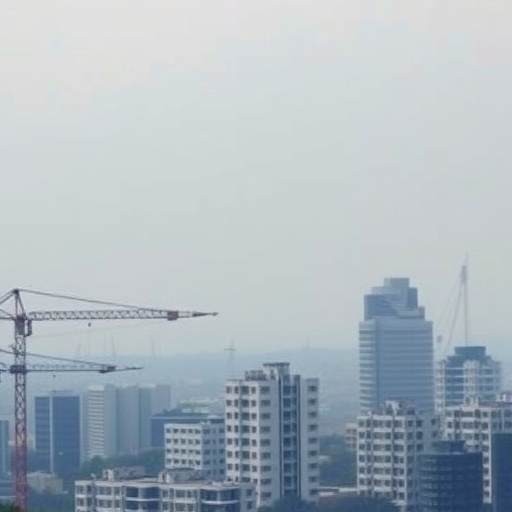
In a groundbreaking study centered on the Wasatch Front region of Utah—a notorious hotspot for some of the nation’s most severe air pollution episodes—researchers have uncovered a striking correlation between exposure to fine particulate matter and an increased risk of postoperative complications. The study, involving nearly 50,000 patients who underwent non-emergency surgical procedures, reveals that elevated levels of PM2.5, or fine particulate air pollution, in the week leading up to surgery are linked with a statistically significant rise in adverse surgical outcomes, such as sepsis, pneumonia, and wound infections. This research offers compelling insights that may fundamentally alter preoperative risk assessment and environmental health policies.
The Wasatch Front’s unique topographical and meteorological conditions occasionally lead to dangerous air quality levels, especially during inversion events when pollutants become trapped near the ground. Using a sophisticated combination of EPA and state air monitoring data alongside satellite observations, scientists were able to estimate the particulate exposure for each patient at their residential address in the critical week preceding surgery. Data analysis revealed that whenever PM2.5 concentrations surpassed the EPA’s daily safety threshold of 35 micrograms per cubic meter, the likelihood of postoperative complications jumped markedly from a baseline of 4.8% to 6.2%. This nearly 1.4 percentage point increase represents a profound public health concern with potentially far-reaching implications for surgical care protocols.
Digging deeper, the researchers applied Bayesian statistical models to quantify how incremental changes in PM2.5 concentration modulate surgical risk. Their findings indicate that with every 10 microgram per cubic meter surge in fine particulate pollution, the relative risk of experiencing postoperative complications rises by approximately 8%. This nuanced understanding underscores the dose-dependent relationship between environmental toxins and physiological vulnerability during the perioperative period. The research team’s focus on PM2.5 stems from its minuscule size—particles smaller than 2.5 micrometers in diameter—which grants them the ability to penetrate deep into the lung alveoli, where they can cross the alveolar-capillary barrier and disseminate systemically.
The health ramifications of PM2.5 are well-documented in respiratory and cardiovascular contexts, but this is among the first studies to explore its direct associations with surgical outcomes. Once these fine particles enter the bloodstream, they instigate widespread inflammatory responses and oxidative stress, mechanisms that can compromise immune defense and tissue repair. Inflammation, particularly systemic inflammation, is a biologically plausible pathway through which particulate matter may elevate the risks of infections and impair wound healing after surgery. The authors suggest that this pro-inflammatory milieu can exacerbate vulnerability during the critical recovery window, increasing susceptibility not only to localized surgical site infections but also to severe systemic complications such as sepsis and pneumonia.
The observational nature of the study necessitates careful interpretation of causality. While the data strongly indicate a linkage between higher pollution exposure and surgical complications, confounding variables cannot be fully excluded. Factors such as socioeconomic status, access to healthcare, and other environmental or behavioral exposures could potentially mediate observed outcomes. The researchers advocate for larger-scale studies encompassing multiple healthcare centers to refine the specificity of these associations. Identifying which types of surgeries and which patient populations are most susceptible to pollution-related risks could lead to targeted preoperative interventions or even rescheduling elective procedures based on forecasted air quality.
The ramifications of these findings extend beyond the operating room. They provide another compelling argument for robust environmental policies aimed at curbing air pollution, particularly PM2.5 emissions from transportation, industrial processes, and wildfires. Regions like the Wasatch Front, characterized by acute pollution episodes, could benefit significantly from such interventions—not just in terms of chronic disease burden, but also in perioperative health outcomes. Public health messaging and policy reforms that focus on reducing ambient particulate matter could thus serve as a novel strategy to improve surgical prognosis and reduce healthcare complications and costs.
Clinicians may soon need to integrate environmental air quality data into preoperative assessments, potentially advising patients to minimize exposure during high pollution days before surgery. Practical recommendations might include using high-efficiency particulate air (HEPA) filters indoors, avoiding outdoor exertion during smog events, or even modifying surgical scheduling. The study’s authors caution, however, that further evidence is needed before formal guidelines can be established. They emphasize that for now, common-sense precautions against air pollution remain prudent for all individuals planning to undergo surgery.
Technically, this research leverages advanced statistical methodologies to tackle complex environmental-health relationships. Bayesian analysis, a probabilistic approach that allows incorporation of prior knowledge and uncertainty quantification, enabled a robust assessment of postoperative risk relative to continuous exposure metrics. This methodological innovation enhances confidence in the observed associations and sets a precedent for future investigations of environmental exposures and clinical outcomes.
The study’s interdisciplinary nature—spanning anesthesiology, environmental science, epidemiology, and statistics—reflects a growing recognition of the interaction between environmental determinants and human health. As climate change intensifies wildfire seasons and urban pollution, understanding these interactions becomes increasingly vital. This research exemplifies how data-driven insights can inform both clinical practice and public health policies, ultimately bridging the gap between environmental science and surgical medicine.
In conclusion, the compelling evidence revealed by this extensive cohort study signals a paradigm shift in how perioperative risks might be conceptualized in the context of environmental exposures. The interplay between air pollution and surgical complications demands attention not only from healthcare providers but also policymakers and the general public. Future research, building on this foundational work, may unlock targeted strategies to mitigate these risks and improve surgical outcomes in pollution-prone regions worldwide.
News Publication Date: 26-Apr-2026
Web References:
https://onlinelibrary.wiley.com/doi/10.1111/aas.70235
http://dx.doi.org/10.1111/aas.70235
References:
Pearson, J.F., Pace, N.L., Goodrich, B., Gabry, J., et al. (2026). Bayesian Analysis of Postoperative Complication Risk Associated With Preoperative Exposure to Fine Particulate Matter: A Single-Center Cohort Study. Acta Anaesthesiologica Scandinavica. https://doi.org/10.1111/aas.70235
Cite Scienmag News
Russell Cooper. (May 6, 2026). Air Pollution Severity Correlates with Poorer Post-Surgical Recovery Outcomes. Scienmag. https://scienmag.com/air-pollution-severity-correlates-with-poorer-post-surgical-recovery-outcomes/
Russell Cooper. "Air Pollution Severity Correlates with Poorer Post-Surgical Recovery Outcomes." Scienmag, 6 May 2026, https://scienmag.com/air-pollution-severity-correlates-with-poorer-post-surgical-recovery-outcomes/. Accessed 3 September 2026.
Russell Cooper. "Air Pollution Severity Correlates with Poorer Post-Surgical Recovery Outcomes." Scienmag. May 6, 2026. https://scienmag.com/air-pollution-severity-correlates-with-poorer-post-surgical-recovery-outcomes/


