


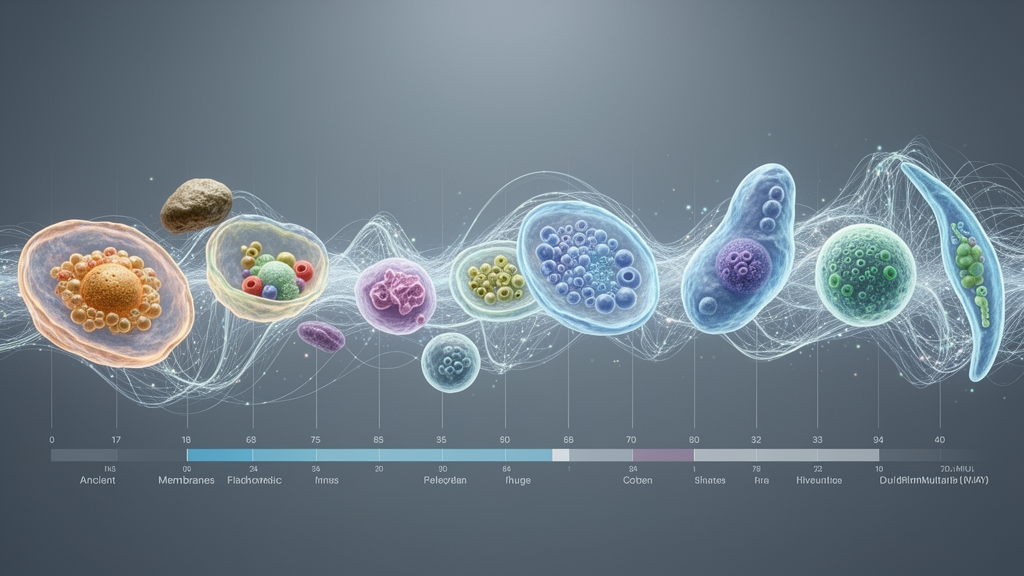
A peer-reviewed computational study led by King Abdullah University of Science and Technology reports that an artificial-intelligence system called Unify connected 125 cell types from seven species separated by more than 700 million years of evolution. Published in Nature Communications, the system identifies cells that perform similar biological functions even when the genes underlying those functions no longer match directly. The researchers say the approach can help assess which discoveries from animal studies may be relevant to human health, although the study tested computational relationships rather than clinical outcomes.
The central challenge is that genes can change as species diverge. Cells in humans, mice, fish, flies and worms may carry out comparable biological roles even when the genes responsible for those roles have acquired new sequences or functions over evolutionary time. Scientists often use single-cell RNA sequencing to identify which genes are active in each cell, then use that information to build a cell tree representing different cell types and their activity.
Existing comparison tools commonly rely on direct one-to-one gene matches, however, and those matches become harder to find as evolutionary distance increases. As a result, important similarities, such as those between immune cells in humans and mice or neurons in fish and flies, may be missed. Unify addresses that limitation by comparing the functions performed by genes rather than requiring a literal genetic match.
The system uses AI models to analyze protein sequences and scientific descriptions of gene functions. Genes displaying certain similarities are grouped into units called macrogenes, enabling Unify to recognize cells that perform similar jobs even when their individual genes no longer correspond. The researchers describe this distinction by comparing conventional approaches to dictionaries that search for word-for-word translations, whereas Unify looks for shared biological meaning.
In reconstructing relationships among the 125 cell types, the system distinguished identical genes, similar genes that had evolved new jobs and different genes that had evolved independently to perform the same function. The reconstructed evolutionary network revealed patterns that would be difficult to detect through direct gene comparisons alone. When the researchers analyzed immune cells across multiple species, Unify identified shared defense tactics.
In another experiment, the system predicted the response of human blood cells to a particular immune-signaling protein from the response observed in mouse lymph-node immune cells. Across all genes evaluated, Unify’s predictions were more accurate than those of existing methods. These results are model predictions and comparative findings; they do not show that findings can automatically be transferred from an animal model to human disease or that Unify produces clinical benefits.
The KAUST team is now extending Unify to incorporate information about gene regulation and the positions occupied by cells within tissues. The current study is nevertheless limited to the cell types, species and functions represented in its tested datasets, and it does not establish how reliably the tool will perform beyond those conditions. By combining biological knowledge with AI, Unify can identify patterns at a scale that would take researchers far longer to find through manual gene-by-gene comparison.
Subject of Research: A computational study using AI to compare cell functions across seven species and more than 700 million years of evolution.
Article Title: Tracing 700 million years of cell evolution
Article References: Tracing 700 million years of cell evolution. Original publication (Bibliographic details unavailable.)
Image Credits: AI Generated
DOI: Not provided
Keywords: Unify AI, cell evolution, cross-species comparison, single-cell RNA sequencing, comparative genomics, macrogenes, immune cells, gene function, Nature Communications, animal models, Tracing, million
Cite Scienmag News
Juliet Wilcox. (October 26, 2026). AI Unifies Cell Types Across 700 Million Years. Scienmag. https://scienmag.com/ai-unifies-cell-types-across-700-million-years/
Juliet Wilcox. "AI Unifies Cell Types Across 700 Million Years." Scienmag, 26 October 2026, https://scienmag.com/ai-unifies-cell-types-across-700-million-years/. Accessed 26 October 2026.
Juliet Wilcox. "AI Unifies Cell Types Across 700 Million Years." Scienmag. October 26, 2026. https://scienmag.com/ai-unifies-cell-types-across-700-million-years/


