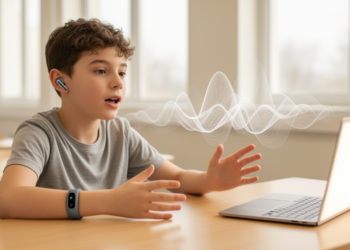
Generative artificial intelligence is often portrayed as either a shortcut that erodes students’ thinking or a miracle tool that transforms classrooms overnight. A new study from Türkiye suggests a more nuanced picture: when future teachers used AI tools inside a carefully structured, five-week course, their self-reported creative thinking skills improved in specific and measurable ways, while their attitudes toward AI grew warmer and their exam scores rose. But the benefits were selective, and the researchers are careful to say the design, not the technology alone, deserves the credit.
The study, published in the journal Discover Artificial Intelligence, was conducted by Ece Leventoğlu and Burak Ayçiçek of Tokat Gaziosmanpaşa University. It focused on a construct called metacreativity, defined as the awareness and regulation of one’s own creative process. Rather than treating creativity as a spontaneous spark, the researchers framed it as something learners can deliberately monitor and steer, much like the planning, monitoring, and evaluation that define metacognition more broadly. In practice, metacreativity shows up when students understand problems more deeply, reorganize relationships among ideas, generate alternative strategies, and judge the quality of their emerging answers.
To test whether AI could scaffold that kind of thinking, the team ran a convergent parallel mixed-methods study in an undergraduate Philosophy of Education course. Fifty students participated in the quantitative phase: 22 in an experimental group from the Special Education Teaching program and 28 in a control group from the Psychological Counseling and Guidance program. Both groups studied the same philosophical topics with the same instructor over the same five weeks, but only the experimental group worked with generative AI tools. The researchers measured attitudes toward AI, perceived metacreativity, and academic achievement before and after the intervention, and they supplemented the numbers with weekly reflective journals and an open-ended questionnaire.
The AI toolkit was broad. Students worked with ChatGPT, Gamma, Claude, NotebookLM, Suno, and Perplexity, using them to generate visual metaphors, creative texts, songs, and alternative representations of philosophical concepts. Crucially, the pedagogical design positioned AI as a scaffold rather than a substitute for thinking. Students were explicitly instructed not to accept generated content automatically but to examine its relevance, accuracy, and originality before revising or incorporating it into their final products. The instructor introduced weekly objectives and facilitated discussion but never supplied ready-made answers, leaving students responsible for questioning, selecting, revising, and evaluating what the machines produced.
The quantitative results revealed a distinctive pattern. In the experimental group, positive attitudes toward AI rose significantly from an average of 3.18 to 3.69 on a five-point scale, while negative attitudes fell from 3.20 to 3.00, both small-to-medium effects. Four of the six metacreativity subdimensions improved significantly: Comprehending the Main Problem and Sub-Problems, Reconstructing Connections, Finding Solutions, and the Affective Dimension, with effect sizes ranging from medium to medium-to-large. Notably, two subdimensions, Developing Additional Strategies and Evaluation, showed no significant within-group change at all. The control group, meanwhile, remained statistically flat across every attitude and metacreativity measure.
Between-group comparisons sharpened the picture further. After controlling for pretest scores, the experimental group scored significantly higher than the control group on Reconstructing Connections, Evaluation, Finding Solutions, and the Affective Dimension, with partial eta-squared values as large as 0.226 for Reconstructing Connections, a large effect by conventional standards. Interestingly, the Evaluation subdimension showed a significant adjusted between-group difference even though the experimental group had not improved significantly within itself, a result the authors attribute partly to the groups’ different baseline levels. Academic achievement rose significantly in both groups, suggesting ordinary course learning contributed to the gains, but the adjusted posttest scores still favored the experimental group, with a medium effect size of Cohen’s d equal to 0.66.
The qualitative data traced a clear developmental arc across the five weeks. First-week journals were dominated by novelty and excitement, laced with hesitation; one student admitted lingering prejudice because AI presents everything in an overly easy and ready-made way. By the second week, confidence grew, and by the third, students described practical applications, using an AI tool to build a presentation and directing its visuals themselves. By the fourth week, reflections turned pedagogical, with students imagining how song-generating AI might serve musically inclined learners and mind-mapping tools might help visual thinkers in their own future classrooms. One student captured a conceptual shift neatly: I used to think AI harmed creativity, but I later realized that creativity and creation are not the same.
Yet the students did not become uncritical enthusiasts. In the open-ended questionnaire, they flagged reduced mental effort, dependence on AI, misinformation risks, privacy and security concerns, and possible creativity suppression as genuine dangers. This balanced stance matters for interpretation. The authors argue that the educational consequences of AI are not inherently positive or negative; they depend on how AI is integrated, what tasks students perform, and whether the design explicitly encourages reflection, monitoring, and critical evaluation of machine-generated output. When AI replaced rather than supported self-regulated thinking, prior research has warned of weakened metacognitive engagement, but this study suggests such risks are contingent on pedagogy, not baked into the technology.
The selective pattern of gains is perhaps the study’s most instructive finding. The dimensions that improved, problem framing, connection-making, solution generation, and emotional engagement, align closely with what iterative AI use naturally affords: repeated cycles of idea generation, comparison, revision, and reflection. The dimensions that lagged, strategic diversification and evaluative judgment, represent higher-order regulatory processes that likely demand more practice, explicit evaluation criteria, and sustained scaffolding than a five-week intervention can provide. The authors recommend that future AI-supported activities push preservice teachers to compare alternatives, revise AI-generated content, justify their decisions, and evaluate their final products, and they suggest prompt templates, reflective journals, and structured reflection questions as practical ways to make students’ reasoning visible.
The researchers also stress the limits of what can be concluded. The sample was small and drawn from a single public university in Türkiye using convenience sampling, the two groups came from different academic programs, and metacreativity was measured through self-report rather than direct behavioral evidence. There was no delayed posttest to check whether the gains persisted, and because the intervention bundled AI use with creative production, discussion, and active learning, the effects reflect the overall instructional design rather than AI in isolation. Still, within those boundaries, the study offers a concrete template for teacher education: AI works best not as an answer machine but as a thinking partner, embedded in reflective, metacognitively oriented designs that keep students firmly in charge of their own creative judgment.
Subject of Research: AI-supported instructional design and preservice teachers' metacreativity, attitudes, and achievement in teacher education
Article Title: AI-supported instructional design and preservice teachers’ perceived metacreativity: a mixed-methods study
Article References: Leventoğlu, E., & Ayçiçek, B. (2026). AI-supported instructional design and preservice teachers’ perceived metacreativity: a mixed-methods study. Discover Artificial Intelligence, 6(1), Article 1239. https://doi.org/10.1007/s44163-026-02319-4
Image Credits: AI Generated
DOI: 10.1007/s44163-026-02319-4
Keywords: artificial intelligence, metacreativity, teacher education, preservice teachers, instructional design, generative AI, metacognition, academic achievement, mixed methods, higher education, AI attitudes, creativity
Cite Scienmag News
Denise Maddox. (October 17, 2026). AI-Supported Lessons Boost Future Teachers’ Perceived Creative Thinking Skills. Scienmag. https://scienmag.com/ai-supported-lessons-boost-future-teachers-perceived-creative-thinking-skills/
Denise Maddox. "AI-Supported Lessons Boost Future Teachers’ Perceived Creative Thinking Skills." Scienmag, 17 October 2026, https://scienmag.com/ai-supported-lessons-boost-future-teachers-perceived-creative-thinking-skills/. Accessed 17 October 2026.
Denise Maddox. "AI-Supported Lessons Boost Future Teachers’ Perceived Creative Thinking Skills." Scienmag. October 17, 2026. https://scienmag.com/ai-supported-lessons-boost-future-teachers-perceived-creative-thinking-skills/