


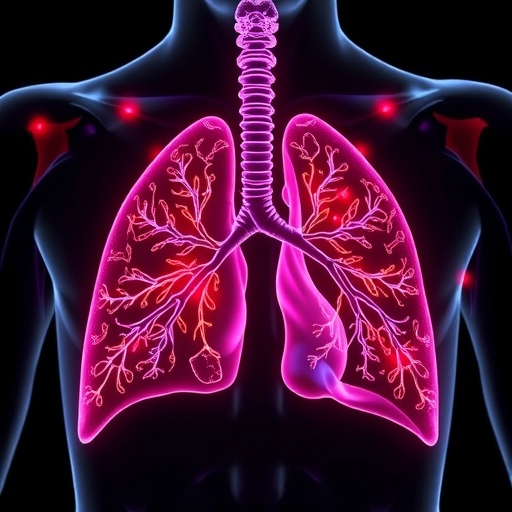
In a groundbreaking study published in the journal Aging-US, researchers have utilized artificial intelligence to explore the significant parallels between idiopathic pulmonary fibrosis (IPF) and the biological processes associated with aging. Conducted by a team from Insilico Medicine, including Fedor Galkin, Shan Chen, Alex Aliper, Alex Zhavoronkov, and Feng Ren, this research sheds light on the complex dynamics of IPF, a debilitating lung condition that predominantly affects older adults. The study emphasizes that while IPF has features resembling accelerated aging, it represents a unique pathological state shaped by age-related cellular dysfunctions. These findings promise to enhance therapeutic strategies for IPF, potentially paving the way toward innovative treatment approaches.
Idiopathic pulmonary fibrosis, primarily observed in individuals over the age of 60, leads to progressive scarring of lung tissue. This fibrosis significantly impairs respiratory function, often culminating in life-threatening respiratory failure. Current treatment options available for IPF aim to decelerate disease progression; however, they seldom halt or reverse its clinical course. The pressing need for more effective interventions is underscored by the alarming trend of rising IPF incidence among the aging population, highlighting an urgent focus for medical researchers and practitioners alike.
The researchers embarked on this endeavor by creating a novel “proteomic aging clock,” which harnesses data from over 55,000 individuals participating in the UK Biobank study. By analyzing protein expression profiles, they found that the AI-driven tool was capable of accurately predicting biological age. Interestingly, the study revealed that patients who experienced severe cases of COVID-19—who are at heightened risk for developing lung fibrosis—exhibited signs indicative of accelerated aging. This correlation adds a new dimension to our understanding of how IPF may leave behind a quantifiable biological mark, thereby strengthening the case for employing aging clocks in the investigation of age-related diseases.
One of the pivotal components of the study involved comparing gene activity in the lungs of older adults versus those suffering from IPF. An advanced AI model, designated ipf-P3GPT, was created for this task. Results indicated that although several genes displayed similar activity in both populations, a substantial number exhibited contrasting behavior. Remarkably, over half of the shared genes demonstrated inverse effects—indicating that IPF not only accelerates the aging process but also disrupts regular biological aging pathways. The ramifications of these findings suggest that therapeutic strategies must consider the intricate interplay of these pathways to develop effective interventions.
Within the research, the scientists uncovered distinct molecular signatures that differentiate IPF from normal aging processes. While both conditions are characterized by inflammation and tissue remodeling, the distinction lies in the more damaging modifications that IPF inflicts upon lung architecture and repair mechanisms. Understanding these unique alterations is crucial for formulating targeted pharmacological therapies aimed at addressing the specific pathways involved in fibrosis without inadvertently affecting normal aging functions.
Furthermore, the implications of this research extend beyond IPF. The robust toolset enabled by AI and large-scale biological data analysis could be leveraged to investigate other age-related conditions, such as kidney and liver fibrosis. This comprehensive framework affords immense potential for elucidating the nuances of aging-related diseases, establishing a foundation for personalized medicine approaches. Clinicians could tailor treatment plans based on individual biological profiles, enhancing the efficacy of interventions and improving patient outcomes.
The researchers noted a significant finding wherein linear regression analysis indicated that patients with severe IPF exhibit biological age predictions that are, on average, 2.77 years older than their chronological age, with statistical significance (p=0.026). This observation underscores the urgent need to address the accelerated aging process in patients suffering from IPF, as it reveals a deeper understanding of the disease’s impact on overall health and longevity.
Additionally, the study highlights the role of inflammation and fibrosis in driving adverse effects on lung structure and function. The researchers propose that interventions targeting cooperative inflammatory pathways could not only mitigate fibrosis but also attenuate unwarranted aging processes activated by this debilitating condition. Future therapeutic avenues might explore the development of anti-fibrotic agents that specifically inhibit destructive signaling pathways, offering hope for reversing the debilitating effects of IPF.
Importantly, this pioneering research aligns with the growing field of AI’s application in medicine, showcasing how machine learning can bring forth transformative insights into complex biological systems. By analyzing vast datasets and uncovering hidden patterns, AI empowers researchers to discern critical associations between pathology and aging, potentially revolutionizing our approach to disease treatment.
The study’s profound insights illustrate how interdisciplinary approaches combining biology, computational modeling, and clinical medicine can lead to remarkable breakthroughs in understanding multifaceted diseases like IPF. The potential for AI to drive therapeutic innovation signifies a significant leap forward in the quest for effective treatments that may redefine the standard of care for patients suffering from lung fibrosis.
Overall, the researchers’ pioneering work draws attention to the revolutionary applications of AI in unraveling the complexities of aging and disease. By establishing novel connections between IPF and biological aging, this study stands as a catalyst for future research endeavors aimed at developing targeted therapies tailored to the unique challenges presented by aging-related conditions.
As the field of aging research expands, the implications of these findings continue to resonate, inspiring a new generation of scientists and clinicians to pursue innovative strategies that bridge the gap between aging biology and therapeutic advancement. Ultimately, the insights gained from this research hold the promise of ushering in improved patient care for those afflicted by IPF and other age-related diseases, paving the way for healthier aging.
Keywords
aging, IPF, generative AI, proteomics, personalized medicine, fibroblast signaling, lung disease, artificial intelligence, machine learning, respiratory health, aging research.
Cite Scienmag News
Beatrice Stafford. (September 11, 2025). AI Reveals Connection Between Aging and Idiopathic Pulmonary Fibrosis. Scienmag. https://scienmag.com/ai-reveals-connection-between-aging-and-idiopathic-pulmonary-fibrosis/
Beatrice Stafford. "AI Reveals Connection Between Aging and Idiopathic Pulmonary Fibrosis." Scienmag, 11 September 2025, https://scienmag.com/ai-reveals-connection-between-aging-and-idiopathic-pulmonary-fibrosis/. Accessed 3 September 2026.
Beatrice Stafford. "AI Reveals Connection Between Aging and Idiopathic Pulmonary Fibrosis." Scienmag. September 11, 2025. https://scienmag.com/ai-reveals-connection-between-aging-and-idiopathic-pulmonary-fibrosis/


