

Wednesday, November 18, 2026
Science
No Result
View All Result
  • Login
  • HOME
  • SCIENCE NEWS
  • CONTACT US
  • HOME
  • SCIENCE NEWS
  • CONTACT US
No Result
View All Result
Scienmag
No Result
View All Result
Home Science News

AI-guided design yields high-affinity nucleosome acidic-patch binders

October 22, 2026
in Science News, Technology and Engineering
Denise Maddox
By Denise Maddox Scienmag Editorial Profile - Mechanical Engineering
Reading Time: 2 mins read
0
AI-guided design yields high-affinity nucleosome acidic-patch binders

AI-guided design yields high-affinity nucleosome acidic-patch binders

65
SHARES
587
VIEWS
Share on FacebookShare on Twitter
ADVERTISEMENT

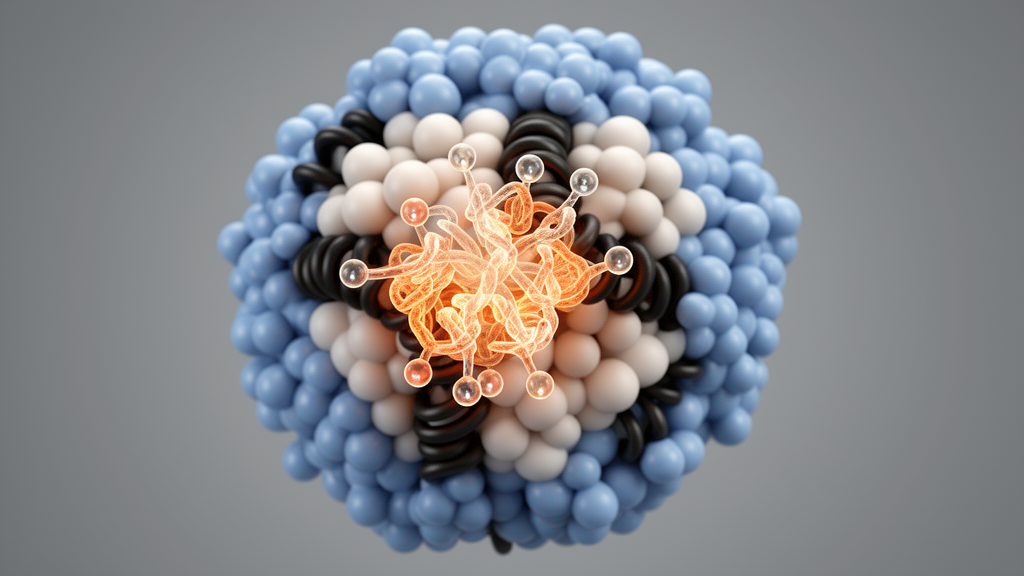
Artificial-intelligence-assisted protein design has produced peptides with high affinity for the acidic patch of canonical nucleosome core particles, according to a brief research report in Frontiers in Bioengineering and Biotechnology . The study combined BindCraft-based sequence design with an adapted donor FRET-quenching assay to identify and quantitatively characterize the interactions. The reported result establishes a laboratory-validated peptide-binding workflow for the nucleosome acidic patch, an interaction interface used by numerous chromatin-associated proteins.

Chromatin is an assembly of DNA, RNA and proteins in the nuclei of eukaryotic cells, and the protein interactions governing its function are important regulators of genome activity. The researchers focused on the nucleosome, one of the primary structural units of chromatin, and specifically on its acidic patch. This region is a binding site for many chromatin-associated proteins, including proteins that engage it through intrinsically disordered regions.

Because engineering or modulating these interactions could provide a route to epigenetic therapeutics, the acidic patch offers a defined molecular target for designed binding peptides. The computational component used BindCraft, an AI protein-design approach, to generate candidate peptide sequences directed toward the nucleosome acidic patch. The authors then refined a donor FRET-quenching assay for this application so that it could provide sensitive and consistent measurements of the binding affinities of the designed sequences.

This combined design-and-validation framework meant that the reported binders were not selected solely from computational outputs: their interactions with canonical nucleosome core particles were evaluated experimentally through the adapted FRET assay. Among the results, the researchers successfully identified peptides with high affinity for the acidic patch. The work therefore demonstrates a route by which BindCraft-generated candidates can be selected through quantitative binding measurements and converted into experimentally verified nucleosome-binding peptides.

The demonstrated outcome is narrower: AI-assisted peptide design, coupled to a tailored FRET-based validation assay, yielded peptides that bound the intended nucleosome acidic-patch region with high affinity. For synthetic biology, the practical significance lies in the workflow itself. AI-assisted design can propose molecular sequences for a biologically important interface, while a dedicated quantitative assay tests those proposals and measures their interactions.

The authors describe the findings as groundwork for synthetic epigenetic modulators and for broader use of protein design in managing three-dimensional genome organization. At this stage, however, the evidence supports a biochemical binding result rather than a demonstrated epigenetic, cellular or therapeutic effect. The study’s central achievement is the experimental validation of BindCraft-designed peptides as high-affinity binders of the nucleosome acidic patch, together with a refined donor FRET-quenching assay developed to measure those interactions precisely.

Subject of Research: BindCraft-guided design and FRET validation of peptides binding the nucleosome acidic patch

Article Title: Design and validation of nucleosome binding peptides using BindCraft

Article References: Oleinikov, P. D., Armeev, G. A., Sidorkina, A. E., Rykunova, E. B., Komarova, G. A., Motorin, N. A., Gerasimova, N. S., Feofanov, A. V., Studitsky, V., & Shaytan, A. K. (2026). Design and validation of nucleosome binding peptides using BindCraft. Frontiers in Bioengineering and Biotechnology, 14, 1946220. https://doi.org/10.3389/fbioe.2026.1946220

Image Credits: AI Generated

DOI: 10.3389/fbioe.2026.1946220

Keywords: BindCraft, AI protein design, nucleosome acidic patch, nucleosome binding, peptide design, FRET assay, chromatin interactions, epigenetics, synthetic biology, Design, validation, nucleosome

Cite Scienmag News

Denise Maddox. (October 22, 2026). AI-guided design yields high-affinity nucleosome acidic-patch binders. Scienmag. https://scienmag.com/ai-guided-design-yields-high-affinity-nucleosome-acidic-patch-binders/

Denise Maddox. "AI-guided design yields high-affinity nucleosome acidic-patch binders." Scienmag, 22 October 2026, https://scienmag.com/ai-guided-design-yields-high-affinity-nucleosome-acidic-patch-binders/. Accessed 18 November 2026.

Denise Maddox. "AI-guided design yields high-affinity nucleosome acidic-patch binders." Scienmag. October 22, 2026. https://scienmag.com/ai-guided-design-yields-high-affinity-nucleosome-acidic-patch-binders/

Tags: AI protein designAI-assisted nucleosome targetingAI-guided protein designBindCraftbioengineering of nucleosome binderschromatin interactionschromatin regulation mechanismschromatin structure and functionchromatin-associated protein interactionscomputational peptide engineeringDesignepigenetic therapeutic targetsepigeneticsFRET assayFRET-based interaction assaysnucleosomenucleosome acidic patchnucleosome acidic patch bindingnucleosome bindingpeptide affinity characterizationpeptide designprotein-DNA interaction modulationsynthetic biologyvalidation
Share26Tweet16
Previous Post

Advances in photoacoustic spectroscopy for human breath analysis

Next Post

Cosserat-rod digital twin screens continuous-tow composite deposition risks

Related Posts

Error-Correction Engineering Tasks Reduce Generative AI Effectiveness While Preserving Student Learning
Science News

Error-Correction Engineering Tasks Reduce Generative AI Effectiveness While Preserving Student Learning

November 18, 2026
GABA Treatment Associated With Modulated Drought Responses in Contrasting Flax Varieties
Biology

GABA Treatment Associated With Modulated Drought Responses in Contrasting Flax Varieties

November 18, 2026
High Bipolarity Index Scores Associated With Mood Stabilizer Use in MDD Patients
Science News

High Bipolarity Index Scores Associated With Mood Stabilizer Use in MDD Patients

November 18, 2026
Spanish Contract Cheating Web Traffic Plunged After Generative AI Emerged
Science News

Spanish Contract Cheating Web Traffic Plunged After Generative AI Emerged

November 18, 2026
Environmental and Indoor Dust Compromise Forensic Presumptive Blood Tests and DNA Profiling
Medicine

Environmental and Indoor Dust Compromise Forensic Presumptive Blood Tests and DNA Profiling

November 18, 2026
Three in Four Hubei Oriented Medical Students Intend Contract Compliance
Medicine

Three in Four Hubei Oriented Medical Students Intend Contract Compliance

November 18, 2026
Next Post
Cosserat-rod digital twin screens continuous-tow composite deposition risks

Cosserat-rod digital twin screens continuous-tow composite deposition risks

  • Mothers who receive childcare support from maternal grandparents show more optimized

    Mothers who receive childcare support from maternal grandparents show more parental warmth, finds NTU Singapore study

    27656 shares
    Share 11059 Tweet 6912
  • University of Seville Breaks 120-Year-Old Mystery, Revises a Key Einstein Concept

    1061 shares
    Share 424 Tweet 265
  • Bee body mass, pathogens and local climate influence heat tolerance

    682 shares
    Share 273 Tweet 171
  • Researchers record first-ever images and data of a shark experiencing a boat strike

    546 shares
    Share 218 Tweet 137
  • Groundbreaking Clinical Trial Reveals Lubiprostone Enhances Kidney Function

    531 shares
    Share 212 Tweet 133
Science

Embark on a thrilling journey of discovery with Scienmag.com—your ultimate source for cutting-edge breakthroughs. Immerse yourself in a world where curiosity knows no limits and tomorrow’s possibilities become today’s reality!

RECENT NEWS

  • Error-Correction Engineering Tasks Reduce Generative AI Effectiveness While Preserving Student Learning
  • GABA Treatment Associated With Modulated Drought Responses in Contrasting Flax Varieties
  • High Bipolarity Index Scores Associated With Mood Stabilizer Use in MDD Patients
  • Spanish Contract Cheating Web Traffic Plunged After Generative AI Emerged

Categories

  • Agriculture
  • Anthropology
  • Archaeology
  • Athmospheric
  • Biology
  • Biotechnology
  • Blog
  • Bussines
  • Cancer
  • Chemistry
  • Climate
  • Earth Science
  • Editorial Policy
  • Marine
  • Mathematics
  • Medicine
  • Pediatry
  • Policy
  • Psychology & Psychiatry
  • Science Education
  • Science News
  • Social Science
  • Space
  • Technology and Engineering

Subscribe to Blog via Email

Enter your email address to subscribe to this blog and receive notifications of new posts by email.

Join 5,151 other subscribers

© 2026 Scienmag - Science Magazine

Welcome Back!

Login to your account below

Forgotten Password?

Retrieve your password

Please enter your username or email address to reset your password.

Log In
No Result
View All Result
  • HOME
  • SCIENCE NEWS
  • CONTACT US

© 2026 Scienmag - Science Magazine

Discover more from Science

Subscribe now to keep reading and get access to the full archive.

Continue reading

