


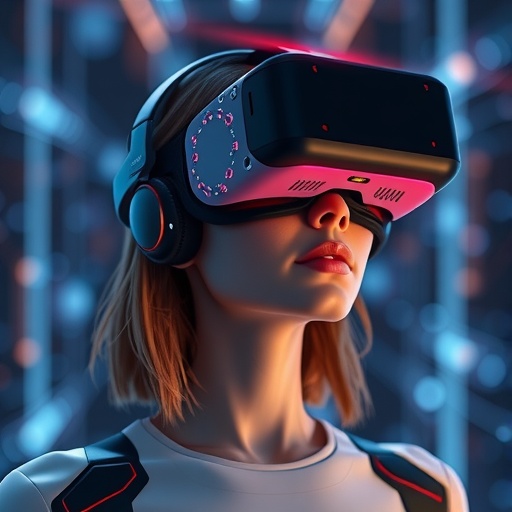
In a landmark advancement for mental health treatment methodologies, recent research has illuminated the transformative role of artificial intelligence (AI) integrated with virtual reality exposure therapy (VRET). This pioneering systematic review, authored by Bergsnev and Sánchez Laws, underscores how AI technologies are revolutionizing VRET approaches, promising unprecedented efficacy in treating a variety of psychological conditions through immersive and adaptive virtual environments. The amalgamation of AI with VRET is setting new standards in personalized therapy and broadening our horizons in psychiatric care.
Virtual Reality Exposure Therapy has long been recognized for its power in assisting patients to confront and manage fears or phobias by immersing them in controlled virtual scenarios. Traditionally, however, these experiences have been static and limited by their one-size-fits-all design. The integration of AI dramatically shifts this paradigm. AI algorithms delve deep into patient data, behavioral responses, and real-time feedback to craft dynamically evolving therapeutic scenarios. This evolution transforms VRET from a simple exposure tool into an intelligent, interactive, and adaptive therapeutic companion, precisely calibrated for each individual’s psychological landscape.
At the core of this enhancement is the AI’s ability to analyze and interpret complex biometric and cognitive data streams. By utilizing machine learning models, the system can detect subtle indicators of anxiety or stress responses that might escape human observation. These insights allow for the instantaneous modulation of virtual environments—altering intensity, duration, and stimuli complexity—ensuring the exposure remains optimally challenging without overwhelming the patient. This meticulous calibration accelerates therapeutic progress and fosters resilience in coping mechanisms.
Moreover, AI-driven VRET platforms are equipped with natural language processing capabilities that facilitate sophisticated, real-time dialogues between patients and virtual therapists or avatars. This interaction not only enriches the realism of the experience but also enables customized psychoeducation and cognitive restructuring exercises within the immersive environment. The capacity for empathetic, scenario-specific responses mimics the nuanced guidance of human therapists, expanding reach while maintaining high therapeutic fidelity.
The review further reveals the profound implications for treating disorders such as post-traumatic stress disorder (PTSD), anxiety disorders, specific phobias, and obsessive-compulsive disorder (OCD). For PTSD patients, the controlled re-exposure to trauma-related stimuli within a safe, monitored virtual setting—with adaptive pacing and support from AI—has the potential to reduce symptom severity without the risks associated with traditional exposure therapies. Anxiety disorders benefit from this technology’s capacity to simulate real-world stressors with graduated intensity, allowing patients to build tolerance progressively.
One of the most striking benefits highlighted is the scalability and accessibility of AI-enhanced VRET. Mental health resources are notoriously limited worldwide, often hindered by geographical and economic barriers. AI-powered virtual therapies delivered via consumer-grade VR platforms can democratize access, offering high-quality care to individuals previously unable to engage in therapy due to logistical constraints. This implies a paradigm shift toward more equitable mental health care dissemination globally.
The ethical and privacy considerations surrounding AI in healthcare also form a critical part of the discourse. The authors emphasize the importance of transparent data handling, informed consent, and robust cybersecurity measures to protect sensitive patient information. The success of AI in VRET rests not only on technological sophistication but also on fostering trust, ensuring patients are confident in their data’s security and the integrity of their treatment.
Technological challenges remain, such as perfecting emotion recognition accuracy and fine-tuning AI responsiveness to subtle behavioral cues. However, the iterative nature of machine learning algorithms promises continuous improvements as more patient data are integrated for model refinement. Efforts to standardize protocols and therapeutic content across platforms are underway, aiming to establish best practices that clinical practitioners can rely on.
Further research directions proposed include longitudinal studies that assess the durability of treatment effects achieved through AI-enhanced VRET. Understanding how this approach impacts long-term recovery, relapse prevention, and quality of life remains imperative. Additionally, exploring multi-sensory interfaces that incorporate haptic feedback and olfactory stimuli could deepen immersion and therapeutic impact, providing a more holistic treatment experience.
The integration of AI also opens new avenues for personalized medicine within psychiatry. By combining genetic, psychometric, and neuroimaging data, future AI models might predict individual responses to therapy types and tailor interventions with unparalleled precision. This convergence of data science and mental health therapy signals a future where treatment plans are as unique as the individuals they serve.
Clinicians are poised to benefit from AI-driven analytical tools that offer comprehensive reports on patient progress, enabling data-informed clinical decisions and timely adjustments to therapy protocols. This reduces reliance on subjective assessments and enhances therapeutic outcomes through real-time, evidence-based interventions.
The review by Bergsnev and Sánchez Laws concludes that the synergy of AI and VRET represents a paradigm shift in psychiatric treatment, boasting the potential to alleviate suffering for millions globally. As this field rapidly evolves, it beckons healthcare providers, researchers, and technologists to collaborate in ethical, innovative, and patient-centered ways to harness the full potential of this groundbreaking technology.
In summary, AI-augmented VRET stands not only as a technological leap but as a beacon of hope in mental health care, promising accessibility, personalization, and enhanced effectiveness. It challenges traditional therapeutic boundaries and catalyzes a new frontier where artificial intelligence and human empathy coalesce to heal minds and restore lives. The journey of implementing and refining this therapeutic modality is only beginning, and its impact may well redefine the future of psychiatry.
Cite Scienmag News
Glenn Wilkins. (March 26, 2026). AI Enhances Virtual Reality Exposure Therapy: Review. Scienmag. https://scienmag.com/ai-enhances-virtual-reality-exposure-therapy-review/
Glenn Wilkins. "AI Enhances Virtual Reality Exposure Therapy: Review." Scienmag, 26 March 2026, https://scienmag.com/ai-enhances-virtual-reality-exposure-therapy-review/. Accessed 3 September 2026.
Glenn Wilkins. "AI Enhances Virtual Reality Exposure Therapy: Review." Scienmag. March 26, 2026. https://scienmag.com/ai-enhances-virtual-reality-exposure-therapy-review/


