


In a groundbreaking study recently published in BMC Geriatrics, researchers have shed new light on the application of guideline-directed medical therapy (GDMT) among elderly patients suffering from heart failure, a condition that remains a leading cause of morbidity and mortality worldwide. This extensive investigation aimed to explore how adherence to GDMT varies across different age groups within the older adult population, revealing critical insights into treatment disparities and clinical outcomes in this vulnerable demographic.
Heart failure, particularly in older adults, presents a complex clinical challenge due to the presence of multiple comorbidities, altered pharmacodynamics, and the physiological changes associated with aging. GDMT—comprising a well-established regimen of beta-blockers, ACE inhibitors, angiotensin receptor blockers, mineralocorticoid receptor antagonists, and newer agents like SGLT2 inhibitors—has been demonstrated to significantly improve survival rates and quality of life in patients with heart failure. However, the extent to which these therapies are optimally applied in aged populations remains underexplored, prompting the present study.
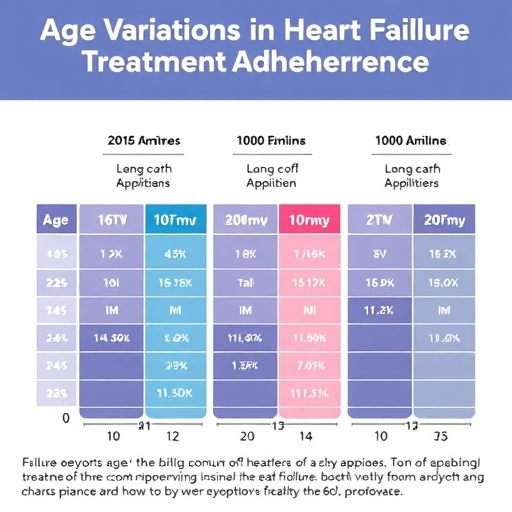
The authors, Kwa, Chung, Tan, and colleagues, employed a robust cohort design, capturing a diverse sample of older adults stratified by age subgroups to meticulously analyze prescription patterns, adherence rates, and clinical effectiveness of GDMT. The study highlighted a striking gradient, wherein the oldest cohorts consistently received suboptimal GDMT compared to their younger elderly counterparts. This finding raises essential questions about age-related biases, therapeutic inertia, and the potential under-treatment of the oldest old, who arguably stand to gain the most from effective heart failure management.
This suboptimal GDMT usage in the oldest patients is multifactorial. The study suggests that clinicians often exercise caution in prescribing certain medications due to concerns about polypharmacy, renal function decline, and the heightened risk of adverse effects in frail older adults. Indeed, the physiological changes affecting drug metabolism and clearance in this population necessitate a delicate balance between therapeutic efficacy and safety, complicating the uniform application of guidelines originally developed based on trials predominantly involving younger populations.
Furthermore, the investigation illuminated disparities in the utilization of newer pharmacological agents such as sodium-glucose cotransporter-2 (SGLT2) inhibitors. These drugs have revolutionized heart failure management in recent years, offering compelling benefits in reducing hospitalization and cardiovascular death. Nonetheless, the data illustrate that adoption of these agents among the oldest subsets remains woefully inadequate, highlighting potential gaps in guideline translation, physician familiarity, or perhaps issues with drug accessibility and reimbursement policies affecting geriatric patients.
Notably, Kwa et al.’s analysis extended beyond mere prescription patterns to evaluate patient outcomes, demonstrating that suboptimal adherence to GDMT correlated with increased rates of heart failure exacerbations, hospitalization, and all-cause mortality. This evidence reinforces the notion that rigorous, age-appropriate implementation of guideline-based therapies can markedly alter the disease trajectory in elderly heart failure patients, potentially reducing healthcare burdens and improving life expectancy.
The study also delved into patient-centered factors influencing GDMT adherence, including cognitive impairment, functional status, and social support systems. Elderly patients with diminished cognitive ability or limited caregiver assistance exhibited lower adherence rates, underscoring the necessity for comprehensive care models which integrate multidisciplinary support and tailored patient education to optimize treatment effectiveness.
Moreover, technological advancements in remote monitoring and telehealth interventions emerged as promising adjuncts that could enhance medication adherence and early detection of heart failure decompensation among the elderly. However, the disparity in digital literacy and technology access within this population remains a significant barrier, necessitating targeted strategies to bridge the digital divide in geriatric care.
Importantly, the researchers advocate for the refinement of clinical guidelines to incorporate age-specific recommendations that address the unique pharmacological and physiological considerations in older heart failure patients. The existing one-size-fits-all paradigm may inadvertently contribute to therapeutic hesitancy or overtreatment risks, which could be mitigated through nuanced, geriatric-centric recommendations.
In addition, the study calls for intensified clinical trials that inclusively represent the oldest segments of the population. Historically, these individuals have been systematically underrepresented in cardiovascular research, limiting the generalizability of trial outcomes and influencing real-world clinical decisions. Greater inclusivity would foster evidence-based, individualized care protocols that better serve this demographic.
Equally compelling is the ethical imperative highlighted by the research to ensure equitable healthcare delivery regardless of age. The observed disparities in GDMT application may inadvertently propagate ageism within clinical practice, emphasizing the need for heightened awareness and education among healthcare providers to combat unconscious biases.
The investigation also underscores the crucial role of caregivers and social networks in supporting the health management of elderly heart failure patients. Given the complexities of polypharmacy and regimen adherence, caregiver involvement is integral to ensuring consistent medication administration and symptom monitoring, further emphasizing the multidimensional nature of geriatric cardiovascular care.
On a systemic level, the study prompts policymakers and healthcare institutions to reconsider resource allocation and care models tailored for aged patients with chronic conditions like heart failure. Enhanced integration of specialized geriatric cardiology services, education programs, and infrastructure designed to facilitate access to evidence-based therapies could significantly improve clinical outcomes.
This extensive research not only establishes a foundation for future inquiries into the optimization of guideline-directed therapy in heart failure among elderly patients but also serves as a clarion call to the medical community to prioritize age-sensitive approaches. The findings have profound implications for clinical practice, policy formulation, and patient advocacy, ultimately aiming to prolong and enhance the quality of life for one of the most vulnerable patient cohorts.
In conclusion, the study by Kwa, Chung, Tan, and colleagues represents a seminal contribution to our understanding of age-related disparities in the management of heart failure. By illuminating critical gaps in guideline adherence and patient outcomes, it charts a path forward toward more personalized, equitable, and effective cardiac care for older adults, ensuring that advances in medical therapy translate into tangible benefits across all stages of aging.
Cite Scienmag News
Beatrice Stafford. (May 7, 2026). Age Variations in Heart Failure Treatment Adherence. Scienmag. https://scienmag.com/age-variations-in-heart-failure-treatment-adherence/
Beatrice Stafford. "Age Variations in Heart Failure Treatment Adherence." Scienmag, 7 May 2026, https://scienmag.com/age-variations-in-heart-failure-treatment-adherence/. Accessed 3 September 2026.
Beatrice Stafford. "Age Variations in Heart Failure Treatment Adherence." Scienmag. May 7, 2026. https://scienmag.com/age-variations-in-heart-failure-treatment-adherence/


