


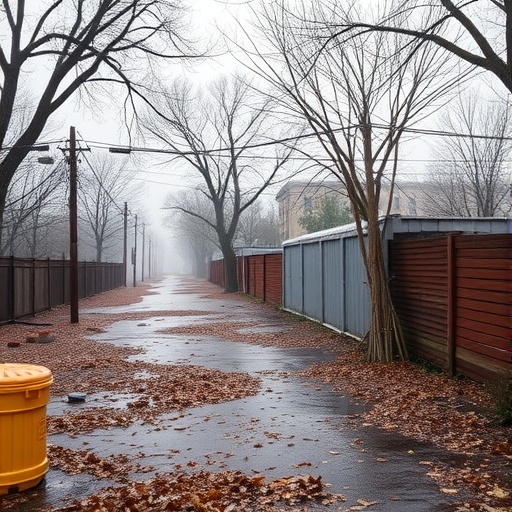
Superstorm Sandy did not end when the winds fell quiet. In New York City, floodwaters, damaged buildings, prolonged dampness and disrupted housing conditions continued to shape children’s health long after the storm had passed. A new study in the Journal of Exposure Science & Environmental Epidemiology examines one of the most persistent and easily overlooked consequences of that disaster: household fungal exposure and asthma morbidity among children living in New York City. The research, led by N.M. Flores with M. Little, L. Acosta and colleagues, focuses on how storm-related damage may have transformed indoor environments into ongoing respiratory hazards.
The study addresses a problem that becomes particularly urgent after hurricanes, coastal flooding and other extreme weather events. When water enters homes, it can soak drywall, insulation, flooring, furniture and other porous materials. Even after visible water disappears, trapped moisture can remain inside walls and under floors, creating conditions favorable for fungal growth. Fungi release spores and microscopic fragments into indoor air. For people with asthma, these particles may irritate already sensitive airways or trigger immune reactions that increase coughing, wheezing, chest tightness and shortness of breath. Children may be especially vulnerable because their lungs are still developing and they breathe more air relative to their body size than adults.
Flores and colleagues investigated whether exposure to fungi inside the home following Superstorm Sandy was linked to asthma-related illness in children. Rather than treating the storm as a single, short-lived event, the study considers the post-disaster home as an important part of the exposure pathway. A child may return to a residence that appears dry and habitable while mold remains hidden behind walls, beneath flooring or in water-damaged belongings. This distinction matters because official recovery efforts often focus on removing standing water and restoring basic services, whereas the biological consequences of chronic dampness may continue for months or years.
Indoor fungal exposure is not measured simply by asking whether mold is visible. Researchers can assess dampness and fungal contamination through home inspections, environmental sampling and analyses of fungal markers in dust or air. Different techniques capture different aspects of exposure. Air samples can reflect what is circulating at a particular moment, while settled-dust samples may provide a longer-term record of particles accumulating indoors. Some studies also examine microbial compounds or DNA signatures that indicate the presence of specific fungal groups. These measurements are then compared with health information, such as asthma symptoms, medication use, emergency visits or hospitalizations, to determine whether children exposed to more contaminated environments experience greater morbidity.
The biological connection between fungi and asthma is complex. Fungal spores can act as allergens, prompting the immune system to produce immunoglobulin E and other inflammatory signals in sensitized individuals. Inhaled particles may also activate airway cells directly, leading to the release of cytokines and other mediators that promote swelling and mucus production. For some children, fungal exposure may therefore trigger an acute attack; for others, repeated exposure may contribute to persistent airway inflammation and poorer symptom control. Damp buildings can intensify the problem by supporting not only fungi but also dust mites, bacteria and chemical irritants released from water-damaged materials.
The importance of the New York City setting extends beyond the city itself. Superstorm Sandy exposed how environmental disasters can create unequal health risks across neighborhoods. Families with fewer financial resources may have less ability to relocate, discard contaminated belongings, repair structural damage or obtain professional remediation. Children who remain in damaged housing can experience continued exposure while also facing interruptions in medical care, school routines and access to asthma medications. These overlapping pressures make it difficult to separate the effect of fungal contamination from the broader stresses of disaster recovery, but they also reflect the real conditions in which post-storm health is experienced.
By examining children rather than only buildings, the study connects environmental measurements to meaningful clinical outcomes. Asthma morbidity is broader than the existence of an asthma diagnosis: it describes how severely the disease affects daily life and how often symptoms require treatment or urgent care. A child whose asthma becomes more difficult to control after returning to a damp home may miss school, wake at night, use a rescue inhaler more frequently or require emergency medical attention. Linking such outcomes to residential fungal exposure can help public-health officials identify which recovery interventions are most likely to reduce illness.
The research also highlights the challenge of proving cause and effect in environmental epidemiology. Children living in storm-damaged homes may differ from other children in many ways, including baseline asthma severity, housing quality before the storm, socioeconomic conditions, smoking exposure, access to healthcare and the extent of flood damage. Researchers must account for these potential confounding factors as carefully as possible. Exposure can also change over time: remediation may reduce fungal contamination, while leaks, condensation or incomplete repairs may cause it to return. Even well-designed studies may therefore measure only part of a child’s total exposure history.
Still, the findings carry a clear practical message for disaster preparedness. Post-flood housing assessments should look beyond visible mold and standing water. Drying materials quickly, removing porous items that cannot be adequately cleaned, repairing leaks and improving ventilation can all reduce the conditions that support fungal growth. Children with asthma may need particular attention during cleanup and rehousing decisions, including temporary relocation when contamination is extensive. Clinicians can also play a role by asking families about dampness, flooding and building damage when asthma control deteriorates after an extreme-weather event.
As climate change increases the likelihood of intense rainfall, coastal flooding and repeated storms, the health consequences of disasters will increasingly be determined by what happens after the emergency broadcast ends. The study by Flores and colleagues places household fungal exposure within that longer recovery timeline, showing why environmental monitoring and respiratory care should be integrated. For families, the lesson is immediate: a home that looks restored is not necessarily a home that is biologically safe. For public-health agencies, it is a reminder that effective disaster recovery must include the indoor environment—and that protecting children with asthma requires attention to the hidden hazards left behind by floodwater.
Flores, N.M., Little, M., Acosta, L. et al. Domestic fungal exposure and asthma morbidity in New York City children following Superstorm Sandy. J Expo Sci Environ Epidemiol (2026). https://doi.org/10.1038/s41370-026-00960-w
Cite Scienmag News
Russell Cooper. (August 12, 2026). After Sandy, Household Fungal Exposure Linked to Asthma in New York Children. Scienmag. https://scienmag.com/after-sandy-household-fungal-exposure-linked-to-asthma-in-new-york-children/
Russell Cooper. "After Sandy, Household Fungal Exposure Linked to Asthma in New York Children." Scienmag, 12 August 2026, https://scienmag.com/after-sandy-household-fungal-exposure-linked-to-asthma-in-new-york-children/. Accessed 3 September 2026.
Russell Cooper. "After Sandy, Household Fungal Exposure Linked to Asthma in New York Children." Scienmag. August 12, 2026. https://scienmag.com/after-sandy-household-fungal-exposure-linked-to-asthma-in-new-york-children/


