


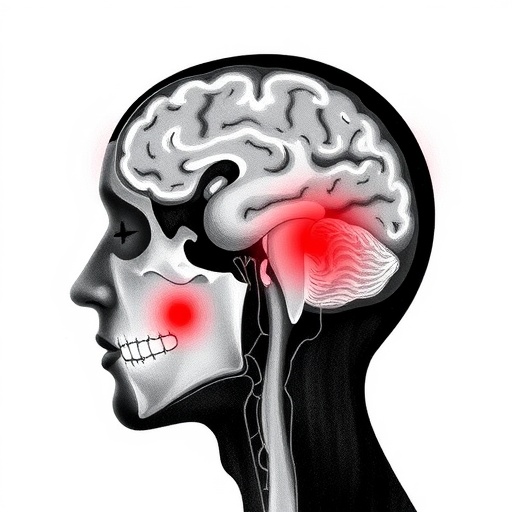
A new study is turning one of the most familiar human behaviors—everyday speech—into a potential window on one of the most difficult aspects of schizophrenia spectrum disorders to measure: negative symptoms. Researchers M.J. Spilka, J. Robin, A.H. Nikzad and colleagues report the identification of robust speech-based markers associated with the severity of negative symptoms, according to a paper published in Schizophrenia in 2026. The work points toward a future in which clinically meaningful changes in motivation, emotional expression and social engagement could be tracked not only during appointments, but also through carefully analyzed samples of natural speech.
Negative symptoms are not defined by unusual experiences added to a person’s mental life, such as hallucinations or delusions. Instead, they involve reductions in behaviors and emotional capacities that are normally present. A person may speak less, show reduced facial or vocal expressiveness, lose interest in social interaction, experience diminished pleasure or struggle to initiate ordinary activities. These symptoms can be persistent, disabling and closely linked to difficulties in education, employment and independent living. Yet they remain challenging to assess because clinicians must often infer internal states from brief conversations and rating scales.
Speech offers a complex biological and behavioral signal that may reflect several of these changes at once. Someone experiencing reduced motivation may produce shorter responses or take longer to begin speaking. Diminished emotional expression may appear as a narrower range of vocal pitch, reduced loudness variation or a more monotonous rhythm. Reduced social engagement can influence conversational turn-taking, responsiveness and the amount of information a speaker offers. Language itself may also change, with fewer descriptive details, less spontaneous elaboration or a reduced tendency to introduce new topics. None of these features is diagnostic on its own, but together they may form a measurable profile.
The significance of the new research lies in the emphasis on robustness. In speech science, a marker is useful only if it remains informative when conditions change. A feature that appears in one laboratory recording may disappear when a person speaks with a different microphone, in a different room or to a different interviewer. Speech is also affected by age, education, culture, medication, fatigue, anxiety, hearing ability and ordinary differences in communication style. A robust marker must therefore survive variation that is unrelated to symptom severity, while still preserving the signal associated with the clinical phenomenon being studied.
Technically, speech-based analysis can draw on several layers of information. Acoustic processing examines measurable properties of the voice, including fundamental frequency, intensity, speech rate, pauses, articulation and prosody—the pattern of stress and intonation that gives spoken language its rhythm and emotional contour. Linguistic analysis can evaluate vocabulary, sentence structure, semantic richness and the coherence or complexity of a person’s responses. Timing measures may capture latency before an answer, the length of silent intervals and how smoothly speakers exchange conversational turns. Modern computational systems can combine these variables into statistical models that estimate symptom-related patterns rather than relying on a single feature.
The promise of such models is not to replace clinical judgment, but to make assessment more continuous and sensitive to change. Traditional evaluations are typically conducted at intervals and depend on trained observers rating behavior during a structured or semi-structured interview. Those assessments remain essential, but they can miss fluctuations between visits and may be influenced by the setting or by the relationship between patient and clinician. An objective speech measure could provide an additional layer of evidence, helping researchers determine whether a treatment is changing a specific symptom domain even when broad clinical scores show only modest movement.
That possibility is especially important because negative symptoms have historically been harder to treat than some other manifestations of schizophrenia. Clinical trials need reliable outcome measures to distinguish a genuinely effective intervention from a treatment that merely changes alertness, anxiety or motor activity. If speech markers can be shown to track negative symptom severity independently of unrelated factors, they could help investigators evaluate new medicines, psychological therapies, social interventions and digital treatments with greater precision. A measurable change in vocal expressiveness or spontaneous language, for example, might complement reports of improved daily functioning rather than serving as a standalone endpoint.
However, the rise of automated speech analysis also brings scientific and ethical challenges. A computational model can identify statistical associations without understanding a speaker’s experience, and it may perform differently across languages, dialects, genders, age groups or cultural communication styles. Medication side effects, depression, neurological conditions and social anxiety can influence speech in ways that resemble negative symptoms. For that reason, a marker should be interpreted as evidence that contributes to an assessment, not as an automated verdict about a person’s diagnosis, prognosis or abilities. Validation in diverse populations and transparent reporting of errors will be essential.
Privacy is another central concern. Voice recordings can reveal identity, health status, emotional state and personal information embedded in conversation. Any clinical or research system using speech must address consent, secure data storage, controlled access and the possibility that recordings could be reused for purposes participants did not anticipate. The most responsible applications may rely on extracting numerical features while minimizing retention of raw audio, although even derived data can carry sensitive information. Patients should also know how an algorithm’s output will influence care and have the opportunity to question or correct it.
The study by Spilka, Robin, Nikzad and colleagues arrives as mental-health researchers increasingly explore digital biomarkers—measurable signals collected through smartphones, wearable devices and other technologies. Speech is particularly attractive because it can be sampled through ordinary clinical conversations or remote assessments without requiring specialized hardware. The paper’s focus on robust markers suggests a move away from impressive but fragile demonstrations toward tools designed for real-world reliability. If that goal is achieved, a person’s voice could become one component of a broader, patient-centered measurement system that captures symptom severity with more frequency, nuance and sensitivity than occasional observation alone.
The broader message is both technologically exciting and clinically grounded: the way people speak may carry information about changes in motivation, expression and social connection that are difficult to quantify by conventional means. But the value of speech analysis will depend on whether it improves understanding and care rather than reducing complex human experiences to a score. Robust validation, collaboration with patients and clinicians, and careful protection of privacy will determine whether these markers become practical instruments or remain promising research signals. For now, the new findings place speech at the center of an accelerating effort to make the hidden dimensions of schizophrenia spectrum disorders more visible, measurable and ultimately more treatable.
Cite Scienmag News
Glenn Wilkins. (August 12, 2026). Speech Patterns Reliably Reveal Negative Symptom Severity in Schizophrenia Spectrum Disorders. Scienmag. https://scienmag.com/speech-patterns-reliably-reveal-negative-symptom-severity-in-schizophrenia-spectrum-disorders/
Glenn Wilkins. "Speech Patterns Reliably Reveal Negative Symptom Severity in Schizophrenia Spectrum Disorders." Scienmag, 12 August 2026, https://scienmag.com/speech-patterns-reliably-reveal-negative-symptom-severity-in-schizophrenia-spectrum-disorders/. Accessed 4 September 2026.
Glenn Wilkins. "Speech Patterns Reliably Reveal Negative Symptom Severity in Schizophrenia Spectrum Disorders." Scienmag. August 12, 2026. https://scienmag.com/speech-patterns-reliably-reveal-negative-symptom-severity-in-schizophrenia-spectrum-disorders/


