


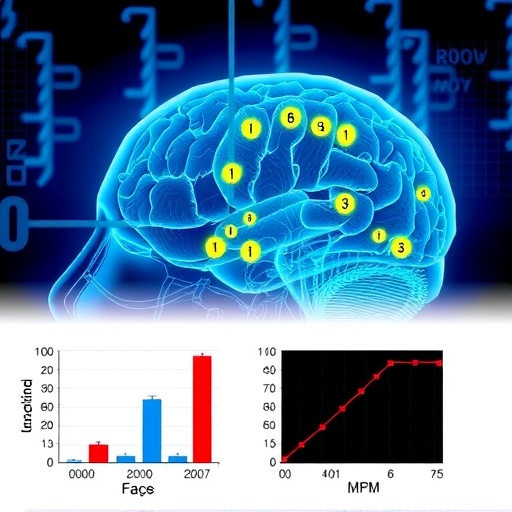
Aerobic exercise has long been praised for its numerous physical benefits; however, recent research reveals its profound implications for cognitive function, particularly in hypoxic environments. A groundbreaking study conducted by Luo et al. investigates how aerobic exercise training enhances learning and memory performance in rats exposed to reduced oxygen levels. This research not only underscores the importance of physical activity but also delves into the molecular mechanisms at play, focusing on the PKA–CREB–BDNF signaling pathway in the hippocampus.
As the study notes, exposure to hypoxia can lead to cognitive deficits and detrimental changes to brain structure. The hippocampus, a pivotal region for learning and memory, seems particularly susceptible to these adverse effects. The authors hypothesized that aerobic exercise could potentially mitigate these negative outcomes by promoting neuroplasticity and synaptic functionality through various signaling pathways. This hypothesis propelled their investigation into the impacts of consistent aerobic training on cognitive abilities in hypoxic conditions.
The experimental design utilized a sample of rats exposed to hypoxic environments, simulating conditions that could happen in high-altitude scenarios or compromised respiratory states. The rats were divided into control and exercise groups, with the latter undertaking a structured aerobic exercise regimen over several weeks. This methodology aimed to provide insight into whether sustained physical activity could yield improvements in cognitive performance for subjects facing hypoxia.
Upon assessing the cognitive outcomes, the researchers employed various behavioral tests, designed to evaluate learning and memory capabilities. These included maze navigation trials, which are particularly effective in gauging spatial memory and learning efficiency. The rats that participated in aerobic training exhibited marked improvements in task performance when compared with their sedentary counterparts, indicating a clear link between physical activity and cognitive enhancement in challenging environments.
In an effort to unravel the biological underpinnings of these observed improvements, the research team focused on the PKA–CREB–BDNF signaling pathway. Protein kinase A (PKA) serves as a critical mediator in numerous cellular processes, including those related to the brain’s neuroplasticity. The activation of this pathway is crucial for the phosphorylation of cAMP response element-binding protein (CREB), a transcription factor known to promote the expression of brain-derived neurotrophic factor (BDNF).
BDNF itself is a pivotal neurotrophin involved in the survival and differentiation of neurons, synaptic plasticity, and cognitive functions. The study revealed that aerobic exercise significantly increased the levels of BDNF in the hippocampus, supporting the notion that enhanced neurotrophic signaling plays a vital role in improving cognitive capacities. These findings highlight a promising strategy to boost cognitive resilience in hypoxic conditions, a revelation that could carry implications for various human populations exposed to similar stressors.
Throughout their investigation, the authors meticulously analyzed the molecular changes following aerobic training. The results clearly demonstrated an upregulation of BDNF and its receptors, further solidifying the intricate relationship between physical exercise and neurochemical pathways associated with learning and memory. This research sets a foundation for understanding how lifestyle interventions can be tailored to protect cognitive function amidst environmental challenges.
A compelling aspect of this study lies in its relevance to everyday life. As populations around the world grapple with varying degrees of hypoxia—from high-altitude dwellers to individuals with respiratory ailments—the potential for aerobic exercise as a simple and accessible cognitive enhancer is noteworthy. The findings advocate for increased awareness of the benefits of aerobic training, emphasizing that engagement in physical activity could transcend mere physical health, impacting mental faculties profoundly.
Moreover, the implications of this research extend beyond animal models. While further studies are necessary to explore the translatability of these results to human subjects, the principles behind the PKA–CREB–BDNF signaling pathway are conserved across species. This suggests that strategies geared towards integrating aerobic exercise into daily routines may bolster cognitive health, particularly for individuals at risk of hypoxic impairments due to various factors.
In conclusion, while more rigorous investigations are required to fully elucidate the effects of aerobic exercise on cognitive function in humans, the work by Luo et al. offers a compelling narrative for the integration of physical activity into health regimens. The implications for public health could be vast, promoting strategies that reinforce the protective effects of aerobic training on cognition even under life’s challenging and oxygen-depleted conditions.
Given the straightforward applicability of these findings, there arises the need for broader discussions and initiatives aimed at embedding physical exercise into educational programs and lifestyles. The research emphasizes that every stride taken in physical activity could potentially lead to significant strides in mental agility, particularly in environments where the brain is under duress.
Luo, S., Shi, L., Liu, T. et al. Aerobic exercise training improves learning and memory performance in hypoxic-exposed rats by activating the hippocampal PKA–CREB–BDNF signaling pathway. BMC Neurosci 26, 13 (2025). https://doi.org/10.1186/s12868-025-00935-x
Cite Scienmag News
Ophelia Keating. (September 3, 2025). Aerobic Training Enhances Memory in Hypoxic Rats. Scienmag. https://scienmag.com/aerobic-training-enhances-memory-in-hypoxic-rats/
Ophelia Keating. "Aerobic Training Enhances Memory in Hypoxic Rats." Scienmag, 3 September 2025, https://scienmag.com/aerobic-training-enhances-memory-in-hypoxic-rats/. Accessed 4 September 2026.
Ophelia Keating. "Aerobic Training Enhances Memory in Hypoxic Rats." Scienmag. September 3, 2025. https://scienmag.com/aerobic-training-enhances-memory-in-hypoxic-rats/


