


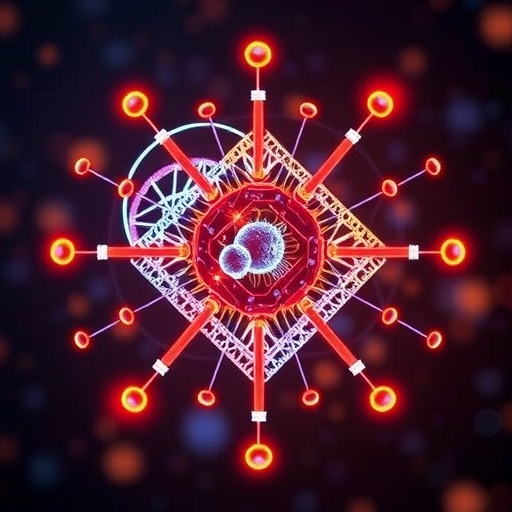
AMHERST, Mass. — In a groundbreaking development that may redefine the future of artificial intelligence (AI), researchers at the University of Massachusetts Amherst have unveiled a pioneering AI framework that drastically reduces energy consumption while preserving, and potentially advancing, computational power. This milestone challenges the prevailing model of AI architecture by drawing inspiration directly from the human brain’s efficient and asynchronous processing style—a paradigm shift with monumental implications for both the environment and the scalability of AI technologies.
The team, led by Hava Siegelmann, Provost Professor at the Manning College of Information and Computer Sciences, confronts a paradox that has long hampered the expansion of AI capabilities: the insatiable energy demands of ever-growing, highly synchronized neural networks. While contemporary AI models such as ChatGPT and Claude exhibit astounding computational feats, they do so by relying on synchronous updates coordinated through a global clock, inevitably resulting in energy consumption on the order of millions of watts. This complexity and energy cost have become a drastic bottleneck for deploying autonomous and embedded AI systems at scale.
One of the fundamental insights driving Siegelmann’s research is the striking contrast between artificial neural networks and the biological brain. The human brain, with its nearly 86 billion neurons firing asynchronously and selectively, manages to perform immensely complex cognitive tasks while consuming only about 20 watts of power—comparable to the energy usage of a small LED bulb. This ability arises from neurons updating independently, activating only as needed for the task at hand, thus avoiding the global synchronization overhead that plagues standard AI architectures. Emulating this asynchronous dynamism has been a longstanding but elusive goal within computational neuroscience and machine learning.
Existing attempts to harness asynchronous spiking neural networks have stumbled over significant practical hurdles, primarily because these biologically inspired models have not supported efficient training methods. Traditional backpropagation and other gradient-based techniques, which enable modern deep neural networks’ remarkable learning capabilities, are ill-suited to the irregular timing and event-driven nature of spiking neurons. As a result, the AI community has wrestled with a tradeoff, forced to choose between energy-efficient but less adaptable spiking models and computationally powerful but energy-intensive synchronized networks.
Siegelmann’s team broke new ground by introducing Asynchronous Neural Turing networks, or ANT—a novel neural architecture that integrates the adaptive power of differentiable deep networks with the energy efficiency of asynchronous processing. ANT dispenses with the central coordinating clock, allowing neural units to update independently in response to pertinent stimuli, much like biological neurons, while maintaining compatibility with gradient-based training methods. This approach requires revolutionary design principles to ensure that asynchronous updating does not disrupt information flow or learning capacity—challenges that Siegelmann’s group has impressively overcome.
The benefits of this architecture are both theoretical and practical. By restricting computation to only those neurons essential to the immediate cognitive function, ANT systems can dramatically reduce power consumption by orders of magnitude. In theory, this efficiency does not compromise computational capability—in fact, ANT potentially matches the prowess of conventional digital systems and state-of-the-art deep learning frameworks, all while enabling real-time, continuous learning. This breakthrough directly addresses the escalating environmental footprint of AI research and deployment, especially as models scale to trillions of parameters.
The conceptual underpinnings of ANT are anchored in Siegelmann’s foundational work from the mid-1990s, when she demonstrated that recurrent neural networks could attain the computational equivalence of Turing machines, a seminal finding linking machine learning architectures to classical computation theory. Building on decades of expertise in neural computation, the Siegelmann lab’s innovation marries theoretical rigor with practical applicability, fostering a new class of energy-aware neural networks primed for next-generation AI applications.
The implications extend far beyond academic curiosity. With energy efficiency at a premium for autonomous robotics, edge computing devices, and self-driving vehicles, ANT architectures could enable these machines to operate sustainably in environments where power resources are limited or costly. Moreover, by facilitating continuous online learning free from rigid training phases, this approach promises smarter, more adaptable systems capable of learning and evolving within their operational contexts without prohibitive energy costs.
Siegelmann’s team is actively advancing the ANT framework, focusing on enhancing real-time learning capabilities and pushing the boundaries of energy efficiency even further. Their work is poised to inspire a paradigm shift across AI research, promoting systems that not only mitigate environmental impact but also improve adaptability and autonomy in ways previously constrained by synchronous computation.
As AI’s role broadens in society and industry, the urgency of developing sustainable, scalable, and capable architectures cannot be overstated. ANT represents a crucial step toward reconciling AI’s extraordinary promise with the practical realities of power consumption and environmental stewardship. The research, supported by the U.S. National Science Foundation and the Air Force Office of Scientific Research, invites the global scientific community to rethink core assumptions about AI design and operation.
In summary, the ANT framework embodies a transformative vision for AI: one where intelligence is not sacrificed at the altar of energy efficiency, and where learning is continuous, dynamic, and more brain-like than ever before. By realigning artificial intelligence with the principles that make biological computation so efficient, Siegelmann and her collaborators herald an era of smarter, greener AI poised to meet the challenges of tomorrow.
News Publication Date: June 5, 2026
Web References:
https://doi.org/10.1038/s41467-026-73830-6
https://www.cics.umass.edu/about/directory/hava-siegelmann
Keywords
Artificial Intelligence, Energy Efficiency, Asynchronous Neural Networks, Continuous Learning, Neural Computation, ANT Architecture, Sustainable AI, Gradient-Based Learning, Autonomous Systems, Neural Turing Machines, Brain-Inspired Computing, Real-Time Adaptation
Cite Scienmag News
Cassandra Pierce. (June 8, 2026). Next-Gen AI Achieves Continuous Learning Using a Fraction of Today’s Computing Energy. Scienmag. https://scienmag.com/next-gen-ai-achieves-continuous-learning-using-a-fraction-of-todays-computing-energy/
Cassandra Pierce. "Next-Gen AI Achieves Continuous Learning Using a Fraction of Today’s Computing Energy." Scienmag, 8 June 2026, https://scienmag.com/next-gen-ai-achieves-continuous-learning-using-a-fraction-of-todays-computing-energy/. Accessed 3 September 2026.
Cassandra Pierce. "Next-Gen AI Achieves Continuous Learning Using a Fraction of Today’s Computing Energy." Scienmag. June 8, 2026. https://scienmag.com/next-gen-ai-achieves-continuous-learning-using-a-fraction-of-todays-computing-energy/


