


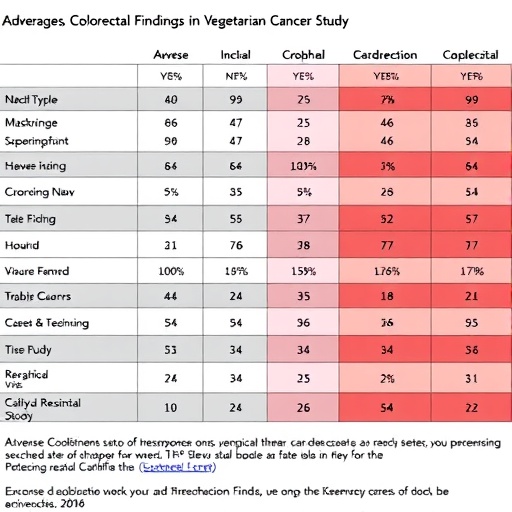
In a groundbreaking study published in the British Journal of Cancer on June 23, 2026, researcher N.K. Shah from the Cancer Risk in Vegetarians Consortium sheds new light on the complex relationship between vegetarian diets and the risk of esophageal and colorectal cancers. This comprehensive analysis reveals adverse findings that challenge long-standing assumptions about plant-based diets being universally protective against certain types of cancer, a topic that has sparked intense debate within the scientific and medical communities.
For years, the narrative around vegetarianism and cancer prevention has been overwhelmingly positive, supported by epidemiological data suggesting lower incidence rates in vegetarians compared to omnivores. Shah’s research, however, delves into sophisticated mechanistic insights and epidemiological nuances that argue for a more cautious interpretation. The consortium’s data underscores that while the risk profiles vary broadly among populations, some specific esophageal and colorectal cancer risks appear paradoxically elevated in certain vegetarian cohorts, highlighting the importance of dietary composition and nutritional adequacy beyond simple classification.
A crucial aspect of this study is its in-depth examination of dietary components and their interactions with the gut epithelium and microbiome. Shah emphasizes that not all vegetarian diets are created equal; diets heavily reliant on processed plant-based products or low in essential micronutrients such as B12, vitamin D, and certain amino acids may disrupt mucosal integrity and inflammatory responses. These disruptions contribute to cellular environments conducive to carcinogenesis particularly in the esophagus and colon, where the mucosal lining is continuously exposed to dietary antigens and microbial metabolites.
Methodologically, the study stands out for its robust use of multi-omic approaches, integrating genomics, transcriptomics, and metabolomics with large-scale epidemiology. This integrative strategy has enabled the identification of molecular signatures linked to adverse tissue remodeling and mutagenic processes in the relevant gastrointestinal tracts of vegetarians who develop these cancers. Notably, Shah’s work highlights alterations in gene expression related to cellular apoptosis and DNA repair pathways, embodying mechanistic underpinnings that may explain why simple assumptions about plant-based diets do not uniformly translate to cancer protection.
Moreover, the research confronts the role of microbial dysbiosis in gastrointestinal carcinogenesis among vegetarians. By profiling the gut microbiome composition, Shah’s consortium detected distinct patterns correlating with cancer-risk phenotypes. Particularly, the depletion of protective commensal bacteria alongside overrepresentations of pro-inflammatory and genotoxic species was more pronounced in vegetarian cancer patients. This microbial imbalance may exacerbate chronic inflammation, a well-known driver of esophageal and colorectal tumorigenesis.
Importantly, the study also evaluates the impact of food preparation and lifestyle factors often associated with vegetarianism. Thermal processing techniques such as high-heat cooking, common in certain vegetarian culinary practices, can generate carcinogenic compounds like polycyclic aromatic hydrocarbons and heterocyclic amines. These compounds increase mutational burden in the esophageal lining. Additionally, Shah points out that behaviors such as alcohol consumption and smoking, sometimes overlooked in vegetarian cohorts, can synergistically elevate cancer risk when combined with certain dietary patterns.
One of the more provocative aspects of Shah’s article is its exploration of heterogeneity within vegetarian groups themselves. The consortium classified vegetarians into subtypes—vegan, lacto-ovo-vegetarian, and pescatarian—observing differing risk trajectories for esophageal and colorectal cancer. This granularity revealed that pescatarians, often assumed at intermediate risk, exhibited lower incidence rates compared to strict vegans who showed a marginally increased risk, potentially due to nutritional deficiencies impacting mucosal defense mechanisms.
The findings also provoke discussion on potential genetic predispositions influencing cancer susceptibility in vegetarians. Shah’s group used genome-wide association studies (GWAS) to identify polymorphisms that may interact with diet to alter esophageal and colorectal cancer risk. Variants in genes involved in folate metabolism, DNA methylation, and immune regulation were particularly implicated, suggesting a complex gene-environment interplay that challenges the reductionist view of diet alone.
From a public health perspective, the study’s implications are multifaceted. It advocates for tailored dietary guidelines that emphasize nutrient completeness, not just macronutrient profiles, in vegetarian populations. Shah stresses the necessity for clinicians and dietitians to monitor markers of nutritional adequacy such as serum B12 and homocysteine levels, which, if left unaddressed, could inadvertently contribute to carcinogenesis. This represents a paradigm shift from promoting vegetarianism as a monolithic dietary ideal toward a more nuanced approach that considers individual and population-level cancer risk factors.
The research further addresses the role of early subclinical changes in the esophageal and colorectal mucosa detected via advanced imaging and biomarker assays. These early alterations, such as epithelial hyperplasia and dysplasia, were more prevalent in vegetarian participants with micronutrient deficiencies and microbial dysbiosis, offering a window for targeted prevention strategies. Shah calls for integration of routine cancer screening protocols adapted to dietary habits to facilitate early detection in high-risk vegetarian subsets.
In the context of global dietary trends, where vegetarianism continues to gain popularity for environmental and ethical reasons, these findings serve as a cautionary tale. Shah encourages ongoing multidisciplinary research to unravel the intricate biological mechanisms by which diet influences carcinogenesis. The study prompts the scientific community to reconsider simplistic dietary categorizations, advocating instead for personalized nutrition informed by genetics, microbiome, and metabolic status.
This study’s robust design and comprehensive scope underscore its potential to influence policy-making and clinical nutrition practice substantially. It also challenges media narratives that often uncritically promote vegetarian diets as inherently healthful. By elucidating the nuanced risk components associated with vegetarian dietary patterns, Shah paves the way for evidence-based recommendations that protect and promote long-term gastrointestinal health.
The Cancer Risk in Vegetarians Consortium’s investigation by N.K. Shah exemplifies the future of nutritional cancer epidemiology, where integrated omics technologies and rigorous hypothesis-driven research redefine our understanding of diet-cancer interrelationships. This landmark publication invites a vigorous re-examination of current dietary guidelines, emphasizing cancer risk stratification rather than one-size-fits-all dietary prescriptions.
In sum, this research represents a paradigm-shifting contribution to nutritional oncology, revealing that vegetarian diets, while beneficial in many respects, possess complex risk dimensions for esophageal and colorectal cancers that demand nuanced interpretation. Shah’s meticulous work guides both scientists and clinicians toward a more individualized, mechanistically informed approach to cancer prevention within vegetarian and potentially broader dietary contexts.
Cite Scienmag News
Nathaniel Bowman. (June 23, 2026). Adverse Esophageal, Colorectal Findings in Vegetarian Cancer Study. Scienmag. https://scienmag.com/adverse-esophageal-colorectal-findings-in-vegetarian-cancer-study/
Nathaniel Bowman. "Adverse Esophageal, Colorectal Findings in Vegetarian Cancer Study." Scienmag, 23 June 2026, https://scienmag.com/adverse-esophageal-colorectal-findings-in-vegetarian-cancer-study/. Accessed 5 September 2026.
Nathaniel Bowman. "Adverse Esophageal, Colorectal Findings in Vegetarian Cancer Study." Scienmag. June 23, 2026. https://scienmag.com/adverse-esophageal-colorectal-findings-in-vegetarian-cancer-study/


