


In a groundbreaking study that could reshape our understanding of pediatric inflammatory conditions, researchers from Japan have uncovered compelling epidemiological evidence suggesting a shared 4 to 6-week latency period between Multisystem Inflammatory Syndrome in Children (MIS-C) and Kawasaki disease. This discovery not only bridges two previously separate clinical entities but also offers crucial insights into their pathogenesis and potential triggers. The research, recently published in Pediatric Research, leverages extensive data analyses and temporal correlations, providing a nuanced perspective on these enigmatic syndromes that primarily affect children.
MIS-C emerged prominently during the COVID-19 pandemic as a severe inflammatory condition triggered by SARS-CoV-2 infection, manifesting weeks after the acute viral illness subsides. Kawasaki disease, on the other hand, is a well-documented pediatric vasculitis characterized by systemic inflammation affecting medium-sized arteries, with a mysterious etiology that has puzzled clinicians and researchers for decades. While clinical overlaps between MIS-C and Kawasaki disease have been noted, especially in their presentation of fever, rash, and cardiac involvement, the question of whether these conditions share similar underlying mechanisms has remained largely speculative—until now.
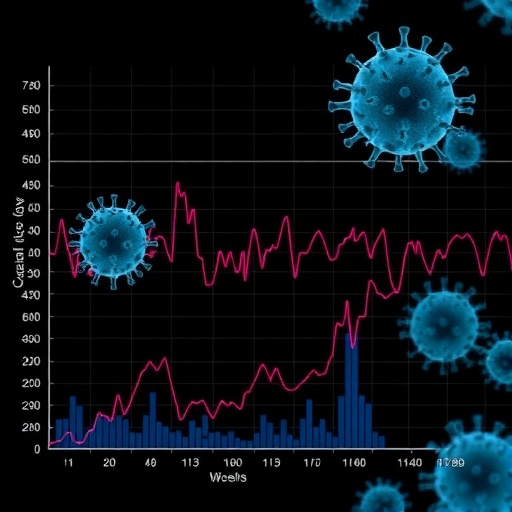
The team led by Suzuki, Suenaga, Kitano, and colleagues conducted meticulous epidemiological surveillance across various prefectures in Japan, capitalizing on the country’s robust health infrastructure and comprehensive disease tracking systems. By analyzing case incidence data over a multi-year period, they identified a conspicuous pattern: surges in MIS-C cases consistently followed spikes in Kawasaki disease by approximately 4 to 6 weeks. This temporal latency was statistically significant and reproducible across multiple demographic subsets, hinting at a potential shared immunological or infectious trigger driving both diseases.
Delving deeper, the researchers hypothesized that this latency might reflect a common post-infectious immune dysregulation phase. Both MIS-C and Kawasaki disease are believed to arise from aberrant immune activation rather than direct pathogen invasion. The 4–6 week delay could represent the incubation period necessary for the hypersensitive immune response to manifest clinically after the initial exposure to a triggering agent—possibly a viral pathogen or an environmental factor. This paradigm challenges prior models that viewed MIS-C and Kawasaki disease as distinct pathologies with unrelated etiologies.
Importantly, this finding may prompt a reevaluation of diagnostic and therapeutic strategies. Currently, MIS-C is treated with immunomodulatory therapies such as intravenous immunoglobulin and corticosteroids, similar to Kawasaki disease, but management is complicated by variations in severity and presentation. Understanding that these conditions could be temporally connected may enable earlier identification of at-risk children and help tailor interventions more precisely. For example, monitoring for early signs of MIS-C in Kawasaki disease patients or vice versa might reduce morbidity associated with delayed treatment.
The epidemiological approach employed also underscores the value of large-scale, longitudinal surveillance in pediatric medicine. By integrating clinical data with intricate timing analyses, the researchers sidestepped the pitfalls of small case reports and anecdotal observations that previously muddled the distinction between MIS-C and Kawasaki disease. Such population-based studies provide a robust framework for untangling complex interactions between infectious agents, host genetics, and immune responses in pediatric inflammatory diseases.
Moreover, the shared latency period aligns intriguingly with known immunological processes. The adaptive immune system typically requires several weeks post-exposure to mount a robust response, including the production of autoantibodies or cytokine storms implicated in these syndromes. The possibility that a single infectious trigger—and not multiple unrelated causes—initiates this cascade poses fascinating questions about viral pathogenesis and host susceptibility.
Japan’s unique epidemiological landscape further strengthens the study’s conclusions. Historically, Kawasaki disease has been most prevalent in East Asian populations, including Japan, hinting at possible genetic predispositions. The appearance of MIS-C with a consistent latency to Kawasaki disease in this population suggests interplay between genetic factors and environmental or infectious stimuli, offering a fertile ground for future genome-wide association studies or immunological profiling work.
From a public health vantage point, these findings advocate for renewed vigilance in pediatric surveillance during outbreaks of viral infections, especially respiratory viruses with pandemic potential. Proactive monitoring for Kawasaki disease and MIS-C could become a pillar of pediatric care, enabling timely interventions that mitigate the risk of severe cardiac complications such as coronary artery aneurysms or myocardial dysfunction.
The study’s methodology also opens doors for broader application in other inflammatory or autoimmune conditions whose triggers and progression timelines remain elusive. By applying similar latency-focused epidemiological frameworks, researchers might unlock hidden connections between different diseases, sparking new hypotheses and translational research avenues.
While the precise molecular mechanisms underpinning this shared latency period wait to be unraveled, this study catalyzes an important shift in how clinicians view pediatric multisystem inflammatory disorders. It underscores the need for interdisciplinary collaboration bridging epidemiology, immunology, virology, and clinical medicine to tackle these multifaceted health challenges.
Looking ahead, the research team emphasizes the importance of corroborating their findings in other geographic and ethnic contexts. Should similar latencies be observed globally, it would reinforce the universality of these mechanisms and accelerate the development of global diagnostic criteria and treatment algorithms that encompass both MIS-C and Kawasaki disease as part of a disease spectrum.
In summary, the elucidation of a 4 to 6-week shared latency period between MIS-C and Kawasaki disease represents a significant stride in pediatric inflammatory disease research. It proposes a unifying temporal framework suggesting that these diseases might be temporally linked manifestations of a broader post-infectious inflammatory syndrome. This revelation not only enriches our scientific understanding but also holds promise for improving clinical outcomes through enhanced surveillance, early diagnosis, and targeted therapeutics for affected children worldwide.
This innovative epidemiological insight from Japan embodies the transformative potential of data-driven research to challenge established paradigms and uncover hidden relationships in complex diseases. As the medical community absorbs these findings, there is hope that future research sparked by this work will unravel the intricate immunological choreography that underlies these conditions, ultimately guiding more effective management and prevention strategies.
The implications for patient care, public health policies, and biomedical research are profound. By reframing MIS-C and Kawasaki disease within a temporal and potentially immunological continuum, this study invites a reexamination of how post-infectious syndromes are conceptualized and tackled in pediatric populations. The journey from epidemiological observation to clinical impact exemplifies the power of integrated scientific inquiry in unraveling the mysteries of childhood diseases.
Cite Scienmag News
Kristina Jarvis. (June 23, 2026). Shared 4–6-Week Latency Between MIS-C, Kawasaki Disease. Scienmag. https://scienmag.com/shared-4-6-week-latency-between-mis-c-kawasaki-disease/
Kristina Jarvis. "Shared 4–6-Week Latency Between MIS-C, Kawasaki Disease." Scienmag, 23 June 2026, https://scienmag.com/shared-4-6-week-latency-between-mis-c-kawasaki-disease/. Accessed 4 September 2026.
Kristina Jarvis. "Shared 4–6-Week Latency Between MIS-C, Kawasaki Disease." Scienmag. June 23, 2026. https://scienmag.com/shared-4-6-week-latency-between-mis-c-kawasaki-disease/


