


Climate change, increasing drought, population growth and consumption habits have spotlighted the scarcity of water available for agriculture. In Spain reservoirs destined for human consumption and agriculture are at 52% of their capacity, a figure higher than in previous years, but one that does not dispel concern about future shortages. The Guadalquivir River Basin, whose reservoirs are at 41%, on average, has been limiting the amount of water earmarked for irrigation for several years. This situation makes it necessary to adopt measures that help reduce consumption and better manage water for crops. Compared to imposing an additional tax on water, as proposed by an EU directive, a study by the WEARE group at the University of Cordoba has found that the most effective system is still the one currently being applied: the proportional reduction of the water made available to users.

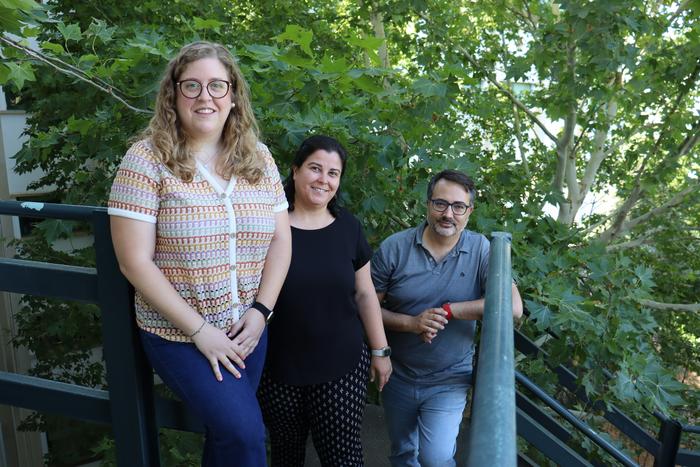
Credit: University of Cordoba
Based on a mathematical programming model, the study finds that the proportional allocation of water, and not additional taxes on the resource, is more effective from the point of view of those engaged in agriculture
Climate change, increasing drought, population growth and consumption habits have spotlighted the scarcity of water available for agriculture. In Spain reservoirs destined for human consumption and agriculture are at 52% of their capacity, a figure higher than in previous years, but one that does not dispel concern about future shortages. The Guadalquivir River Basin, whose reservoirs are at 41%, on average, has been limiting the amount of water earmarked for irrigation for several years. This situation makes it necessary to adopt measures that help reduce consumption and better manage water for crops. Compared to imposing an additional tax on water, as proposed by an EU directive, a study by the WEARE group at the University of Cordoba has found that the most effective system is still the one currently being applied: the proportional reduction of the water made available to users.
The study, part of Ángela Valle García’s doctoral thesis, which featured participation by her advisors, Carlos Gutiérrez Martín and Nazaret M. Montilla López, studied the best way to manage the water available for agriculture in the Guadalquivir basin by comparing two management policies: allocation based on quotas (the proportional reduction of water allocations) vs.tariffication; and from two points of view: social and private. For this they used a model based on Positive Mathematical Programming (PMP), which, with data on revenue, costs and arable area, reproduces the farmer’s behavior. “The objective of this model,” Gutiérrez Martín explains, “is not so much an optimization of what should be done, but to try to reproduce reality and, from there, the farmer’s behavior, applying a management policy to see what effect it would have before it is implemented.The model allows us to know, depending on the amount of water available, what the cultivation plan will be that we will apply next year,” added Montilla López.
Thus, from a social point of view, placing an additional tax on water beyond the price that is already paid for the use made of it to irrigate crops, has an impact on society, as that money could be allocated for other purposes. The tax will work, but, according to the model, it is more detrimental than the allocation of a quantity of water, since, in addition to the difficulty of being able to establish an adequate price, from a private perspective those who manage agriculture suffer more economic losses with the additional tax on water than with the allocation of a quota.
As Gutiérrez Martín argues, “with the water tax, more is lost than is achieved. It is more effective to implement a quota because, by including a tax, the farmer ends up losing more.” This is an idea, the research team argues, that can be taken into account by political authorities when making real-world decisions.
The study has been published in the Water Resources Management journal, and is funded through the e-MOHICAN project (TED2021-131066B-I00), with funds from the Ecological and Digital Transition, the National Research Plan (MCIN/AEI/10.13039/501100011033 and the European Union “NextGenerationEU”/PRTR).
Reference:
Source: Ángela Valle-García, Carlos Gutiérrez-Martín and Nazaret M. Montilla-López, “Water Pricing and Quotas: A Quantitative Analysis from a Private and Social Perspective,”Water Resources Management (2024). https://doi.org/10.1007/s11269-024-03865-1.
Journal
Water Resources Management
Article Title
Water Pricing and Quotas: A Quantitative Analysis from a Private and Social Perspective
Article Publication Date
9-May-2024
Cite Scienmag News
Alan Morgan. (July 16, 2024). Additional taxes vs. water quotas. A study compares the most effective system to manage water consumption in agriculture. Scienmag. https://scienmag.com/additional-taxes-vs-water-quotas-a-study-compares-the-most-effective-system-to-manage-water-consumption-in-agriculture/
Alan Morgan. "Additional taxes vs. water quotas. A study compares the most effective system to manage water consumption in agriculture." Scienmag, 16 July 2024, https://scienmag.com/additional-taxes-vs-water-quotas-a-study-compares-the-most-effective-system-to-manage-water-consumption-in-agriculture/. Accessed 4 September 2026.
Alan Morgan. "Additional taxes vs. water quotas. A study compares the most effective system to manage water consumption in agriculture." Scienmag. July 16, 2024. https://scienmag.com/additional-taxes-vs-water-quotas-a-study-compares-the-most-effective-system-to-manage-water-consumption-in-agriculture/

