

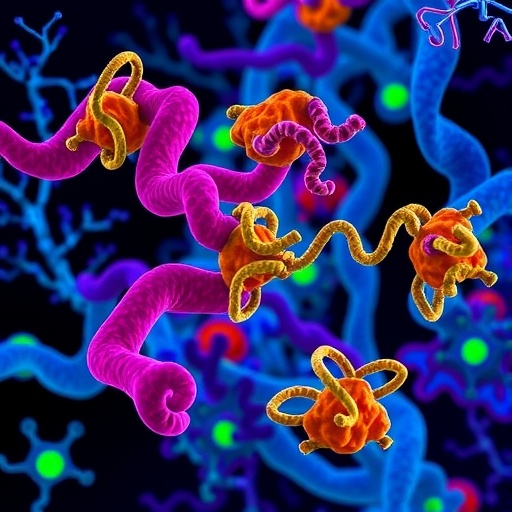
A quiet revolution is unfolding in cancer biology, shifting attention away from the tumor cell itself and toward the vast, malleable community of immune cells that surround it. At the center of this ecosystem are tumor-associated macrophages, or TAMs, which can act as either tireless defenders or treacherous collaborators. A new review published on May 22, 2026, in Oncoscience pulls into sharp focus the molecular puppet masters that dictate which role these macrophages play: a family of proteins known as adaptor proteins. Far from being passive bystanders, these scaffold molecules are emerging as central decision nodes that integrate signals from the tumor microenvironment and orchestrate the macrophage’s fate, with profound implications for cancer progression and therapy.
Adaptor proteins lack enzymatic activity of their own, yet their structural flexibility allows them to physically link activated cell-surface receptors to intracellular signaling cascades. By assembling multiprotein complexes, they effectively channel information from outside the cell into specific transcriptional programs inside the macrophage. The review, led by first author Khandu Wadhonkar and corresponding author Mirza S. Baig from the Indian Institute of Technology Indore, systematically catalogues how these molecules regulate the polarization of TAMs along a spectrum that ranges from pro-inflammatory, tumor-killing phenotypes to immunosuppressive, tumor-nurturing phenotypes. This decision is not binary but emerges from a dynamic competition among intersecting pathways, many of which converge on adaptor-mediated hubs.
The cast of adaptor proteins implicated in this regulation is extensive and includes STING, MyD88, DAP12, TRIF, Gab2, TIRAP, RIAM, LAMTOR1, several TRAF family members, CARD9, STAP, RACK1, TRIB1, and p62. Each of these scaffolds routes incoming signals toward major downstream pathways such as NF-κB, PI3K-AKT, MAPK, JAK-STAT, mTOR, and TBK1-IRF3. It is the combinatorial engagement of these pathways that ultimately determines whether a macrophage produces inflammatory cytokines and presents tumor antigens, or instead secretes factors that suppress cytotoxic T cells, stimulate angiogenesis, and remodel the extracellular matrix to favor invasion. The review emphasizes that the same adaptor protein can drive diametrically opposing outcomes depending on contextual cues, a functional plasticity that mirrors the remarkable adaptability of macrophages themselves.
Among the most striking examples of this duality is STING, a protein best known for sensing cytosolic DNA and triggering potent type I interferon responses. In some tumor settings, STING activation in TAMs enhances anti-tumor immunity, yet in others it contributes to an immunosuppressive milieu. Similarly, MyD88 and TRIF, classical adaptors downstream of Toll-like receptors, can reinforce either protective or pathogenic macrophage states depending on the cytokine environment and the stage of tumor development. This Janus-faced behavior suggests that simply activating or inhibiting such adaptors systemically would be a blunt and potentially dangerous therapeutic strategy. Instead, the challenge lies in selectively modulating their function within the tumor microenvironment to tip the balance toward sustained anti-tumor activity.
Several adaptor proteins, however, appear more consistently skewed toward pro-tumor polarization. Gab2, TIRAP, LAMTOR1, CARD9, RACK1, TRIB1, and p62, for instance, have been shown to activate signaling networks that drive inflammatory programs favorable to tumor growth, enhance the recruitment of immunosuppressive cells, and facilitate metastatic spread. The TRAF family of adaptors, long studied in inflammation, are frequently hijacked by cancer cells to promote survival and immune evasion. These findings paint a picture of a deeply interconnected signaling web in which cancer cells do not simply evade the immune system but actively co-opt macrophage biology through adaptor-mediated subversion.
This mechanistic insight opens a new therapeutic frontier: reprogramming rather than eradicating macrophages. Preclinical studies are already exploring small-molecule inhibitors that disrupt specific adaptor–partner interactions, peptide-based decoys that prevent signalosome assembly, RNA interference to silence key adaptors, and targeted protein degradation strategies using PROTACs or molecular glues. Because adaptor proteins sit at such privileged positions within signaling networks, modest perturbations of their scaffolding functions could yield disproportionately large shifts in macrophage phenotype. The hope is that such interventions could convert TAMs from accomplices into instruments of immune-mediated tumor destruction, thereby complementing existing immunotherapies such as checkpoint inhibitors.
Significant hurdles remain on the path to the clinic. Many adaptor proteins are expressed broadly across tissues and participate in physiological immune responses, raising the risk of off-target effects and autoimmunity. Their functions are also exquisitely tissue-specific and evolve with tumor stage, making it essential to map adaptor interactions at single-cell resolution. The authors point to single-cell transcriptomics, spatial proteomics, and highly selective chemical probes as critical tools for dissecting this complexity. Without such precision, therapies aimed at adaptor networks could inadvertently normalize pro-tumor circuits or unleash systemic inflammation.
The review ultimately positions adaptor proteins as master regulators of macrophage plasticity in the tumor microenvironment. By providing a scaffold for the integration of diverse and often contradictory signals, these molecules hold the keys to one of cancer’s most insidious alliances. As the field advances, the dream is to design therapies that do not simply kill cancer cells but reprogram the entire immune landscape to reject the tumor. If the promise of adaptor-targeted medicine can be realized, macrophages may become not just a cellular marker of malignant fate but a switch that, once flipped, makes that fate impossible to sustain.
Subject of Research: Not applicable
Article Title: Adaptor proteins regulating tumor-associated macrophage polarization during cancer progression
News Publication Date: July 7, 2026
Web References: https://doi.org/10.18632/oncoscience.661
References: Khandu Wadhonkar et al., Oncoscience, Vol. 13, May 22, 2026, DOI: 10.18632/oncoscience.661
Image Credits: Copyright: © 2026 Wadhonkar et al. This is an open access article distributed under the terms of the Creative Commons Attribution License (CC BY 4.0).
Keywords: adaptor proteins, immunomodulation, tumor microenvironment, cancer, macrophage polarization


