

Tuesday, October 20, 2026
Science
No Result
View All Result
  • Login
  • HOME
  • SCIENCE NEWS
  • CONTACT US
  • HOME
  • SCIENCE NEWS
  • CONTACT US
No Result
View All Result
Scienmag
No Result
View All Result
Home Science News Marine

Acoustic study links Omura’s whales to warm, productive waters

October 20, 2026
in Marine
Violet Maxwell
By Violet Maxwell Scienmag Editorial Profile - Natural Hazards
Reading Time: 2 mins read
0
Acoustic study links Omura’s whales to warm, productive waters

Acoustic study links Omura’s whales to warm, productive waters

65
SHARES
587
VIEWS
Share on FacebookShare on Twitter
ADVERTISEMENT

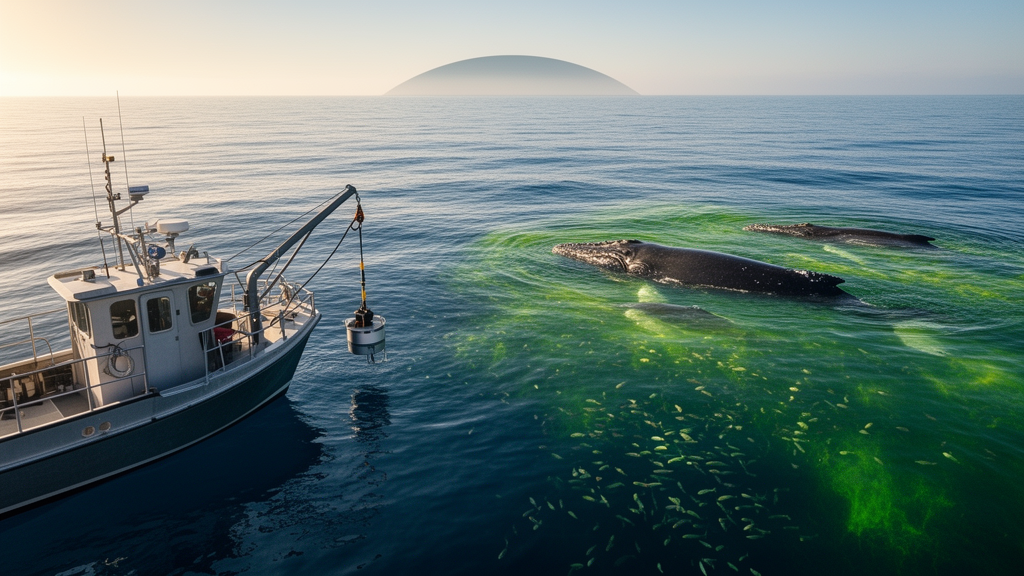
Omura’s whales were more likely to occur in warm, food-rich waters off northwest Australia, according to an observational study that analyzed nearly two decades of underwater acoustic recordings. The results provide a baseline for understanding the habitat of a species that is rarely seen in the wild and is classified as Data Deficient on the International Union for Conservation of Nature Red List, meaning there is currently insufficient information to assess its extinction risk accurately. Researchers from Curtin University’s Centre for Marine Science and Technology analyzed recordings collected at 35 sites across roughly 1,800 kilometres of ocean between 2005 and 2023.

The long-term dataset captured Omura’s whale calls throughout the year, but detections were more frequent from September through May, when waters were warmer. Because visual sightings of Omura’s whales are rare, their vocalizations provide an important way to identify where the animals occur and how their distribution changes with seasonal ocean conditions. The researchers associated the presence of whale calls with sea-surface temperatures above 27.5°C, stronger winds and higher concentrations of chlorophyll-a, an indicator of microscopic marine life that forms the base of the ocean food web.

Their analysis also found that acoustic presence increased about one month after periods of elevated chlorophyll-a. This delayed pattern suggests that the whales may respond to increases in ocean productivity and prey availability that follow changes in ocean conditions, although the study does not establish that these environmental factors directly cause whale movements. The findings identify conditions associated with the species’ presence rather than measuring abundance: they show where and when calls were recorded, not how many individual whales produced them.

Lead author Ciara Browne said listening for the animals’ calls provides an important way of understanding where they occur because visual sightings are notoriously difficult. The results showed that the whales were acoustically present year-round, but that their distribution shifted with the seasons, with a greater likelihood of presence during warmer months. Co-author Christine Erbe said the findings provide an important baseline for understanding how Omura’s whales use Australian waters and how they may respond to environmental change.

That baseline may help inform marine planning, including assessments of potential impacts from shipping, offshore industry and other sources of underwater noise. It may also improve understanding of how future climate change could affect the whales’ behavior, but the acoustic study does not quantify future climate effects or establish specific threats facing the species. Long-term datasets such as this one can reveal patterns that would otherwise remain hidden and provide decision-makers with evidence about where marine species occur and the environmental conditions associated with their presence.

For an elusive species such as Omura’s whale, identifying the habitats and ocean conditions it favors is an important first step toward protecting it and informing future conservation efforts.

Subject of Research: Seasonal acoustic habitat associations of Omura’s whales off northwest Australia

Article Title: Listen up: 18 years of whale calls reveal key habitat of mysterious species

Article References: Listen up: 18 years of whale calls reveal key habitat of mysterious species. Original publication (Bibliographic details unavailable.)

Image Credits: AI Generated

DOI: Not provided

Keywords: Omura’s whale, underwater acoustics, marine habitat, northwest Australia, ocean temperature, chlorophyll-a, seasonal distribution, marine conservation, Listen, years, whale, calls

Cite Scienmag News

Violet Maxwell. (October 20, 2026). Acoustic study links Omura’s whales to warm, productive waters. Scienmag. https://scienmag.com/acoustic-study-links-omuras-whales-to-warm-productive-waters/

Violet Maxwell. "Acoustic study links Omura’s whales to warm, productive waters." Scienmag, 20 October 2026, https://scienmag.com/acoustic-study-links-omuras-whales-to-warm-productive-waters/. Accessed 20 October 2026.

Violet Maxwell. "Acoustic study links Omura’s whales to warm, productive waters." Scienmag. October 20, 2026. https://scienmag.com/acoustic-study-links-omuras-whales-to-warm-productive-waters/


Tags: callschlorophyll-achlorophyll-a as indicator of marine productivityconservation status of Omura’s whalesimpact of ocean conditions on whale presencelistenlong-term ocean sound recordingsmarine biodiversity assessmentmarine conservationmarine habitatnorthwest Australiaocean temperatureocean temperature and whale occurrenceOmura’s whaleOmura’s whale habitatrare whale species habitat analysisseasonal distributionseasonal whale distributionunderwater acoustic monitoringunderwater acousticswarm productive waterswhalewhale vocalization detectionyears
Share26Tweet16
Previous Post

METS-IR Linked to Cardiovascular Risk Across Chinese and U.S. Cohorts

Next Post

GB10 shows durable anti-leakage effects in animal eye models

Related Posts

Fish study links aged PLA microplastics to blood-cell changes
Marine

Fish study links aged PLA microplastics to blood-cell changes

October 20, 2026
Seasonal cycle in surface seawater isotopic composition
Marine

Seasonal cycle in surface seawater isotopic composition

October 20, 2026
Review identifies northern Australia as a green sawfish stronghold
Marine

Review identifies northern Australia as a green sawfish stronghold

October 20, 2026
Open-source R package streamlines spatial ocean data mapping
Marine

Open-source R package streamlines spatial ocean data mapping

October 19, 2026
Juvenile Striped Bass Hold Steady at Average Abundance in Virginia Waters for 2026
Marine

Juvenile Striped Bass Hold Steady at Average Abundance in Virginia Waters for 2026

October 19, 2026
From Courtrooms to Prevention: Rethinking the Human Right to Water
Marine

From Courtrooms to Prevention: Rethinking the Human Right to Water

October 19, 2026
Next Post
GB10 shows durable anti-leakage effects in animal eye models

GB10 shows durable anti-leakage effects in animal eye models

  • Mothers who receive childcare support from maternal grandparents show more optimized

    Mothers who receive childcare support from maternal grandparents show more parental warmth, finds NTU Singapore study

    27656 shares
    Share 11059 Tweet 6912
  • University of Seville Breaks 120-Year-Old Mystery, Revises a Key Einstein Concept

    1061 shares
    Share 424 Tweet 265
  • Bee body mass, pathogens and local climate influence heat tolerance

    682 shares
    Share 273 Tweet 171
  • Researchers record first-ever images and data of a shark experiencing a boat strike

    546 shares
    Share 218 Tweet 137
  • Groundbreaking Clinical Trial Reveals Lubiprostone Enhances Kidney Function

    531 shares
    Share 212 Tweet 133
Science

Embark on a thrilling journey of discovery with Scienmag.com—your ultimate source for cutting-edge breakthroughs. Immerse yourself in a world where curiosity knows no limits and tomorrow’s possibilities become today’s reality!

RECENT NEWS

  • GB10 shows durable anti-leakage effects in animal eye models
  • Acoustic study links Omura’s whales to warm, productive waters
  • METS-IR Linked to Cardiovascular Risk Across Chinese and U.S. Cohorts
  • Art Course Linked to Short-Term Empathy Gain

Categories

  • Agriculture
  • Anthropology
  • Archaeology
  • Athmospheric
  • Biology
  • Biotechnology
  • Blog
  • Bussines
  • Cancer
  • Chemistry
  • Climate
  • Earth Science
  • Editorial Policy
  • Marine
  • Mathematics
  • Medicine
  • Pediatry
  • Policy
  • Psychology & Psychiatry
  • Science Education
  • Science News
  • Social Science
  • Space
  • Technology and Engineering

Subscribe to Blog via Email

Enter your email address to subscribe to this blog and receive notifications of new posts by email.

Join 5,150 other subscribers

© 2025 Scienmag - Science Magazine

Welcome Back!

Login to your account below

Forgotten Password?

Retrieve your password

Please enter your username or email address to reset your password.

Log In
No Result
View All Result
  • HOME
  • SCIENCE NEWS
  • CONTACT US

© 2025 Scienmag - Science Magazine

Discover more from Science

Subscribe now to keep reading and get access to the full archive.

Continue reading