

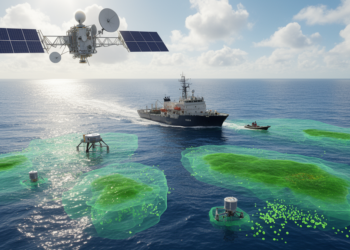
Satellite, field and model study maps asymmetric Indian Ocean phytoplankton response
A satellite, field and model study links asymmetric coastal phytoplankton responses to positive and negative Indian Ocean Dipole events through ...
A satellite, field and model study links asymmetric coastal phytoplankton responses to positive and negative Indian Ocean Dipole events through ...

An analysis of 18 years of underwater recordings suggests Omura’s whales are more likely to occur in warm, productive waters ...
A 24-year analysis of Kuwait's coastal waters reveals an abrupt 2013 surge in phytoplankton biomass that coincided with construction of ...
Scientists have purified the cyanobacterial stress protein HliA for the first time and shown in vitro that it binds chlorophyll ...
AI prediction models built with neural networks and neuro-fuzzy techniques can forecast chlorophyll-a in India's Ashtamudi estuary with near-perfect accuracy, ...
The new study arrives at a moment when the remote sensing community is increasingly confronting a paradox that has quietly ...
A five-year study of Palabuhanratu Bay shows that skipjack tuna catch rates are shaped by the combined influence of physical ...
A nine-year validation study shows satellite chlorophyll measurements reliably track toxic algal blooms in Chesapeake Bay tributaries, but converting chlorophyll ...
A three-year study of India's Ashtamudi Estuary shows that phosphates and nitrates drive chlorophyll-a levels, and that a neural network ...
A six-month study of Lagos coastal waters shows that freshwater inflows during the wet season deliver nutrients that elevate chlorophyll-a ...

Embark on a thrilling journey of discovery with Scienmag.com—your ultimate source for cutting-edge breakthroughs. Immerse yourself in a world where curiosity knows no limits and tomorrow’s possibilities become today’s reality!