


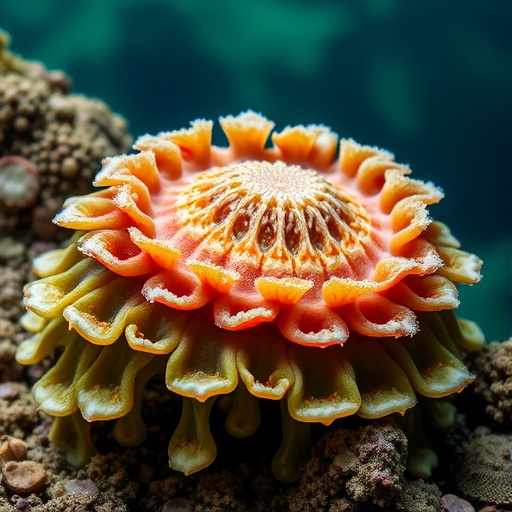
In the relentless global quest to mitigate climate change, researchers are continuously exploring innovative solutions to enhance natural carbon sequestration. A groundbreaking study led by Zhang, Tian, Li, and their colleagues, recently published in Communications Earth & Environment, reveals a compelling synergy between abalone and macroalgae within co-culture ecosystems that significantly elevates carbon storage capabilities. This pioneering research not only reshapes our understanding of marine bioculture but also offers promising pathways to more effective carbon mitigation strategies.
Marine environments have long been recognized for their potential to sequester substantial amounts of atmospheric carbon dioxide. Traditionally, focus has been primarily on macroalgae or seagrasses independently due to their high photosynthetic activity. However, the integration of commercially valuable marine species like abalone with macroalgae in co-culture systems introduces a new dimension to carbon storage. The study meticulously quantified carbon accumulation in laboratory-scale ecosystems, illustrating how the biological interactions between abalone and macroalgae amplify carbon retention beyond additive expectations.
Crucially, the research highlights that the abalone, a well-known herbivorous gastropod, contributes to enhanced macroalgal growth through nutrient cycling. Abalone grazing removes aged algal tissues, stimulating new algal growth with higher photosynthetic rates. This dynamic leads to increased net primary productivity, which directly translates to greater carbon fixation from the surrounding seawater. The indirect promotion of macroalgal photosynthesis by abalone represents a biological feedback mechanism that was previously underappreciated in marine carbon storage models.
Equally fascinating is the discovery that abalone excrete bioavailable nitrogenous compounds which effectively nourish macroalgae. These excretions mitigate nutrient limitations, which can frequently constrain algal growth in natural environments. When combined with the physical structure of abalone shells and their organic waste, these factors collectively contribute to carbon being locked more efficiently within biomass and sediment matrices. This multifaceted approach to carbon sequestration underscores the integrative nature of the co-culture ecosystem’s functionality.
The authors employed state-of-the-art isotopic tracing techniques to differentiate carbon sources and sinks within the experimental ecosystem. This method allowed precise tracking of carbon flow from atmospheric CO2 to macroalgal biomass and subsequently to the sedimentary pool. The findings revealed that sediments beneath the co-culture systems contained significantly more organic carbon compared to monocultures of either abalone or macroalgae, demonstrating enhanced long-term carbon burial potential.
Beyond carbon sequestration, the synergy between abalone and macroalgae holds promising implications for sustainable aquaculture. By fostering naturally balanced nutrient cycles, this co-culture approach increases productivity while reducing reliance on artificial fertilizers. The dual benefit of ecological service enhancement and economic viability positions these systems as attractive models for integrated mariculture operations, particularly in coastal regions vulnerable to nutrient runoff and habitat degradation.
A critical advance from the study is the identification of specific environmental parameters that optimize co-culture carbon storage efficacy. The researchers systematically evaluated variables such as salinity, temperature, and nutrient availability, determining ideal thresholds that maximize biological interactions and minimize stress on both abalone and macroalgae. Such precision enables scalable design of aquaculture infrastructure tailored to local ecological contexts, ensuring maximal carbon capture and species health.
The unparalleled ability of this co-culture ecosystem to sequester carbon lies in its multi-layered biological complexity. While previous efforts typically isolated individual taxa, Zhang and colleagues demonstrated that interspecies interdependencies act synergistically to enhance ecosystem services. This insight paves the way for broader implementation of biologically diverse marine cultivation systems that leverage natural processes rather than rely solely on technological interventions.
Importantly, this research intersects with the burgeoning blue carbon movement, which aims to harness coastal and marine habitats in mitigating climate change. Intertidal and subtidal zones with established macroalgae populations can be stewarded through co-culture practices to significantly augment their carbon storage capacity. The subsequent export of carbon to deep ocean sediments secures long-term sequestration, effectively removing CO2 from the atmosphere on centennial timescales.
The application of co-culture ecosystems involving higher trophic level organisms also introduces resilience against environmental fluctuations and disease outbreaks, which often plague monoculture aquaculture operations. By maintaining biological diversity and fostering mutualistic relationships, these systems can buffer against perturbations, ensuring continuous carbon accumulation and biomass production—even under changing climatic conditions.
Zhang et al.’s work also scrutinizes the carbon budget dynamics relating to respiration and decomposition within the co-cultures. While respiration typically releases CO2 back into the environment, the study finds that carbon fixation by enhanced macroalgal growth overwhelms respiratory losses. This net positive carbon balance is critical for establishing these ecosystems as viable carbon sinks rather than carbon neutral or sources of emissions.
Moreover, the study provides detailed mechanistic insights into how macroalgal species-specific traits influence carbon storage in co-culture scenarios. Certain macroalgal taxa exhibit higher rates of carbon assimilation and more robust structural biomass, which synergize differently when combined with abalone. This specificity encourages tailored species selection to optimize carbon sequestration outcomes regionally, rather than adopting a one-size-fits-all approach.
The environmental ramifications of widespread application of abalone-macroalgae co-culture ecosystems are potentially transformative. Coastal economies could harness these biocultures to simultaneously reduce greenhouse gas concentrations while boosting food security and supporting biodiversity conservation. The dual focus aligns with global sustainability goals, integrating climate mitigation with ecosystem restoration and economic development.
While the promise of these findings is immense, the authors caution about potential scaling challenges. Hydrodynamic conditions, space availability, and ecosystem carrying capacity impose constraints on widespread deployment. Further research into large-scale ecosystem interactions, potential unintended consequences, and socio-economic frameworks for commercialization is essential to translate experimental success into real-world impact.
In sum, this landmark study illuminates a nuanced and powerful biological synergy between abalone and macroalgae that propels co-culture ecosystems to the forefront of climate mitigation strategies. By harnessing natural interspecies dynamics, cultivating such ecosystems offers a frontier for sustainable carbon storage, conservation, and aquaculture innovation. As climate urgency escalates, integrated approaches like these underscore the vital role of marine ecosystems in securing a resilient future for the planet.
Cite Scienmag News
Violet Maxwell. (April 28, 2026). Abalone and Macroalgae Boost Carbon Storage Together. Scienmag. https://scienmag.com/abalone-and-macroalgae-boost-carbon-storage-together/
Violet Maxwell. "Abalone and Macroalgae Boost Carbon Storage Together." Scienmag, 28 April 2026, https://scienmag.com/abalone-and-macroalgae-boost-carbon-storage-together/. Accessed 5 September 2026.
Violet Maxwell. "Abalone and Macroalgae Boost Carbon Storage Together." Scienmag. April 28, 2026. https://scienmag.com/abalone-and-macroalgae-boost-carbon-storage-together/


