


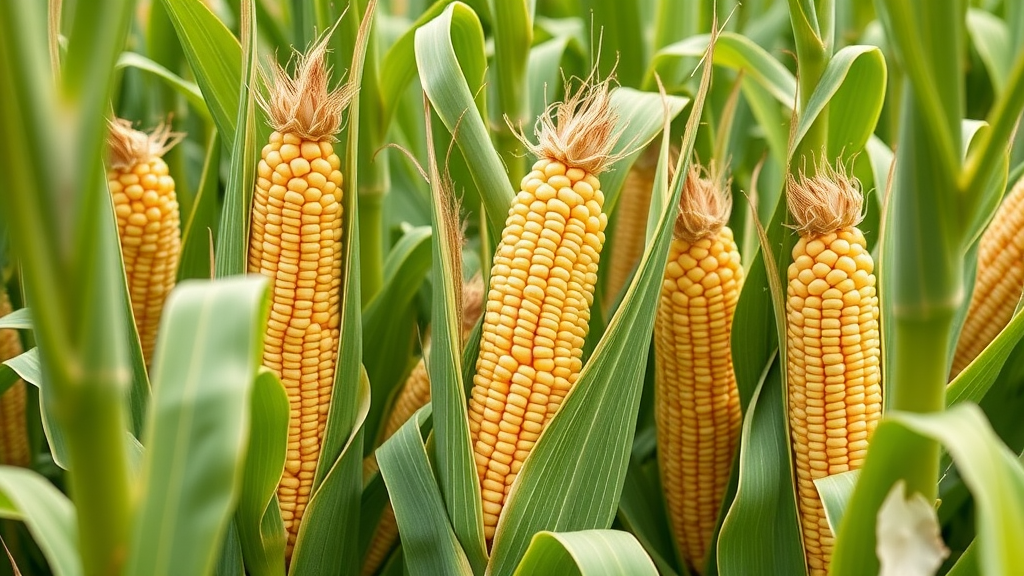
One of the most dramatic transformations in the history of agriculture took place roughly nine thousand years ago in the valleys of southern Mexico, when Indigenous farmers began propagating teosinte, a wild grass with a sprawling, branching habit and a handful of hard-cased kernels, into the plant we now know as maize. Over millennia of selection, that grass was reshaped into one of the world’s most productive cereal crops. A new study published in Nature Plants, highlighted by editor Jun Lyu, adds an important piece to the genetic story of this transformation by showing that the domestication of maize substantially influenced a trait of enormous practical consequence: harvest index, the fraction of a plant’s total biomass that ends up in the harvested grain.
Harvest index sits at the heart of crop productivity. It is the ratio of grain yield to total above-ground biomass, and it captures how efficiently a plant partitions its resources between the parts people eat and the parts they do not. While decades of research have documented how maize domestication restructured the plant’s overall architecture and the architecture of its male and female inflorescences, the question of whether and how domestication genetically shaped harvest index had remained open. Answering that question requires comparing wild, traditional, and modern material in a controlled framework, and that is precisely what a research team led by Li Guo of China Agricultural University set out to do.
The team assembled a diversity panel that spans the full arc of maize evolution: thirty lines of teosinte, the wild ancestor; twenty maize landraces, representing the semi-domesticated forms grown by early farmers; and fifty modern inbred lines, the elite genetic material that underpins contemporary maize breeding. By evaluating harvest index across these three groups, the researchers quantified the cumulative effect of domestication on this trait. The result was striking. On average, domestication increased harvest index by 81 percent, meaning that modern maize devotes a dramatically larger share of its total plant mass to grain than its wild progenitor does.
An 81 percent increase is not a subtle adjustment. It reflects a deep reorganization of how the maize plant allocates carbon, nutrients, and developmental resources. Wild teosinte invests heavily in stems, branches, tassels, and protective structures that help it survive in the wild, but produce little food. Domesticated maize, through the combined action of many genes selected over generations, was redirected toward producing large, exposed ears packed with kernels. Understanding which genetic elements underlie this shift is essential both for reconstructing the history of the crop and for guiding future breeding efforts, particularly as breeders seek to push yield gains further in the face of climate change and growing global demand for grain.
To dissect the genetics behind the shift, Guo and colleagues turned to quantitative trait locus mapping, a classical but powerful technique that links regions of the genome to measurable trait differences in segregating populations. The researchers created two maize-teosinte crossing populations, each mixing chromosomes from the wild ancestor and domesticated maize in different combinations, and then mapped which genomic intervals were associated with variation in harvest index. The scan identified twenty quantitative trait loci, confirming that harvest index is a genetically complex trait shaped by many loci spread across the maize genome, as expected for a trait so tightly connected to overall plant growth and partitioning.
Among those twenty loci, one stood out. A major locus, which the researchers named Harvest Index 1, or HI1, showed consistent and large effects in both crossing populations. Consistency across independent populations is an important signal in genetics: it indicates that the effect is real and robust rather than an artifact of a particular cross. The magnitude of the HI1 effect, together with its reproducibility, marks it as a principal genetic contributor to the harvest index difference between teosinte and maize.
To pin down the function of HI1 more precisely, the team used near-isogenic lines, pairs of plants that are genetically almost identical except for a small chromosome segment carrying either the teosinte or the maize version of the locus. This design isolates the effect of the target gene from the noise of the rest of the genome. When the researchers compared near-isogenic lines carrying the maize allele of HI1 with those carrying the teosinte allele, they confirmed that the maize allele increases harvest index. But the locus also influenced total biomass and grain weight, revealing a pleiotropic effect: a single genetic change simultaneously affecting multiple traits of the plant.
Pleiotropy is a recurring theme in crop domestication genetics. The best-known domestication genes in maize, such as those controlling branching and glume architecture, also produce coordinated suites of changes, because the regulatory variants involved often act on shared developmental pathways rather than on a single trait. The apparent role of HI1 in modulating biomass and grain weight alongside harvest index suggests it may tune the growth and partitioning machinery of the plant more broadly, rather than acting narrowly on grain fill alone. Notably, as the research highlight’s framing emphasizes, HI1 joins a growing list of domestication-selected enhancers, regulatory DNA elements that altered gene expression under human selection rather than changes in the protein-coding sequence itself. This regulatory mode of domestication has emerged as a hallmark of how early farmers, deliberately or not, reshaped crops: subtle changes in when and where genes are turned on can reorganize a plant’s architecture without breaking the genes outright.
The identification of HI1 carries implications well beyond evolutionary history. Harvest index has been a cornerstone of modern yield improvement, and the gains achieved during the Green Revolution of the twentieth century came largely from breeding varieties that invested more heavily in grain and less in straw. Knowing the specific loci that raise harvest index gives breeders molecular targets for the next round of improvement, and the teosinte alleles preserved at loci like HI1 represent a reservoir of functional variation that could be deployed either to boost or, in some contexts, to rebalance trait architecture. As genomic tools make it increasingly feasible to edit or introgress specific regulatory regions, the boundary between the wild ancestor and the modern crop becomes not just a historical record but a practical resource. The study of harvest index during maize domestication, with HI1 as its newly identified centerpiece, illustrates how a single enhancer selected by ancient farmers continues to shape the productivity of one of humanity’s most important food crops, and how decoding the genetic logic of domestication can inform the future of crop improvement.
Subject of Research: Identification of a domestication-selected enhancer, Harvest Index 1, that increased harvest index during maize domestication
Article Title: Yet another domestication-selected enhancer
Article References: Lyu, J. (2026). Yet another domestication-selected enhancer. Nature Plants. https://doi.org/10.1038/s41477-026-02416-3
Image Credits: AI Generated
DOI: 10.1038/s41477-026-02416-3
Keywords: maize domestication, teosinte, harvest index, HI1, enhancer, QTL mapping, near-isogenic lines, plant breeding, biomass allocation, grain yield, pleiotropy, Nature Plants
Cite Scienmag News
Alan Morgan. (September 13, 2026). A Single Genetic Enhancer Helped Turn Wild Teosinte into High-Yielding Maize. Scienmag. https://scienmag.com/a-single-genetic-enhancer-helped-turn-wild-teosinte-into-high-yielding-maize/
Alan Morgan. "A Single Genetic Enhancer Helped Turn Wild Teosinte into High-Yielding Maize." Scienmag, 13 September 2026, https://scienmag.com/a-single-genetic-enhancer-helped-turn-wild-teosinte-into-high-yielding-maize/. Accessed 4 October 2026.
Alan Morgan. "A Single Genetic Enhancer Helped Turn Wild Teosinte into High-Yielding Maize." Scienmag. September 13, 2026. https://scienmag.com/a-single-genetic-enhancer-helped-turn-wild-teosinte-into-high-yielding-maize/


