


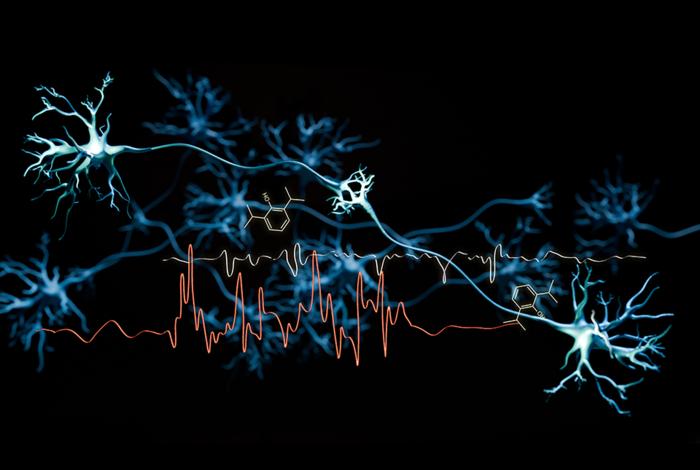
The general anesthetic propofol may hold the keys to developing new treatment strategies for epilepsy and other neurological disorders, according to a study led by researchers at Weill Cornell Medicine and Sweden’s Linköping University.

Credit: Dr. Elizabeth Kim
The general anesthetic propofol may hold the keys to developing new treatment strategies for epilepsy and other neurological disorders, according to a study led by researchers at Weill Cornell Medicine and Sweden’s Linköping University.
In their study, published July 31 in Nature, the researchers determined the high-resolution structural details of how propofol inhibits the activity of HCN1, an ion channel protein found on many types of neurons. Drug developers consider inhibiting HCN1 a promising strategy for treating neurologic disorders including epilepsy and chronic pain. The researchers also found, to their surprise, that when HCN1 contains either of two epilepsy-associated mutations, propofol binds to it in a way that restores its functionality.
“We might be able to exploit propofol’s unique way of binding to HCN1 for the treatment of these drug-resistant epilepsies and other HCN1-linked disorders, either by directly repurposing propofol or by designing new, more selective drugs that have the same mechanism of action,” said study co-senior author Dr. Crina Nimigean, professor of physiology and biophysics in anesthesiology at Weill Cornell Medicine.
The other co-senior author was Dr. Peter Larsson, a professor in the department of biomedical and clinical sciences at Linköping University.
The study’s first author was Dr. Elizabeth Kim, a postdoctoral research associate in the Nimigean laboratory in the Department of Anesthesiology at Weill Cornell Medicine. Dr. Xiaoan Wu, a postdoctoral research associate in the Larsson Laboratory, was co-first author. The laboratories of Dr. Alessio Accardi and Dr. Peter Goldstein from Weill Cornell Medicine also contributed to this work.
HCN ion channels in humans come in four basic forms, HCN1 to HCN4, and are found especially on cells in the heart and nervous system. They work as switches to control the electrical voltage across the cell membrane, opening to admit an inward flow of positively charged potassium and sodium ions—thus “depolarizing” the cell—when the voltage reaches a certain threshold. This function underpins much of the rhythmic activity of brain and heart muscle cells, which is why HCN channels are also called pacemaker channels.
In the study, the researchers used cryo-electron microscopy and other methods to determine, at near-atomic scale, how propofol reduces HCN1 activity—which it does with selectivity for HCN1 over other HCNs. They found that the drug inhibits HCN1 by binding within a groove between two elements of the channel protein’s central pore structure, making it harder for the pore to open.
As they investigated propofol’s action on HCN1, the researchers examined how the drug affects different known mutants of the channel, including mutants that leave it excessively open and are associated with hard-to-treat epilepsy syndromes such as early infantile epileptic encephalopathy (EIEE). The researchers were surprised to find that for two different HCN1 mutations that cause EIEE, propofol restores the mutant channels to normal or near-normal function.
From their experiments, the researchers derived a model in which the mutations decouple HCN1’s voltage-sensing and pore mechanisms, while propofol effectively recouples them, allowing membrane voltage to control ion flow again.
The results suggest at least two possibilities for translation to therapies. One is simply to use propofol, an existing, approved drug, to treat these HCN1-mutation epilepsies and potentially other HCN1-linked disorders. Propofol is a potent anesthetic that requires careful monitoring by anesthesiologists, but it might be able to restore HCN1 function at doses below those used for general anesthesia.
The other possibility, the researchers said, is to use the new structural data on propofol’s binding to design modified, non-anesthetic versions of propofol, or even completely different compounds, that bind to HCN1 with a similar effect but much more selectively—in other words, without binding to other channels, including other HCNs, in the body and thereby potentially causing unwanted side effects.
“For that we will need a better understanding of how propofol inhibits HCN1 better than other HCN channels,” Dr. Kim said.
The work presented here was supported in part by the National Institute of General Medical Sciences and the National Institute of Neurological Disorders and Stroke, both part of the National Institutes of Health, through grant numbers GM124451, GM139164, GM128420, R42NS129370, NS137561 and GM145091. Additional support was provided by the Hartwell Foundation.
Journal
Nature
Cite Scienmag News
Kendall Mcintyre. (July 31, 2024). A new use for propofol in treating epilepsy? Scienmag. https://scienmag.com/a-new-use-for-propofol-in-treating-epilepsy/
Kendall Mcintyre. "A new use for propofol in treating epilepsy?" Scienmag, 31 July 2024, https://scienmag.com/a-new-use-for-propofol-in-treating-epilepsy/. Accessed 6 September 2026.
Kendall Mcintyre. "A new use for propofol in treating epilepsy?" Scienmag. July 31, 2024. https://scienmag.com/a-new-use-for-propofol-in-treating-epilepsy/

