


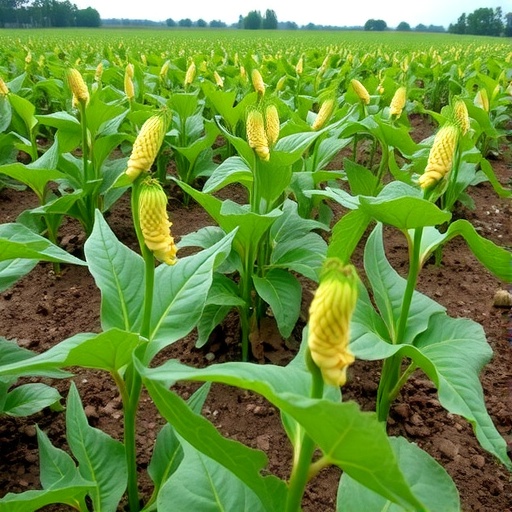
Waterlogging is a significant challenge that adversely impacts agricultural productivity, particularly in soybean cultivation. In a recent study, Sankarapillai et al. (2025) shed light on the resilience of soybean plants when confronted with such severe environmental stressors during critical developmental phases, namely flowering and early seed filling. Understanding the recovery mechanisms of soybean under waterlogging conditions could significantly influence agricultural practices and crop management strategies moving forward in an era marked by unpredictable weather patterns.
Soybeans are a vital crop on a global scale, with vast implications for food security and economic stability. Their growth can be severely hampered by waterlogged conditions, which exacerbate stress as plants struggle to manage nutrient uptake and oxygen availability in the soil. The current study meticulously investigates how soybean plants can recover post-waterlogging—a critical aspect for optimizing yields and ensuring food availability.
The research team conducted a series of experiments to simulate waterlogged conditions, replicating scenarios that closely mimic real-world phenomena frequently encountered due to heavy rainfall or poor drainage. By focusing on pivotal stages of soybean development, namely flowering and the early seed filling period, the study meticulously assessed the physiological and biochemical responses of the plants. The adaptations observed in the soybean cultivars selected could inform resilient agricultural strategies, allowing farmers to better prepare for the challenges of climate change.
One notable finding from this research was the crucial role of root respiration in the recovery process following waterlogging. Soybean plants exhibit remarkable adaptive mechanisms aimed at enhancing their oxygen uptake efficiency in submerged soils. During waterlogged conditions, the roots of soybean plants can form aerenchyma, specialized tissues that assist in gas exchange, thereby supporting root survival. This adaptation mitigates the adverse effects of hypoxic conditions, allowing the plant to regain its vigor after the water recedes.
Moreover, the study detailed the impact of waterlogging on the production of reactive oxygen species (ROS) within the soybean plants. Under stress conditions, the balance of ROS can shift dramatically, leading to both beneficial and detrimental effects. The researchers found that while elevated ROS levels can signal stress responses and trigger protective mechanisms, excessive accumulation can lead to cellular damage. This duality highlights the importance of managing stress-induced responses to optimize recovery and growth.
Another facet of the research focused on the biochemical pathways activated during waterlogging. The signaling molecules and stress hormones, such as abscisic acid (ABA), play a significant role in plant responses to flooding. The results underscored the importance of these biochemical messengers in regulating stomatal closure, a mechanism that helps to conserve water and maintain photosynthetic activity, critical for recovery after such stress.
Additionally, the study evaluated the impact of waterlogging on the nutrient availability within the soil and how it affects soybean growth. The researchers found that nitrogen and phosphorus levels are often compromised during waterlogged conditions, leading to deficiencies that hinder recovery. The implications of this finding challenge current agricultural practices, suggesting that farmers may need to implement tailored nutrient management strategies to support soybean resilience in flood-prone areas.
The interaction between soil microbiota and soybean root systems was another pivotal point of investigation. Beneficial microbes play an essential role in nutrient cycling and plant health. The study highlighted how waterlogging can alter microbial communities in the rhizosphere, leading to shifts in symbiotic relationships. This understanding may pave the way for developing agronomic practices that enhance microbial health, subsequently supporting soybean recovery and productivity.
As the world grapples with climate change and increasingly erratic weather patterns, the findings of this study possess significant implications for sustainable agriculture. By identifying the genetic markers associated with waterlogging tolerance in soybeans, plant breeders may be better equipped to develop cultivars capable of thriving under adverse conditions. This research underscores the importance of integrating genetic diversity into breeding programs, facilitating the creation of robust crops that can withstand environmental stressors.
Furthermore, policy implications arise from this research, emphasizing the need for supportive frameworks that prioritize climate-resilient agricultural practices. Governments and agricultural organizations must collaborate closely to disseminate knowledge and resources to farmers, particularly in regions vulnerable to flooding. This proactive approach will be essential in maintaining soybean production, ensuring food security, and fostering economic stability in agricultural communities.
The intersection of agriculture and climate change necessitates ongoing research such as that performed by Sankarapillai and colleagues. As farmers adapt to the realities of a warming world, insights into the physiological and biochemical responses of soybean plants to challenges like waterlogging will remain indispensable. Continued exploration in this domain will not only inform best practices in crop management but also contribute to the overarching goal of sustainable development in agriculture.
In conclusion, the comprehensive research conducted on soybean recovery post-waterlogging provides a wealth of information that can significantly influence agricultural practices. With findings indicating crucial adaptations at physiological and biochemical levels, the study offers a roadmap for enhancing resilience in soybeans. As the agricultural community faces increasing pressure from changing environmental conditions, harnessing these insights could become pivotal in ensuring stable and productive crop yields in the years to come.
Cite Scienmag News
Gideon R. (October 28, 2025). Soybean Resilience: Thriving After Flowering Waterlogging. Scienmag. https://scienmag.com/soybean-resilience-thriving-after-flowering-waterlogging/
Gideon R. "Soybean Resilience: Thriving After Flowering Waterlogging." Scienmag, 28 October 2025, https://scienmag.com/soybean-resilience-thriving-after-flowering-waterlogging/. Accessed 28 August 2026.
Gideon R. "Soybean Resilience: Thriving After Flowering Waterlogging." Scienmag. October 28, 2025. https://scienmag.com/soybean-resilience-thriving-after-flowering-waterlogging/


