


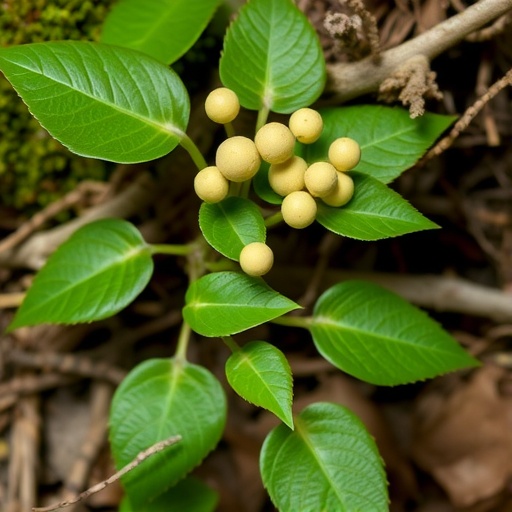
In a groundbreaking study poised to reshape the landscape of natural antifungal therapies, researchers have unveiled the potent bioactive compounds within Gymnema sylvestre, a plant long revered in traditional medicine systems. The research not only identifies the key antifungal agents but also pioneers optimized processes for their extraction and application, promising a new wave of phytochemical-based antimycotic interventions. This study’s revelations are significant in light of the ongoing global quest for alternatives to conventional antifungal drugs, which face escalating resistance challenges and adverse side effects.
The investigation into Gymnema sylvestre’s bioactive compounds focused on isolating and characterizing phytochemicals with the highest antifungal efficacy against a spectrum of pathogenic fungi. By leveraging advanced chromatographic and spectroscopic techniques, the research dissected the plant’s complex matrix to pinpoint specific molecules responsible for its antifungal attributes. These compounds exhibited remarkable inhibitory activity against fungi that are notorious for causing opportunistic infections, especially in immunocompromised individuals.
Critical to the study’s novelty is the meticulous process optimization framed around enhancing the yield and potency of these antifungal agents. The researchers experimented with various extraction solvents, temperatures, and durations to maximize the concentration of bioactives without compromising their structural integrity or functional activity. This methodical approach ensures that the derived compounds retain their pharmacological efficacy, a crucial factor for potential therapeutic formulation.
Moreover, the research underscores the multifaceted nature of Gymnema sylvestre’s antifungal potential. Beyond mere fungal growth suppression, the bioactives appear to disrupt fungal cell membrane integrity and interfere with key metabolic pathways essential for fungal survival and proliferation. Such a dual mode of action is invaluable in reducing the likelihood of resistance development, a growing concern with monotherapeutic antifungal agents.
The relevance of this study extends into the broader spectrum of food science and biotechnology. Gymnema sylvestre’s bioactive components, when optimized and applied appropriately, could serve as natural preservatives to prevent fungal contamination in food products, thereby enhancing shelf life and food safety. This aligns with increasing consumer demand for natural additives over synthetic preservatives, which often carry health risks and regulatory limitations.
Intriguingly, the researchers also explored the scalability of the extraction process, addressing a critical bottleneck in translating laboratory findings into industrial applications. Through optimization, the team developed protocols that are not only efficient but cost-effective, envisioning the production of antifungal preparations on a commercial scale. This foresight is instrumental for future commercialization and widespread use of plant-derived antifungal agents.
The study also dealt with comprehensive antifungal efficacy testing, utilizing a range of fungal species to validate the broad-spectrum activity of the extracted compounds. These tests involved both in vitro assays and advanced imaging techniques to visualize fungal morphology changes post-treatment, providing robust evidence of the bioactives’ disruptive effects on fungal cells. This methodological rigor enhances confidence in the practical applicability of the findings.
In parallel, the research delves into the chemical structures of the bioactive constituents, revealing complex triterpenoid saponins and flavonoids as primary antifungal agents. The elucidation of these structures via nuclear magnetic resonance (NMR) and mass spectrometry (MS) not only advances the understanding of Gymnema sylvestre’s phytochemistry but also opens avenues for synthetic analog development, potentially leading to even more potent antifungal drugs.
The implications of this discovery are profound for antifungal drug development, especially in an era marked by rising fungal infections and limited pharmacological options. Gymnema sylvestre, long used for glycemic control in traditional medicine, emerges here as a source of powerful antifungal compounds, suggesting a new paradigm where multifunctional plant metabolites address diverse health challenges.
This comprehensive study further contributes to sustainable medicine by promoting plant-based therapeutics, which typically have a lower environmental footprint compared to synthetic pharmaceuticals. By validating Gymnema sylvestre’s antifungal potential and optimizing its extraction, the research champions a green approach that could alleviate the pressures on conventional drug manufacturing and reduce chemical pollution associated with antifungal agents.
Notably, the research team also addressed potential cytotoxicity concerns, ensuring that the antifungal extracts exhibit selective toxicity toward fungal cells without adverse effects on mammalian cells. This safety profiling is paramount for future clinical applications and regulatory approval, situating Gymnema sylvestre’s bioactives as promising candidates for safe therapeutic use.
The integration of biotechnological techniques in this research exemplifies modern approaches to harnessing natural products. The synergy between traditional knowledge and contemporary analytical tools facilitated a granular understanding of the plant’s bioactive profile, underscoring the importance of interdisciplinary strategies in natural product research.
In an age where antimicrobial resistance looms as a global health crisis, the identification of novel antifungal agents from Gymnema sylvestre offers a beacon of hope. This plant’s bioactive compounds could serve as prototypes for next-generation antifungal drugs, potentially transforming treatment protocols and reducing reliance on conventional, resistance-prone therapies.
The study’s findings catalyze further investigations into Gymnema sylvestre’s pharmacodynamics and pharmacokinetics, crucial steps in translating laboratory success into clinical solutions. Understanding absorption, distribution, metabolism, and excretion of these bioactives will pave the way for effective dosage forms and delivery mechanisms tailored for optimal antifungal efficacy.
Ultimately, this innovative research project reinforces the pivotal role of ethnobotany and natural product chemistry in contemporary drug discovery. By unveiling the bioactive spectrum of Gymnema sylvestre and fine-tuning extraction methodologies, the study not only expands the pharmacopeia of antifungal agents but also opens new frontiers for integrating botanical resources into mainstream healthcare paradigms.
Cite Scienmag News
Drew Townsend. (October 28, 2025). Gymnema sylvestre’s Antifungal Compounds and Optimization. Scienmag. https://scienmag.com/gymnema-sylvestres-antifungal-compounds-and-optimization/
Drew Townsend. "Gymnema sylvestre’s Antifungal Compounds and Optimization." Scienmag, 28 October 2025, https://scienmag.com/gymnema-sylvestres-antifungal-compounds-and-optimization/. Accessed 5 September 2026.
Drew Townsend. "Gymnema sylvestre’s Antifungal Compounds and Optimization." Scienmag. October 28, 2025. https://scienmag.com/gymnema-sylvestres-antifungal-compounds-and-optimization/


