


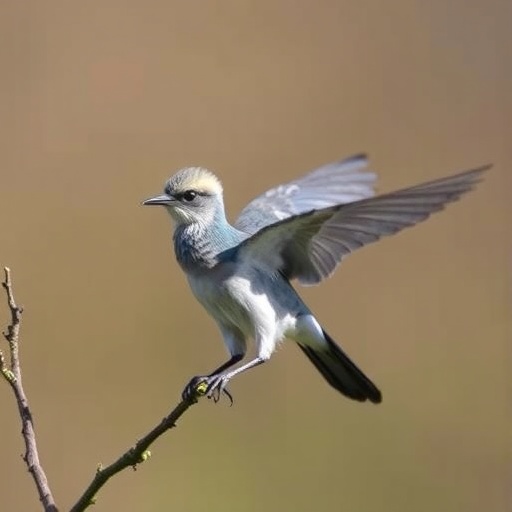
A groundbreaking longitudinal study conducted at Lund University in southern Sweden has revealed a striking correlation between rising spring temperatures and a dramatic increase in the transmission of avian malaria within a local population of blue tits (Cyanistes caeruleus). Over an extensive 30-year period, researchers meticulously gathered biological samples from hundreds of these small passerine birds at a single breeding site, enabling unprecedented insight into the dynamic relationship between climate change and infectious disease ecology in wildlife.
This comprehensive investigation highlights that during the early stages of the birds’ breeding season, specifically between May 9 and June 24, elevated ambient temperatures have more than doubled the incidence of malaria infections carried by the blue tits. Data indicates that the prevalence of infection, which was around 45% in the mid-1990s, surged to between 85% and 90% in recent years—marking an alarming increase and implicating climate as a key driver in disease dynamics. Notably, this temporal specificity underscores the importance of focusing on critical developmental windows when the nestlings are most vulnerable to vector-borne pathogens.
The parasites responsible for avian malaria belong to the genus Plasmodium, sharing a close phylogenetic relationship with human malaria parasites. These protozoan parasites rely on blood-feeding dipteran vectors—primarily mosquitoes—to complete their complex life cycles. As temperatures rise, the parasites’ extrinsic incubation period shortens, potentially accelerating transmission cycles, while warmer conditions may also enhance vector survival, biting rates, and host-seeking behavior. The study’s lead investigator, Olof Hellgren, emphasizes that the research enhances understanding of how climate variables precisely influence infection rates, moving beyond simplistic correlations to pinpoint discrete ecological mechanisms that facilitate disease spread.
Initially, the long-term sampling effort had not been designed to address climate change impacts; it was primarily focused on other ecological questions. However, the extensive dataset has proven invaluable, demonstrating how investments in sustained ecological monitoring can yield unforeseen yet critically important insights into emergent environmental health issues. Jan-Åke Nilsson, professor of biology involved in the project, reflects on this serendipity, noting that long-term ecological data repositories can serve as crucial resources for deciphering complex interactions in a changing world.
Further exploration into the mechanisms driving the temperature-dependent rise in malaria infections suggests a confluence of factors. Preliminary findings indicate that during warmer springs, increases in ambient temperature likely boost mosquito abundance and nesting site fidelity, leading to a higher frequency of blood meals on blue tit nestlings. Concurrently, elevated temperatures may enhance parasite replication rates, facilitating more efficient infection and transmission cycles. The interplay of these factors creates a conducive environment for amplified disease spread during this narrow time window—an ecological phenomenon with significant implications for avian population health and conservation strategies.
The implications of this research extend well beyond the local Swedish habitat. Given the widespread distribution of malaria-like parasites and their vectors worldwide, temperature-driven changes in pathogen transmission dynamics represent a global concern. Climate-induced expansions of vector ranges and alterations in host susceptibility could precipitate cascading effects on ecosystem stability, biodiversity, and wildlife population resilience. Thus, this study not only informs regional conservation practices but also contributes critical data to global models projecting disease emergence and re-emergence under future climate scenarios.
This research provides one of the first robust empirical demonstrations from Sweden linking climate change directly to the increase in vector-borne wildlife diseases. The specificity of the transmission window during spring breeding highlights the nuanced and often indirect ways in which climate variables can modulate pathogen-host-vector interactions. Such insights emphasize the need for precise temporal and ecological frameworks when formulating strategies to mitigate climate change impacts on wildlife health.
As the study progresses, the researchers aim to dissect the relative contributions of vector ecology and parasite biology in facilitating the observed increase in infection rates. Understanding whether the enhanced transmission is primarily driven by shifts in mosquito behavior or by accelerated parasite development within hosts under warmer conditions will be central to developing targeted interventions. This multidisciplinary approach, integrating field ecology, parasitology, and climate science, exemplifies the complex nature of disease ecology in the Anthropocene.
Moreover, the findings underscore the critical role of entomological surveillance integrated with wildlife monitoring programs, enabling early detection and response to emerging disease threats linked to environmental change. As climate change continues to redefine ecological baselines, such long-term, fine-scale research will be indispensable for anticipating and managing the health of animal populations that play foundational roles in their ecosystems.
The study was published in the reputable journal Global Change Biology and offers a compelling case study in the tangible consequences of climate warming for infectious disease dynamics in non-human hosts. It sets a precedent for how well-designed, sustained ecological research can uncover subtle yet consequential impacts of global change, providing vital knowledge to guide conservation and public health policies alike.
In conclusion, the Lund University investigation into blue tit avian malaria vividly illustrates how rising temperatures within a defined spring period have exacerbated the transmission of vector-borne parasites, doubling infection rates over three decades. This work invites broader consideration of climate-disease linkages across taxa and geographies, ultimately reinforcing the urgency of addressing climate change to safeguard biodiversity and ecosystem health worldwide.
Cite Scienmag News
Russell Cooper. (October 23, 2025). Rising Nordic Spring Temperatures Trigger a Twofold Increase in Avian Malaria Cases. Scienmag. https://scienmag.com/rising-nordic-spring-temperatures-trigger-a-twofold-increase-in-avian-malaria-cases/
Russell Cooper. "Rising Nordic Spring Temperatures Trigger a Twofold Increase in Avian Malaria Cases." Scienmag, 23 October 2025, https://scienmag.com/rising-nordic-spring-temperatures-trigger-a-twofold-increase-in-avian-malaria-cases/. Accessed 6 September 2026.
Russell Cooper. "Rising Nordic Spring Temperatures Trigger a Twofold Increase in Avian Malaria Cases." Scienmag. October 23, 2025. https://scienmag.com/rising-nordic-spring-temperatures-trigger-a-twofold-increase-in-avian-malaria-cases/


