


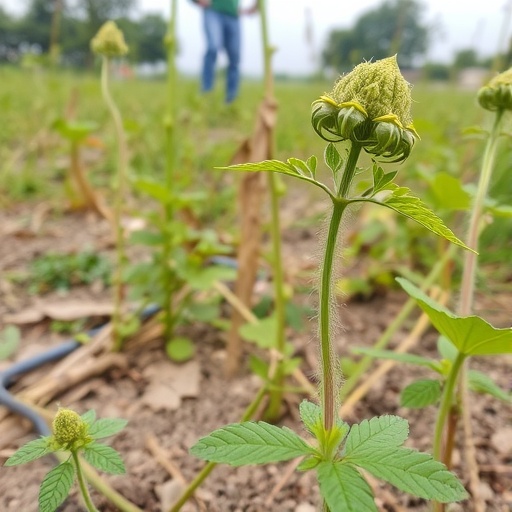
In an age where environmental degradation is often sidelined amidst rapid industrialization, the significance of plants in monitoring air pollution has gained unprecedented attention. A recent study conducted by researchers from India has delved deep into the intertwining relationship between air pollution tolerance and heavy metal bioaccumulation in plants from the Raniganj region—a truth that unveils alarming insights regarding environmental health. This work highlights not just the resilience of flora amidst pollution but also their role in signaling our ecological status, making their importance paramount in the narrative of modern environmental assessment.
As urbanization continues to expand, the impact of pollutants in terrestrial ecosystems has become an urgent concern. The study under discussion brings to light how plants, often considered mere components of our landscape, serve as sentinels of air quality. By investigating various plant species in areas impacted by pollution in Raniganj, the researchers managed to establish a direct link between the levels of air pollutants and the capacity of these species to thrive—or diminish—in such environments, thus paving the way for innovative monitoring strategies.
The research team meticulously measured air pollution tolerance indices across several plant species, assessing how different species responded to varying levels of pollutants. Their findings reveal not just remarkable adaptability but striking differences in tolerance levels. Specific species demonstrated a remarkable ability to withstand toxic air quality in areas heavily affected by pollutants. Such traits are crucial, not only for plant survival but also for maintaining ecological balance.
Central to this study is the concept of bioaccumulation—how plants take up heavy metals from the soil and air. This mechanism is not just a biological reaction; it serves as a potential warning system for human and ecological health. The researchers embarked on rigorous assessments of accumulated metals in the plant tissues, detecting alarming levels of metals such as lead, cadmium, and arsenic. These elements, often resultant of industrial discharges and urban waste, pose severe health risks, highlighting that the state of our flora can be a direct reflection of our environmental negligence.
Moreover, this comprehensive study emphasizes not only the biological aspects of pollution tolerance but also the implications for environmental monitoring and public health. By utilizing plants as bioindicators, scientists can better evaluate the severity of pollution in specific regions, facilitating the development of more effective guidelines and policies to shield the environment from further deterioration. This proactive approach can potentially revolutionize how we manage polluted areas, alerting authorities to threats that need immediate attention.
Intriguingly, the findings also align with a growing body of evidence advocating for the integration of plant-based assessment methods in environmental policy-making and regulation. Legislative frameworks currently in place for monitoring air quality and pollution may require significant overhaul to incorporate these botanical indicators, thus allowing for a more comprehensive evaluation of ecological wellbeing. Indeed, plants hold more power in their petals than previously recognized.
What resonates deeply from this research is the clear call for action. It urges both the scientific community and policymakers to collaborate; leveraging the inherent capacity of plants not only as detoxifying agents but also as vital components for environmental health assessments. This collaboration could foster developments in bioremediation techniques, where we harness the natural capabilities of plants to detoxify environments plagued by heavy metals and other pollutants.
Further, the study indirectly touches upon the socioeconomic implications of air quality. Communities living in polluted areas often bear the brunt of health issues stemming from exposure to air quality degradation. Through the lens of this research, we begin to recognize the intersectionality of environmental health and human welfare—not merely an academic pursuit but a pressing reality that demands community involvement and advocacy.
Looking forward, one cannot help but wonder how these insights could shape future environmental strategies. The imperative to protect plant biodiversity in polluted areas becomes increasingly essential, as their health is inextricably intertwined with our own. Conservation efforts could be recalibrated to include a focus on preserving the flora that demonstrates resilience to pollution, thereby ensuring these species remain present to not only survive but also thrive in a rapidly changing environment.
Communities must become more aware of the role they play in this ecosystem dynamic. Public participation in pollution monitoring through community-led initiatives can elevate the discourse around air quality. Such empowerment can cultivate a culture of responsibility, where residents take greater ownership of their local environments and actively engage in restoration projects, promoting both ecological and public health benefits.
The insights gathered from Raniganj offer a formidable opportunity for future research to investigate not only other geographical locations but also different ecosystems worldwide. By expanding the scope of this research globally, we can uncover new avenues for sustainable practices in plant management, and extend our understanding of bioindicator species that could be effective in monitoring environmental health across diverse contexts.
In the grand tapestry of ecological dynamics, plants emerge not merely as passive entities but as essential actors shaping our interactions with the environment. Their ability to withstand contaminants and still flourish under dire circumstances speaks volumes of nature’s resilience. Yet, this study serves as a stark reminder that we hold the pen to write the next chapter in the intertwined fate of humanity and nature. By choosing to invest in environmental protection and advocate for sustainable practices, we can alter our trajectory toward a healthier planet.
As the urgency surrounding climate change mounts, ongoing studies like this one are crucial in refining our understanding of ecological relationships and resilience. As we gaze towards the future, let’s embrace the lessons learned and commit to fostering a harmonious relationship with our natural environment, ensuring that the plants that so valiantly withstand our pollution continue to thrive for generations to come. Undoubtedly, the path to sustainable environmental health begins with a deeper and more respectful understanding of the interdependence of all living systems.
Ultimately, the researchers’ findings underscore a universal truth: the environment speaks through its organisms, and by listening closely, we may still navigate our way back to a balanced coexistence with nature.
Ghosh, P., Saha, S., Das, T. et al. Assessment of air pollution tolerance and heavy metal bioaccumulation in plants from areas surrounding Raniganj, India: implications for environmental monitoring. Environ Monit Assess 197, 1130 (2025). https://doi.org/10.1007/s10661-025-14591-5
Cite Scienmag News
Russell Cooper. (September 20, 2025). Assessing Plant Tolerance to Pollution in Raniganj. Scienmag. https://scienmag.com/assessing-plant-tolerance-to-pollution-in-raniganj/
Russell Cooper. "Assessing Plant Tolerance to Pollution in Raniganj." Scienmag, 20 September 2025, https://scienmag.com/assessing-plant-tolerance-to-pollution-in-raniganj/. Accessed 3 September 2026.
Russell Cooper. "Assessing Plant Tolerance to Pollution in Raniganj." Scienmag. September 20, 2025. https://scienmag.com/assessing-plant-tolerance-to-pollution-in-raniganj/


