


Bee and butterfly populations are in decline in major regions of North America due to ongoing environmental change, and significant gaps in pollinator research limit our ability to protect these species, according to a study published May 15, 2024 in the open-access journal PLOS ONE by Sara Souther of Northern Arizona University, US, and colleagues.

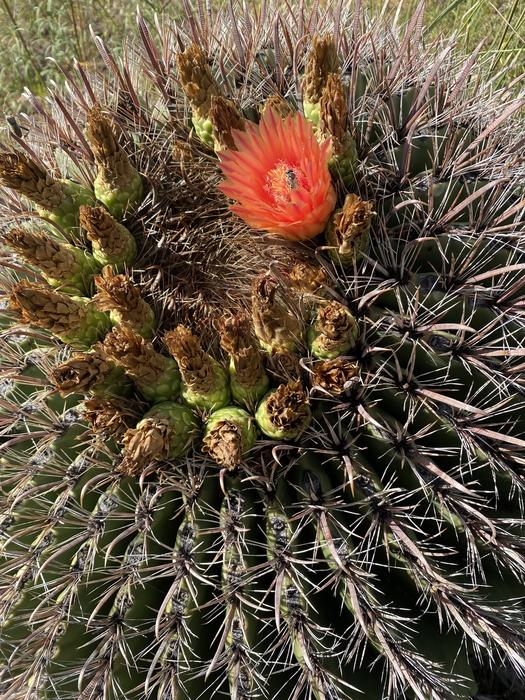
Credit: Sara Souther, CC-BY 4.0 (
Bee and butterfly populations are in decline in major regions of North America due to ongoing environmental change, and significant gaps in pollinator research limit our ability to protect these species, according to a study published May 15, 2024 in the open-access journal PLOS ONE by Sara Souther of Northern Arizona University, US, and colleagues.
Recent research has detected declines in populations of pollinator species, sparking alarm from scientists and policymakers concerned about negative impacts on ecosystems and agriculture. These declines have been linked to various factors including climate change, habitat loss, and invasive species, but reports are often limited to well-studied species in easily accessible regions. In this study, Souther and colleagues used data compiled on four major families of bees and butterflies to construct species distribution models, enabling them to assess changes over time and space across North America.
The highest species richness was found along North America’s West Coast, especially California and the Rocky Mountains. However, the models revealed declining species richness in all four families over the past century in western North America. In contrast, there were disproportionate increases in eastern North America. The authors also assessed similar data for a broader sample of potential pollinator species, including both invertebrate and vertebrate species of conservation concern, and found similar trends.
Comparisons with climate data indicate that these population changes are at least partly related to the impacts of recent climate change – such as prolonged drought and habitat degradation – and regions experiencing apparent population declines have also been heavily impacted by anthropogenic land use. The authors note too that the apparent increases in the eastern U.S. may partly reflect increased detections in these populous areas, given an increase in citizen science and similar data collection efforts.
Overall, this study detects broad trends of population changes in bees and butterflies, as well as other potential pollinators. These results help to identify regions of declining populations where researchers and policymakers can prioritize conservation efforts. This study also identifies gaps in existing knowledge of pollinators, including regions that are more poorly sampled and species that are less well studied, limitations that might be overcome by improved monitoring methods and enhanced citizen science efforts.
The authors add: “Existing records of North American pollinators suggest that diversity has broadly declined in the western US and southern Mexico in recent decades. Losses are consistent with changes in climate and suggest a need for increased monitoring to inform conservation and mitigation actions.”
#####
In your coverage please use this URL to provide access to the freely available article in PLOS ONE:
Citation: Souther SK, Sandor ME, Sample M, Gabrielson S, Aslan CE (2024) Bee and butterfly records indicate diversity losses in western and southern North America, but extensive knowledge gaps remain. PLoS ONE 19(5): e0289742.
Author Countries: USA
Funding: This study was funded by a grant to C.A. by the Commission for Environmental Cooperation (http://www.cec.org/). The funders had no role in study design, data collection and analysis, decision to publish, or preparation of the manuscript.
Journal
PLoS ONE
Method of Research
Computational simulation/modeling
Subject of Research
Not applicable
Article Title
Bee and butterfly records indicate diversity losses in western and southern North America, but extensive knowledge gaps remain
Article Publication Date
15-May-2024
COI Statement
The authors have declared that no competing interests exist.
Cite Scienmag News
Sloane Callahan. (May 15, 2024). Bees and butterflies on the decline in western and southern North America. Scienmag. https://scienmag.com/bees-and-butterflies-on-the-decline-in-western-and-southern-north-america/
Sloane Callahan. "Bees and butterflies on the decline in western and southern North America." Scienmag, 15 May 2024, https://scienmag.com/bees-and-butterflies-on-the-decline-in-western-and-southern-north-america/. Accessed 4 September 2026.
Sloane Callahan. "Bees and butterflies on the decline in western and southern North America." Scienmag. May 15, 2024. https://scienmag.com/bees-and-butterflies-on-the-decline-in-western-and-southern-north-america/

