


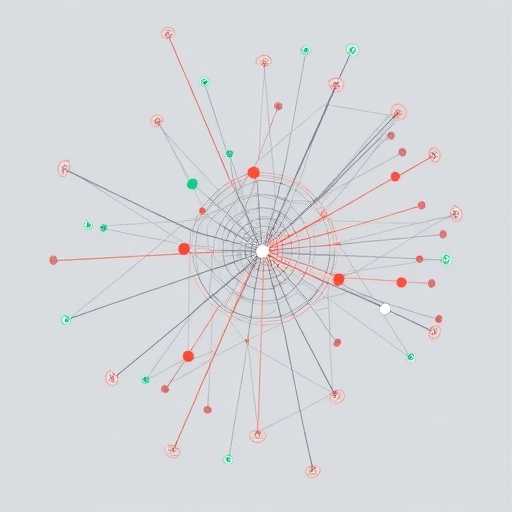
In a groundbreaking exploration of the intricate psychological interplay affecting millions worldwide, a recent study conducted by Dong, Li, Fan, and colleagues sheds new light on the complex nexus of anxiety, depression, and loneliness among middle-aged and elderly populations in the Xining area of China. This research, published in the prestigious journal BMC Psychology, represents a significant stride in understanding not only the prevalence of these mental health challenges but also their interdependent dynamics via state-of-the-art network analysis methodologies.
As the global demographic landscape shifts toward an aging population, the mental wellbeing of older adults has emerged as a critical public health concern. Traditionally, studies have examined anxiety, depression, and loneliness as separate entities; however, the innovative network approach employed by Dong et al. redefines this perspective by investigating these conditions as an interconnected system of symptoms and influences, unveiling patterns that might otherwise go unnoticed in conventional research paradigms.
At the core of this research is the use of network analysis, a cutting-edge analytical framework that conceptualizes psychological disorders not merely as latent diseases causing symptoms but as systems where symptoms actively interact with one another. By mapping these interactions, researchers can identify “central” symptoms that serve as key bridges within the network, potentially guiding focused therapeutic interventions that could disrupt detrimental cycles of comorbidity.
The study focused on a substantial cohort of middle-aged and elderly individuals residing in Xining, a city representative of many urban centers facing rapid societal changes in China. The authors meticulously collected data through standardized psychological assessments, capturing the intensity and frequency of symptoms related to anxiety, depression, and loneliness. This comprehensive dataset enabled the construction of a detailed symptom network, revealing a nuanced portrait of mental health challenges in this unique socio-cultural context.
What makes the findings especially compelling is the precision with which the network highlights critical “hub” symptoms. For instance, feelings of persistent sadness or hopelessness might not only be prevalent but also serve as bridges connecting depressive symptoms with anxiety-related restlessness. Similarly, aspects of social withdrawal characteristic of loneliness could intensify both anxious rumination and depressive lethargy, forming a self-reinforcing triad detrimental to overall mental health.
Beyond identifying these hubs, the analysis delineates symptom clusters that tend to co-occur, suggesting that interventions targeting such clusters may yield synergistic benefits. The research underscores that effective mental health strategies should move beyond treating discrete diagnoses and instead embrace the interconnected symptom architecture, potentially revolutionizing therapeutic approaches for the elderly.
Importantly, the authors discuss how socio-environmental factors in the Xining area might exacerbate or mitigate these symptom networks. For instance, rapid urbanization, changing family structures, and shifting cultural expectations contribute to the psychological landscape in compelling ways. The erosion of traditional support systems often linked to collectivist societies intensifies loneliness, which, as revealed by the network, plays a pivotal role in the mental health of the elderly.
Moreover, this research possesses substantial implications for digital mental health technologies. By pinpointing which symptoms act as “keystone” elements within the network, AI-driven interventions and app-based therapies could be customized to monitor and alleviate these key symptoms, offering scalable mental health support for aging populations worldwide.
The study is equally innovative in its methodological rigor. The authors employed robust statistical techniques to ensure the reliability and validity of the symptom network, addressing common challenges such as distinguishing direct symptom-to-symptom associations from spurious correlations. This level of analytical sophistication sets a new standard for mental health research, propelling the field toward more nuanced and actionable insights.
Additionally, the research highlights gender and age-specific variations within the network. For example, patterns of interaction among symptoms differ subtly between men and women, or between the younger versus older segments of the middle-aged and elderly bracket. These differences underscore the necessity for personalized care strategies that reflect demographic heterogeneity, rather than one-size-fits-all models.
Another pivotal contribution of this study is its relevance for policymakers and public health planners. Recognizing the symptom network structure provides a roadmap for allocation of resources and design of community programs that not only address mental health disorders in isolation but also prioritize reducing loneliness as a central factor. Such approaches promise to enhance the mental resilience of aging societies.
Furthermore, the research addresses a critical knowledge gap in psychological studies within non-Western populations. While much of the existing literature on anxiety, depression, and loneliness is centered on Western cohorts, this study’s focus on the urban Chinese context broadens the understanding of these phenomena globally, emphasizing the importance of cultural and environmental particularities in shaping mental health.
The implications of these findings extend into clinical psychology as well. Psychotherapists and mental health professionals might benefit from integrating network-informed assessments into their diagnostic and treatment planning workflows. By doing so, therapy can become more efficient, targeting the most influential symptoms to break detrimental feedback loops within the individual’s mental health landscape.
At the societal level, the study prompts a re-examination of how communities and families support older members. Cultural shifts associated with modernization can leave elderly individuals socially isolated, amplifying loneliness – a symptom central to the network with cascading effects on anxiety and depression. This calls for renewed efforts in social policy aimed at fostering intergenerational connectivity and community engagement programs.
The authors also confront potential limitations candidly: the cross-sectional nature of the data restricts causal inference, and longitudinal studies are essential to unravel how symptom networks evolve over time. Nonetheless, their work paves the way for future research exploring temporal dynamics and intervention impacts within these symptom networks.
In summary, the study by Dong et al. revolutionizes our grasp of anxiety, depression, and loneliness among middle-aged and elderly adults, employing a sophisticated network analytical lens that highlights symptom interdependencies within a culturally distinctive backdrop. Their work challenges conventional paradigms and opens promising avenues for targeted mental health interventions, public health strategies, and technological innovations tailored to the nuanced needs of aging populations.
As global aging continues apace, such insights are indispensable for tackling the silent epidemic of mental health disorders among older adults. The network approach provides a compelling roadmap, indicating that by addressing key nodal symptoms and social determinants, we can foster psychological resilience and improve quality of life on a mass scale.
This pioneering research hence represents not only a valuable addition to psychological science but also an urgent call to action. Mental health care systems worldwide must embrace integrated, symptom-focused perspectives that acknowledge the complexity and interconnectedness of mental health challenges in diverse societies and demographics.
The study investigates the interrelationships among anxiety, depression, and loneliness in middle-aged and elderly individuals, using network analysis to uncover symptom interactions within the population of the Xining area, China.
A network analysis study of anxiety, depression and loneliness among middle-aged and elderly people in Xining area.
Cite Scienmag News
Glenn Wilkins. (August 18, 2025). Network Analysis of Mental Health in Xining Adults. Scienmag. https://scienmag.com/network-analysis-of-mental-health-in-xining-adults/
Glenn Wilkins. "Network Analysis of Mental Health in Xining Adults." Scienmag, 18 August 2025, https://scienmag.com/network-analysis-of-mental-health-in-xining-adults/. Accessed 1 September 2026.
Glenn Wilkins. "Network Analysis of Mental Health in Xining Adults." Scienmag. August 18, 2025. https://scienmag.com/network-analysis-of-mental-health-in-xining-adults/


