


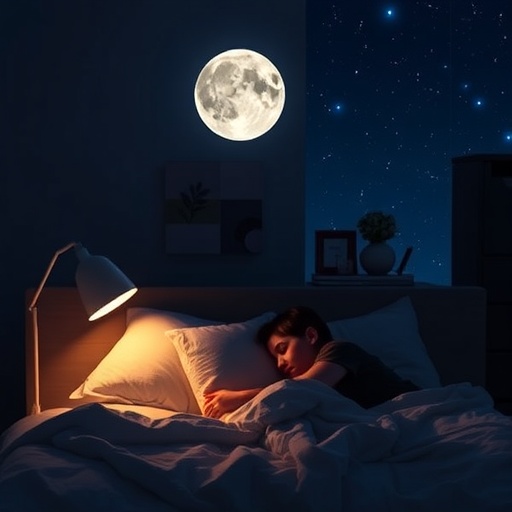
In a groundbreaking study that shines new light on the complex relationship between environmental factors and mental health, researchers have unveiled compelling evidence linking the interaction of daytime and nighttime light exposure with objective sleep quality in patients with bipolar disorder. The findings, emerging from a comprehensive cross-sectional analysis of the APPLE cohort, challenge conventional understandings and open novel avenues for therapeutic interventions targeting sleep disturbances in this vulnerable population.
Bipolar disorder, a chronic psychiatric condition characterized by recurrent mood episodes ranging from mania to depression, affects millions globally and imposes significant burdens on individuals and healthcare systems alike. Sleep disturbances are a hallmark of bipolar disorder, often exacerbating mood symptoms and impairing overall functioning. Although prior research has underscored the importance of circadian rhythms and sleep regulation in bipolar disorder, the nuanced ways in which ambient light exposure modulates these processes have remained elusive until now.
This study leveraged objective sleep metrics, rather than subjective self-reports, to rigorously measure sleep quality parameters including sleep efficiency, latency, duration, and fragmentation. By examining simultaneous daytime and nighttime light exposure patterns using sophisticated light sensors and polysomnographic tools within the cohort, the investigators were able to parse out the interplay of environmental lighting and intrinsic sleep patterns with unprecedented precision.
One of the salient discoveries from this research is the bidirectional impact of varying intensities and timing of light exposure on nighttime sleep quality. During the daytime, adequate exposure to natural light was associated with enhancements in sleep consolidation and efficiency. Conversely, excessive or inappropriate nighttime light exposure was linked with marked disruptions in sleep architecture, such as increased wake after sleep onset and diminished rapid eye movement (REM) sleep.
Notably, the study delineated a synergistic effect wherein optimal daytime light exposure appeared to buffer some of the detrimental consequences of nighttime light pollution. This interplay underscores the critical importance of circadian alignment in patients with bipolar disorder, whose inherent vulnerabilities in rhythm stability may render them particularly susceptible to environmental disturbances. The results advocate for tailored light exposure strategies that emphasize bright, natural light during waking hours while minimizing artificial light exposure after dusk.
Delving further into mechanistic insights, the researchers hypothesize that aberrant light exposure impinges upon the suprachiasmatic nucleus, the master circadian pacemaker residing in the hypothalamus. This disruption may cascade into altered melatonin secretion profiles and downstream perturbations in sleep-wake regulation, mood stability, and cognitive function. Such biological underpinnings align with previous animal and human studies implicating circadian dysregulation as a core pathophysiological feature of bipolar disorder.
Moreover, the cross-sectional design of the APPLE cohort afforded a diverse participant pool, encompassing various age groups, illness severities, and medication regimens. The robustness of the findings across these variables enhances their generalizability and bolsters the imperative for clinical application. Importantly, the study controlled for potential confounders such as psychotropic medication effects and comorbid sleep disorders, isolating light exposure as a discrete modifiable factor impacting sleep quality.
The implications of these findings transcend sleep hygiene advice commonly provided to patients. They point toward sophisticated chronotherapeutic interventions, including timed light therapy and environmental modifications that could stabilize circadian rhythms and ameliorate mood symptoms. Integrating wearable light sensors and personalized light exposure monitoring may revolutionize how clinicians manage bipolar disorder, paving the way for precision psychiatry approaches harnessing environmental cues.
This study also raises intriguing questions about urbanization and modern lifestyle factors that contribute to pervasive light pollution, potentially exacerbating psychiatric morbidity on a population level. The ubiquitous presence of artificial lighting, especially blue-light emitting devices, may unwittingly disrupt circadian homeostasis, particularly in sensitive cohorts such as those with bipolar disorder. Public health initiatives aimed at reducing nighttime light exposure could offer wide-reaching benefits beyond sleep, potentially attenuating mood episode recurrence.
Furthermore, the data exemplify the intricate balance required between daytime and nighttime light exposure to optimize sleep quality. Prolonged indoor confinement during daylight hours, especially under dim lighting conditions, may deprive patients of essential circadian entrainment signals. Simultaneously, excessive evening light, often stemming from screens and urban illumination, can delay melatonin onset and deteriorate sleep consolidation. These insights advocate a deliberate recalibration of daily routines emphasizing natural light exposure and minimizing artificial light at night.
The researchers also address technical challenges inherent to objectively quantifying light exposure and sleep parameters in real-world settings. The utilization of wearable devices combined with polysomnography represents a methodological advance, permitting high-resolution longitudinal monitoring. Such technologies could be harnessed to develop feedback-driven interventions that adapt to individual circadian profiles, optimizing treatment adherence and outcomes.
Critically, the study acknowledges limitations inherent to its cross-sectional nature, such as the inability to infer causality definitively. Longitudinal and interventional studies are warranted to elucidate the temporal dynamics and potentially differential effects based on bipolar disorder subtypes. Additionally, expanding research to include genetic and molecular markers may further elucidate susceptibility and resilience factors relating to light exposure and circadian regulation.
In conclusion, this pioneering research accentuates the pivotal role of the environment, notably light exposure, in shaping sleep quality and, by extension, mood stability in bipolar disorder. By illuminating the interaction between daytime and nighttime light and their collective impact on objective sleep metrics, the study fosters a paradigm shift toward integrating chronobiology and environmental modification into psychiatric care. As mental health disorders continue to escalate globally, leveraging accessible interventions rooted in environmental science offers promising avenues for enhancing quality of life for affected individuals.
With rising awareness of the profound influence of light on human physiology and behavior, this research exemplifies the fusion of cutting-edge technology, clinical insight, and environmental health. The APPLE cohort analysis stands as a testament to multidisciplinary collaboration, propelling the field toward holistic, patient-centered paradigms in mental health management. Future directions will likely explore translational strategies to mitigate circadian disruption, optimize light therapy protocols, and ultimately reduce the swift relapse cycles that plague individuals with bipolar disorder.
As modern society grapples with the unintended consequences of technological advancement and lifestyle shifts, the elucidation of light’s dualistic effects on sleep and mood heralds a critical juncture. Bridging neuroscience, psychiatry, and environmental science, this work challenges clinicians and policymakers alike to reimagine mental health care through the lens of natural rhythms and ecological balance. It portends a future where a simple adjustment of one’s exposure to light may serve as a potent adjunctive therapy in the battle against bipolar disorder.
Cite Scienmag News
Glenn Wilkins. (August 18, 2025). Day-Night Light Effects on Bipolar Sleep Quality. Scienmag. https://scienmag.com/day-night-light-effects-on-bipolar-sleep-quality/
Glenn Wilkins. "Day-Night Light Effects on Bipolar Sleep Quality." Scienmag, 18 August 2025, https://scienmag.com/day-night-light-effects-on-bipolar-sleep-quality/. Accessed 4 September 2026.
Glenn Wilkins. "Day-Night Light Effects on Bipolar Sleep Quality." Scienmag. August 18, 2025. https://scienmag.com/day-night-light-effects-on-bipolar-sleep-quality/


