


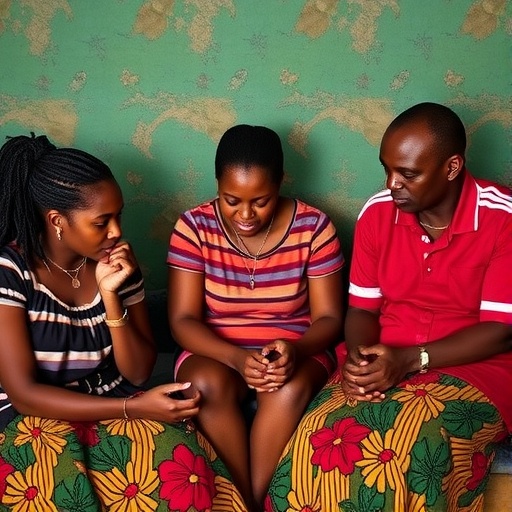
When a teenager or young adult slides into problematic substance use, the clinical spotlight almost always falls on the individual holding the bottle or the pipe. A new study from Zimbabwe argues that this narrow focus has left a crucial group standing in the shadows: the mothers, fathers, siblings and extended relatives whose lives are quietly reorganized around a young person’s escalating use. Published on 30 July 2026 in the journal Discover Psychology, the research documents how families in Harare absorb the financial shocks, emotional turbulence and relational damage that accompany youth substance use, and it concludes that health systems too often overlook these relatives as affected people in their own right. Drawing on in-depth interviews with nineteen family members of young people receiving care at a tertiary mental health facility, the study offers a detailed qualitative portrait of what substance use does to the family system — and of what families say they need in return.
Substance use among adolescents and young adults is a rising public health concern worldwide, but its burden is distributed unevenly. In low- and middle-income countries, specialist treatment services are scarce, professional support networks are thin, and the household — rather than the clinic — is usually the first line of response. In Zimbabwe, as across much of sub-Saharan Africa, mental health services operate under persistent resource constraints while young people navigate economic precarity and rapidly shifting social environments. Against this backdrop, a research team led by Chido Rwafa-Madzvamutse of the World Health Organization’s Regional Office for Africa, working with colleagues at the University of Cape Town’s Alan J Flisher Centre for Public Mental Health and the University of Zimbabwe, set out to examine a dimension that clinical research has historically marginalized: what happens to family members themselves when a young person develops a substance-related condition. Existing literature, the authors observe, tends to cast relatives primarily as a treatment resource — motivators, supervisors and relapse-prevention allies — rather than as people whose own health and functioning are placed at risk.
To structure the inquiry, the researchers anchored their analysis in the stress–strain–coping–support model, a framework widely used in caregiving research. In technical terms, the model treats a persistent stressor — here, a young person’s ongoing substance use — as the engine of a cascade. Sustained exposure generates strain, which accumulates across the emotional, financial and relational domains of family life. How family members cope depends on their coping repertoire, which ranges from problem-focused strategies such as seeking treatment or setting boundaries to emotion-focused strategies such as acceptance or avoidance. Support — whether informal, drawn from kin and community, or formal, drawn from health services — acts as the moderating variable that can either buffer the strain or fail to relieve it. The model’s power lies in its systems logic: it refuses to isolate the young person as the sole problem or to reduce the family to a bystander, and instead maps a dynamic circuit in which stressors, coping responses and support deficits continuously interact.
The study followed a rigorous exploratory qualitative design. The team purposively recruited nineteen family members of individuals under the age of twenty-four who were receiving treatment for substance-related conditions at a tertiary mental health facility in Harare. Purposive sampling — deliberately selecting participants for their direct, relevant experience rather than for statistical representativeness — is standard practice in exploratory qualitative research, where the objective is depth of understanding rather than population-level generalization. Each participant completed an in-depth, semi-structured interview in Shona, Zimbabwe’s most widely spoken language, or in English, ensuring that language would not become a barrier to candid testimony. The interviews were audio-recorded and transcribed verbatim, preserving participants’ words exactly as spoken. The researchers then applied codebook thematic analysis, a structured qualitative method in which analysts develop a coding framework, apply it systematically across the full dataset using the qualitative analysis software NVivo 12, and refine it iteratively until stable themes emerge from the data. Ethical oversight came from three bodies: the University of Cape Town’s Faculty of Health Sciences Human Research Ethics Committee, the Medical Research Council of Zimbabwe and the institutional review board of Harare Hospital.
What emerged from the transcripts was a picture of substance use as neither a purely individual pathology nor a purely private family matter. Participants consistently framed youth substance use as a family and community issue, one shaped by broader social and structural contexts rather than by individual weakness alone. In analytical terms, this reflects a social-ecological understanding of health behavior: the view that any person’s conduct is produced within interacting layers of influence, stretching from the immediate household through peer networks and community conditions to the wider structural environment. The framing carries direct consequences for intervention design. If the forces sustaining a young person’s use are partly located outside the individual, then a treatment plan aimed solely at the young person leaves those forces intact. The participants’ account effectively relocates the problem from inside a single young body into the web of relationships and circumstances surrounding it — a web in which the family is simultaneously an affected party and a potential site of change.
The most consistent thread in the data was the sheer chronicity of the strain. Family members described chronic stress accumulating across multiple domains of life at once. Financially, the burden was material and ongoing, with hardship touching everything from ordinary household economics to the costs and logistics of seeking care. Relationally, families described conflict that eroded cohesion — recurring disputes, broken trust and the gradual fraying of bonds between the young person and the relatives trying to help. Emotionally, participants reported persistent distress: the steady drain of fear, grief and worry that accompanies loving someone whose behavior has turned unpredictable and, at times, self-destructive. The technical significance of these findings lies in their convergence with the stress–strain–coping–support model’s core prediction: when a stressor persists for months or years without adequate buffering support, strain ceases to be an episodic crisis and becomes a chronic condition of the household itself, with cumulative consequences for the mental and physical health of caregivers as well as of the young person.
The ways families responded to this strain were, the researchers emphasize, complex and dynamic rather than uniform. Some relatives pursued active engagement: confronting the problem directly, seeking professional help and maintaining supportive involvement with the young person through repeated setbacks. Others described tolerance — a strategy of accommodation in which distressing behavior is absorbed in order to keep peace in the home — and some described withdrawal, pulling back emotionally or physically when their efforts appeared futile. Many participants moved among these modes over time, adjusting their stance as circumstances shifted. Alongside this variability ran a strong current of helplessness: numerous family members reported feeling they lacked the knowledge, resources or standing to alter the trajectory of the problem. Yet the picture was not uniformly bleak. As time passed, some participants described developing adaptive coping strategies — practical and psychological adjustments that allowed them to keep functioning, remain engaged and protect their own wellbeing despite an unresolved situation.
Running through the interviews, too, was a catalogue of unmet needs. Participants did not merely describe suffering; they offered recommendations for more responsive prevention, treatment and rehabilitation services — a signal, the researchers argue, that families are not passive casualties but keen observers of their own situation, holding practical insight into what a functioning support system should provide. The implication is a shift in the architecture of care. In conventional service models, family members appear in the clinic as adjuncts: they are enlisted to attend sessions, encourage abstinence and reinforce the young person’s treatment plan. The Zimbabwean data points instead toward family-centred interventions in which relatives receive recognition and support in their own right — whether through inclusion in treatment planning, access to guidance and counseling, or services designed around the household as a unit rather than the individual as the sole client. In settings where professional resources are stretched thin, the authors suggest, this reframing is a structural necessity rather than an optional enhancement.
The authors situate these findings squarely within the realities of low- and middle-income African settings, where family-centred, contextually grounded interventions are increasingly viewed as essential rather than idealistic. The composition of the team reflects that orientation: lead author Chido Rwafa-Madzvamutse works at the World Health Organization’s Regional Office for Africa, while co-authors Claire van der Westhuizen, Rehana Kader and Katherine Sorsdahl are based at the Alan J Flisher Centre for Public Mental Health at the University of Cape Town, and Walter Mangezi at the University of Zimbabwe’s Department of Mental Health. Their argument carries a practical edge for health systems: if families already absorb most of the labor of responding to youth substance use, then services that ignore families are ignoring the system’s largest existing workforce. Strengthening family capacity, by this logic, is among the most feasible routes to expanding effective care where adding specialist staff is slow and costly. The findings also speak to prevention, since an approach that treats the household as a core intervention site can reach young people earlier than clinic-based care typically does.
The study, received by the journal in March 2026 and published online on 30 July 2026, appears in Discover Psychology as an open-access article under a Creative Commons license, carried not by a large grant but by the researchers’ own institutional commitments; the authors declare no competing interests. For the families of Harare who shared their stories, the immediate payoff is recognition: experiences so often invisible in clinical records are now documented in peer-reviewed form. For researchers and policymakers, the payoff is a map. The study shows where family strain concentrates, how coping strategies evolve over time and where support systems break down, offering designers of prevention and treatment programs a template built from lived experience rather than assumption. As substance use among adolescents and young adults continues to climb as a global health concern, the message from Zimbabwe is direct: the family is not merely the backdrop to the problem or the support crew for treatment. It is a system under chronic load, and any serious response to youth substance use must treat it as such.
Cite Scienmag News
Glenn Wilkins. (August 31, 2026). Zimbabwean families share perspectives on substance use among young people. Scienmag. https://scienmag.com/zimbabwean-families-share-perspectives-on-substance-use-among-young-people/
Glenn Wilkins. "Zimbabwean families share perspectives on substance use among young people." Scienmag, 31 August 2026, https://scienmag.com/zimbabwean-families-share-perspectives-on-substance-use-among-young-people/. Accessed 3 September 2026.
Glenn Wilkins. "Zimbabwean families share perspectives on substance use among young people." Scienmag. August 31, 2026. https://scienmag.com/zimbabwean-families-share-perspectives-on-substance-use-among-young-people/


