

Monday, August 31, 2026
Science
No Result
View All Result
  • Login
  • HOME
  • SCIENCE NEWS
  • CONTACT US
  • HOME
  • SCIENCE NEWS
  • CONTACT US
No Result
View All Result
Scienmag
No Result
View All Result
Home Science News Athmospheric

Multi-Proxy Analysis Suggests Llamas Were Domesticated in Semi-Arid Northern Chile Before the Incas

May 28, 2025
in Athmospheric
Russell Cooper
By Russell Cooper Scienmag Editorial Profile - Environmental Pollution
Reading Time: 2 mins read
0
Multi-Proxy Analysis Suggests Llamas Were Domesticated in Semi-Arid Northern Chile
68
SHARES
621
VIEWS
Share on FacebookShare on Twitter
ADVERTISEMENT

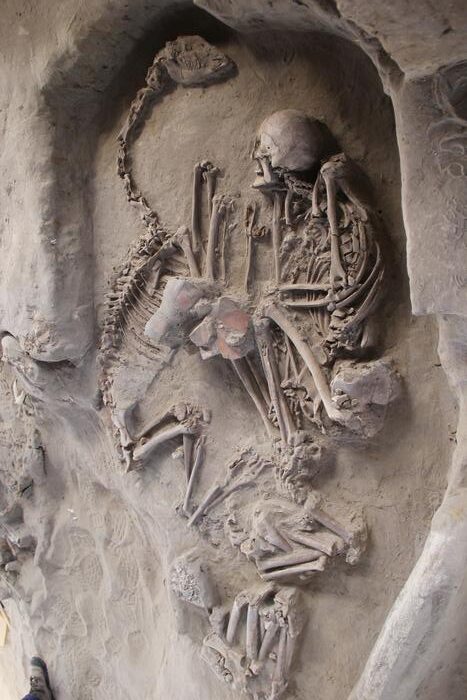
Llamas have long been symbolic of Andean culture, widely recognized as animals domesticated by the Inca civilization to fulfill crucial roles in transportation, agriculture, and textiles. However, recent groundbreaking research is challenging this established timeline by suggesting that llama domestication may have occurred much earlier than previously believed, and specifically in the semi-arid northern regions of Chile. A multi-proxy analysis conducted on camelid remains from the El Olivar archaeological site, dated between 1,090 and 1,440 cal AD, provides compelling evidence that domesticated llamas were present in this region well before the Incas established their expansive empire.

The El Olivar site in northern Chile serves as a unique cemetery context where archeologists uncovered complete camelid skeletons interred alongside human remains, offering a rare window into ancient human-animal relationships. Unlike isolated bone finds, these funerary deposits allow researchers to study camelid usage and status within human societies in a more holistic manner. The research team employed an integrative multi-proxy approach combining osteological analysis, isotopic data, and morphometric measurements to discern the identity and domestication status of the camelids.

From an osteological perspective, the bone morphology was indicative of medium-sized camelids consistent with llamas (Lama glama) rather than wild guanacos (Lama guanicoe). This distinction is pivotal since the two species often co-occur in South American archaeological sites but differ significantly in their domestication status and cultural implications. The analysis revealed bone robusticity and skeletal shape aligning closely with domesticated llama profiles, supporting the hypothesis that these animals were not wild but managed by humans.

Moreover, stable isotope analysis provided insights into the diets and mobility patterns of these camelids. The isotopic signatures suggested a relatively controlled diet consistent with human provisioning, rather than the diverse grazing patterns expected from wild populations. This dietary uniformity reinforces the notion of domestication and human care. Additionally, strontium isotope mapping helped interpret the geographic origin of these animals, hinting at local rearing practices rather than large-scale trade or transient herding.

Importantly, this study refines regional archaeological chronologies by situating llama domestication in the semi-arid northern Chilean environment at least several centuries prior to the 15th century Inca expansion. The timing challenges the traditional view that llamas were introduced exclusively or primarily through Inca imperial networks and suggests a more complex process of domestication and animal management independent of Inca state control.

The cultural implications of these findings are profound. The presence of domesticated llamas in burial contexts with humans points towards the symbolic and economic value attributed to these animals by pre-Inca societies. Llamas likely played essential roles beyond mere labor or meat provision, possibly including ritual significance within mortuary customs. The careful placement of complete camelid remains alongside human skeletons indicates intricate social and spiritual relationships that warrant further anthropological scrutiny.

Technologically, the El Olivar project exemplifies the power of multi-proxy methodologies in archaeology. By integrating morphometrics, isotopic geochemistry, and contextual analysis, the researchers achieved a nuanced reconstruction of ancient animal domestication processes otherwise elusive through singular methods. This comprehensive approach opens new pathways for re-examining other ancient sites in South America and beyond.

The research team, comprising experts from Chile, Denmark, and Argentina, emphasized that the study was conducted without external influence over design, collection, or publication decisions, ensuring scientific rigor and transparency. Their work highlights international collaboration and shared scholarly interest in unraveling complex human-animal dynamics in prehistoric contexts.

Subject of Research: Athmospheric

Article Title: Multi-Proxy Analysis Suggests Llamas Were Domesticated in Semi-Arid Northern Chile Before the Incas

Article References: Original research article

Image Credits: AI Generated

DOI: Not provided

Keywords: ancient Andean culture, camelid remains analysis, El Olivar archaeological site, human-animal relationships in prehistory, Inca civilization and llamas, isotopic data in archaeology, llama domestication history, llama roles in agriculture and transport, morphometric measurements in animal studies, multi-proxy analysis in archaeology, osteological analysis techniques, semi-arid northern Chile

Cite Scienmag News

Russell Cooper. (May 28, 2025). Multi-Proxy Analysis Suggests Llamas Were Domesticated in Semi-Arid Northern Chile Before the Incas. Scienmag. https://scienmag.com/multi-proxy-analysis-suggests-llamas-were-domesticated-in-semi-arid-northern-chile-before-the-incas/


Russell Cooper. "Multi-Proxy Analysis Suggests Llamas Were Domesticated in Semi-Arid Northern Chile Before the Incas." Scienmag, 28 May 2025, https://scienmag.com/multi-proxy-analysis-suggests-llamas-were-domesticated-in-semi-arid-northern-chile-before-the-incas/. Accessed 31 August 2026.

Russell Cooper. "Multi-Proxy Analysis Suggests Llamas Were Domesticated in Semi-Arid Northern Chile Before the Incas." Scienmag. May 28, 2025. https://scienmag.com/multi-proxy-analysis-suggests-llamas-were-domesticated-in-semi-arid-northern-chile-before-the-incas/

Tags: ancient Andean culturecamelid remains analysisEl Olivar archaeological sitehuman-animal relationships in prehistoryInca civilization and llamasisotopic data in archaeologyllama domestication historyllama roles in agriculture and transportmorphometric measurements in animal studiesmulti-proxy analysis in archaeologyosteological analysis techniquessemi-arid northern Chile
Share27Tweet17
Previous Post

OECD Nations Exhibit Varied Advances in Energy and Economic Convergence

Next Post

Alcohol Abuse Medication Shows Promise in Preventing Trauma-Induced Cell Death, Particularly in Females

Related Posts

Extreme temperatures may raise heart failure hospitalization risk
Athmospheric

Extreme temperatures may raise heart failure hospitalization risk

August 29, 2026
Warmer tropical waters briefly slow Antarctic ice melt
Athmospheric

Warmer tropical waters briefly slow Antarctic ice melt

August 29, 2026
New England Team Wins $5.9 Million to Study Snow and Outdoor Economy
Athmospheric

New England Team Wins $5.9 Million to Study Snow and Outdoor Economy

August 28, 2026
El Niño Intensified More in 40 Years Than Any Previous Millennium
Athmospheric

El Niño Intensified More in 40 Years Than Any Previous Millennium

August 28, 2026
Despite growing livestock-climate research, applying science on farms remains challenging
Athmospheric

Despite growing livestock-climate research, applying science on farms remains challenging

August 26, 2026
Rain May Turn Wildfire Smoke Pollution Into Fertilizer
Athmospheric

Rain May Turn Wildfire Smoke Pollution Into Fertilizer

August 25, 2026
Next Post
Alcohol Abuse Medication Shows Promise in Preventing Trauma-Induced Cell Death,

Alcohol Abuse Medication Shows Promise in Preventing Trauma-Induced Cell Death, Particularly in Females

  • Mothers who receive childcare support from maternal grandparents show more optimized

    Mothers who receive childcare support from maternal grandparents show more parental warmth, finds NTU Singapore study

    27656 shares
    Share 11059 Tweet 6912
  • University of Seville Breaks 120-Year-Old Mystery, Revises a Key Einstein Concept

    1061 shares
    Share 424 Tweet 265
  • Bee body mass, pathogens and local climate influence heat tolerance

    682 shares
    Share 273 Tweet 171
  • Researchers record first-ever images and data of a shark experiencing a boat strike

    546 shares
    Share 218 Tweet 137
  • Groundbreaking Clinical Trial Reveals Lubiprostone Enhances Kidney Function

    531 shares
    Share 212 Tweet 133
Science

Embark on a thrilling journey of discovery with Scienmag.com—your ultimate source for cutting-edge breakthroughs. Immerse yourself in a world where curiosity knows no limits and tomorrow’s possibilities become today’s reality!

RECENT NEWS

  • β-Sitosterol from Ipomoea carnea Jacq. As a promising anti-inflammatory agent: Evidence from in silico modeling and in vitro validation
  • Design, fabrication and characterization of a wearable Fiber Bragg grating sensor for cardiorespiratory monitoring using finger plethysmography
  • Mercury’s crust formed by extreme volcanism
  • KAIST opens the era of industrial-scale microbial foods, proposing growth strategies for the next-generation protein market

Categories

  • Agriculture
  • Anthropology
  • Archaeology
  • Athmospheric
  • Biology
  • Biotechnology
  • Blog
  • Bussines
  • Cancer
  • Chemistry
  • Climate
  • Earth Science
  • Editorial Policy
  • Marine
  • Mathematics
  • Medicine
  • Pediatry
  • Policy
  • Psychology & Psychiatry
  • Science Education
  • Social Science
  • Space
  • Technology and Engineering

Subscribe to Blog via Email

Enter your email address to subscribe to this blog and receive notifications of new posts by email.

Join 5,150 other subscribers

© 2025 Scienmag - Science Magazine

Welcome Back!

Login to your account below

Forgotten Password?

Retrieve your password

Please enter your username or email address to reset your password.

Log In
No Result
View All Result
  • HOME
  • SCIENCE NEWS
  • CONTACT US

© 2025 Scienmag - Science Magazine

Discover more from Science

Subscribe now to keep reading and get access to the full archive.

Continue reading