Mango (Mangifera indica L.) ranks among the most economically important tropical fruits worldwide, prized for its distinctive flavor, vibrant color and high nutritional value. A new study has characterized the fruit quality traits and bioactive compound content of 82 mango genotypes grown under the agroclimatic conditions of the Brazilian semi-arid region, with the aim of identifying the most promising candidates for the fresh-consumption market. Using a multivariate selection index, the researchers ranked the genotypes and pinpointed a small group of elite accessions that consistently outperformed the rest.
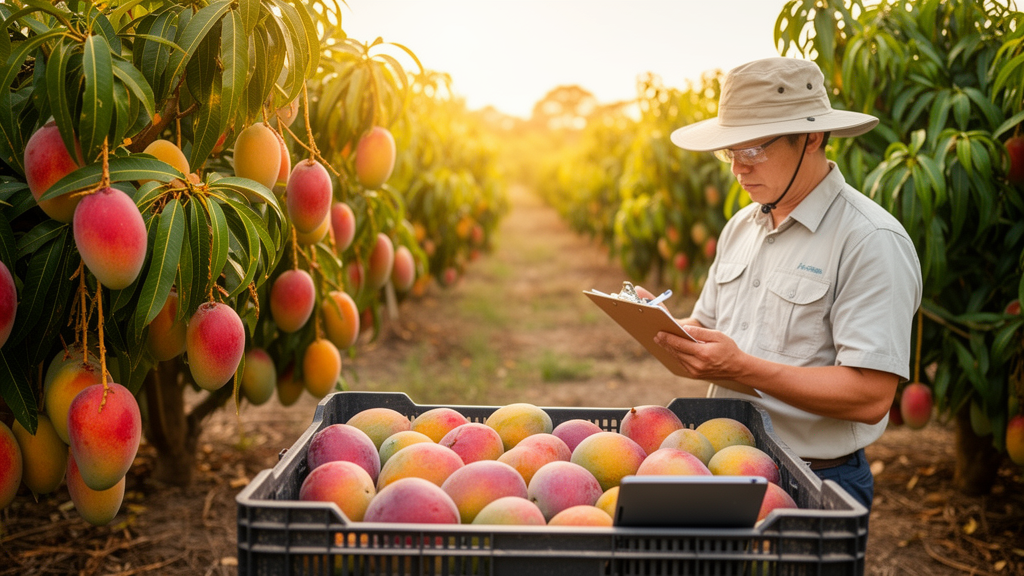
The evaluation was carried out over two consecutive growing seasons in an experimental design comprising four plots per genotype, each plot holding one clonal plant. For every genotype, forty fruits were assessed, with ten fruits sampled from each plot. The traits measured spanned the physical, chemical and nutritional dimensions of fruit quality: fruit mass in grams, transverse diameter and length in millimeters, pulp yield as a percentage, skin and pulp color in degrees, pulp firmness in newtons, titratable acidity, soluble solids content, ascorbic acid, reducing sugars, total soluble sugars, soluble pectins, total extractable polyphenols, yellow flavonoids, anthocyanins, β-carotene and starch. Mean values for all of these traits were then synthesized into a single multivariate selection index used to rank genotypes on overall fruit quality.
The results showed substantial variability across the 82 genotypes for every quality attribute measured. The selection index itself proved to be an effective tool for identifying elite genotypes for fresh consumption, because it allowed the simultaneous selection of multiple traits rather than focusing on any single characteristic.
Based on the index rankings, five genotypes stood out: Mallika, Papo de Peru I, Favo de Mel, CPAC 58/95 and Aplle DCG 406. These accessions consistently exhibited superior fruit quality attributes and were highlighted as the most promising candidates for the fresh market.
The authors characterized 82 genotypes across two seasons, with four plots per genotype and forty fruits sampled per genotype.
Subject of Research: Multivariate selection of mango genotypes for fruit quality and bioactive compounds in the Brazilian semi-arid region
Article Title: Characterization, multivariate analysis and selection of mango genotypes based on fruit quality and bioactive compounds
Article References: Costa, C. D. S. R., de Lima, M. A. C., Lima Neto, F. P., da Silva Costa, A. E., Martins, L. S. S., & Musser, R. D. S. (2026). Characterization, multivariate analysis and selection of mango genotypes based on fruit quality and bioactive compounds. BMC Plant Biology. https://doi.org/10.1186/s12870-026-10135-2
Image Credits: AI Generated
DOI: 10.1186/s12870-026-10135-2
Keywords: mango, fruit quality, bioactive compounds, multivariate selection index, Brazilian semi-arid, genotype characterization, plant breeding, BMC Plant Biology, fresh market, ascorbic acid, polyphenols, pulp yield
Cite Scienmag News
Drew Townsend. (October 29, 2026). Multivariate selection index pinpoints top mango genotypes for fresh consumption. Scienmag. https://scienmag.com/multivariate-selection-index-pinpoints-top-mango-genotypes-for-fresh-consumption/
Drew Townsend. "Multivariate selection index pinpoints top mango genotypes for fresh consumption." Scienmag, 29 October 2026, https://scienmag.com/multivariate-selection-index-pinpoints-top-mango-genotypes-for-fresh-consumption/. Accessed 29 October 2026.
Drew Townsend. "Multivariate selection index pinpoints top mango genotypes for fresh consumption." Scienmag. October 29, 2026. https://scienmag.com/multivariate-selection-index-pinpoints-top-mango-genotypes-for-fresh-consumption/