Saturday, October 31, 2026
Science
No Result
View All Result
  • Login
  • HOME
  • SCIENCE NEWS
  • CONTACT US
  • HOME
  • SCIENCE NEWS
  • CONTACT US
No Result
View All Result
Scienmag
No Result
View All Result
Home Science News Biology

Bacterial Inoculants Boost Groundnut Growth at Reduced Nitrogen Rates

October 28, 2026
in Biology
Alan Morgan
By Alan Morgan Scienmag Editorial Profile - Precision Agriculture
Reading Time: 2 mins read
0
Bacterial Inoculants Boost Groundnut Growth at Reduced Nitrogen Rates

Bacterial Inoculants Boost Groundnut Growth at Reduced Nitrogen Rates

65
SHARES
587
VIEWS
Share on FacebookShare on Twitter
ADVERTISEMENT

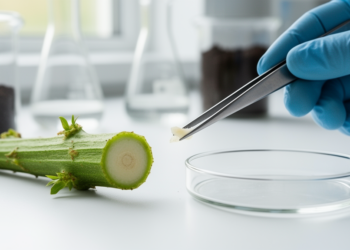
The work, conducted in glasshouse and field experiments, used two peanut varieties, NARC-2019 and BARD-479, and was designed to test whether bacterial inoculants could help maintain crop performance while cutting reliance on synthetic nitrogen fertiliser.

Nitrogen is an essential macronutrient for peanut growth and productivity, but excessive nitrogen in agricultural soils contributes to serious environmental pollution and degradation. The researchers therefore evaluated the two PGPR sources alongside the reduced nitrogen doses to identify a sustainable nutrient management strategy. In the glasshouse phase, they measured morphological and physiological traits, ran antioxidant enzyme assays, and assessed changes in the phytochemical and metabolic profiles of the plants; the field experiment measured yield and yield-contributing factors.

The results pointed to positive effects rather than stress induction. Biozote-max in particular performed well, and the combination of 30 kg N per hectare with Biozote-max produced the strongest overall response, with NARC-2019 outperforming BARD-479. Nodule numbers increased in both varieties under the treatments, though the response was markedly higher in NARC-2019 than in BARD-479, indicating a clear varietal difference in nodulation response to the combined inoculation and reduced nitrogen regime.

Antioxidant enzyme assays yielded non-significant results, which the authors interpret as evidence that the PGPR formulations enhanced growth rather than inducing oxidative stress in the plants. Phytochemical profiling showed a significant influence of the PGPR treatments on plant metabolites: total soluble sugars increased with bacterial inoculation and were enhanced further when nitrogen was added. In the field experiments, yield parameters improved when the PGPR formulations were applied together with 30 kg N per hectare.

The study concludes that combining PGPR application with a reduced nitrogen rate of 30 kg N per hectare is an effective strategy for improving peanut growth and production while promoting nodulation. The authors suggest this integrated approach holds promise for reducing reliance on synthetic nitrogen fertiliser, contributing to environmental sustainability and lowering agricultural costs. As the findings come from glasshouse and field trials with two peanut varieties under specific reduced nitrogen doses, the reported benefits apply to the tested formulations, varieties and conditions described in the study.

Subject of Research: Effects of two PGPR formulations on groundnut growth, yield and nodulation under reduced nitrogen fertiliser rates

Article Title: Differential effects of two PGPR formulations on groundnut growth, yield, and nodulation under reduced nitrogen amounts

Article References: Fatima, H., Bibi, F., Alam, T., Hira, Q. U. A. A., Rafi, A. M., Munir, F., Gul, A., Jahanzaib, M., & Amir, R. (2026). Differential effects of two PGPR formulations on groundnut growth, yield, and nodulation under reduced nitrogen amounts. BMC Plant Biology. https://doi.org/10.1186/s12870-026-10245-x

Image Credits: AI Generated

DOI: 10.1186/s12870-026-10245-x

Keywords: PGPR, groundnut, nitrogen fertiliser, nodulation, Biozote-max, Biopower, NARC-2019, BARD-479, sustainable agriculture, plant growth-promoting rhizobacteria, phytochemical profiling, crop yield

Cite Scienmag News

Alan Morgan. (October 28, 2026). Bacterial Inoculants Boost Groundnut Growth at Reduced Nitrogen Rates. Scienmag. https://scienmag.com/bacterial-inoculants-boost-groundnut-growth-at-reduced-nitrogen-rates/

Alan Morgan. "Bacterial Inoculants Boost Groundnut Growth at Reduced Nitrogen Rates." Scienmag, 28 October 2026, https://scienmag.com/bacterial-inoculants-boost-groundnut-growth-at-reduced-nitrogen-rates/. Accessed 31 October 2026.

Alan Morgan. "Bacterial Inoculants Boost Groundnut Growth at Reduced Nitrogen Rates." Scienmag. October 28, 2026. https://scienmag.com/bacterial-inoculants-boost-groundnut-growth-at-reduced-nitrogen-rates/

Tags: bacterial inoculants for groundnut cultivationBARD-479biopowerBiozote-maxbiozote-max effectiveness in peanut productioncrop yieldcrop yield improvement with bacterial inoculantsenvironmental impact of nitrogen fertilizer reductionfield and glasshouse studies on peanut growthgroundnutNARC-2019nitrogen fertilisernodulationPGPRPGPR microbial inoculants for legume cropsPhytochemical Profilingplant growth-promoting rhizobacteriaplant physiological responses to bacterial inoculantsreduced nitrogen fertilizer strategies for groundnutrole of PGPR in nodulation and plant growthsustainable agriculturesustainable nitrogen management in peanut farmingvarietal response to biofertilizers in peanuts
Share26Tweet16
Previous Post

One Fat-Activating Enzyme Emerges as a Common Thread in Female Reproductive Disease

Next Post

Exercise-linked lactate may remodel the post-stroke brain through tubulin modification

Related Posts

Microbial Sources and Stress Shape the Hidden Endophytes of an Invasive Plant
Biology

Microbial Sources and Stress Shape the Hidden Endophytes of an Invasive Plant

October 30, 2026
Firebreaks Leave Lasting Scars in Grasslands While Wildfire Heals Fast
Biology

Firebreaks Leave Lasting Scars in Grasslands While Wildfire Heals Fast

October 30, 2026
Hidden Peptides in Non-Coding RNAs Reshape Cardiovascular Biology
Biology

Hidden Peptides in Non-Coding RNAs Reshape Cardiovascular Biology

October 30, 2026
Phage K Holin’s C-Terminal Region Shapes Antibacterial Activity, Study Finds
Biotechnology

Phage K Holin’s C-Terminal Region Shapes Antibacterial Activity, Study Finds

October 30, 2026
Computational screen flags five natural compounds that bind a tuberculosis virulence enzyme
Chemistry

Computational screen flags five natural compounds that bind a tuberculosis virulence enzyme

October 30, 2026
Antifungal liver injury study pinpoints KDR as shared hepatotoxicity target
Biology

Antifungal liver injury study pinpoints KDR as shared hepatotoxicity target

October 30, 2026
Next Post
Exercise-linked lactate may remodel the post-stroke brain through tubulin modification

Exercise-linked lactate may remodel the post-stroke brain through tubulin modification

  • Mothers who receive childcare support from maternal grandparents show more optimized

    Mothers who receive childcare support from maternal grandparents show more parental warmth, finds NTU Singapore study

    27656 shares
    Share 11059 Tweet 6912
  • University of Seville Breaks 120-Year-Old Mystery, Revises a Key Einstein Concept

    1061 shares
    Share 424 Tweet 265
  • Bee body mass, pathogens and local climate influence heat tolerance

    682 shares
    Share 273 Tweet 171
  • Researchers record first-ever images and data of a shark experiencing a boat strike

    546 shares
    Share 218 Tweet 137
  • Groundbreaking Clinical Trial Reveals Lubiprostone Enhances Kidney Function

    531 shares
    Share 212 Tweet 133
Science

Embark on a thrilling journey of discovery with Scienmag.com—your ultimate source for cutting-edge breakthroughs. Immerse yourself in a world where curiosity knows no limits and tomorrow’s possibilities become today’s reality!

RECENT NEWS

  • Trademarks Meet Patents in New Method to Spot Technology Opportunities
  • Reddit self-declarations offer auditable labels for demographic inference
  • Scots pine needles map trace element pollution in Polish industrial town
  • Dual-blockchain scheme secures vehicle handovers without pre-shared keys

Categories

  • Agriculture
  • Anthropology
  • Archaeology
  • Athmospheric
  • Biology
  • Biotechnology
  • Blog
  • Bussines
  • Cancer
  • Chemistry
  • Climate
  • Earth Science
  • Editorial Policy
  • Marine
  • Mathematics
  • Medicine
  • Pediatry
  • Policy
  • Psychology & Psychiatry
  • Science Education
  • Science News
  • Social Science
  • Space
  • Technology and Engineering

Subscribe to Blog via Email

Enter your email address to subscribe to this blog and receive notifications of new posts by email.

Join 5,150 other subscribers

© 2025 Scienmag - Science Magazine

Welcome Back!

Login to your account below

Forgotten Password?

Retrieve your password

Please enter your username or email address to reset your password.

Log In
No Result
View All Result
  • HOME
  • SCIENCE NEWS
  • CONTACT US

© 2025 Scienmag - Science Magazine

Discover more from Science

Subscribe now to keep reading and get access to the full archive.

Continue reading