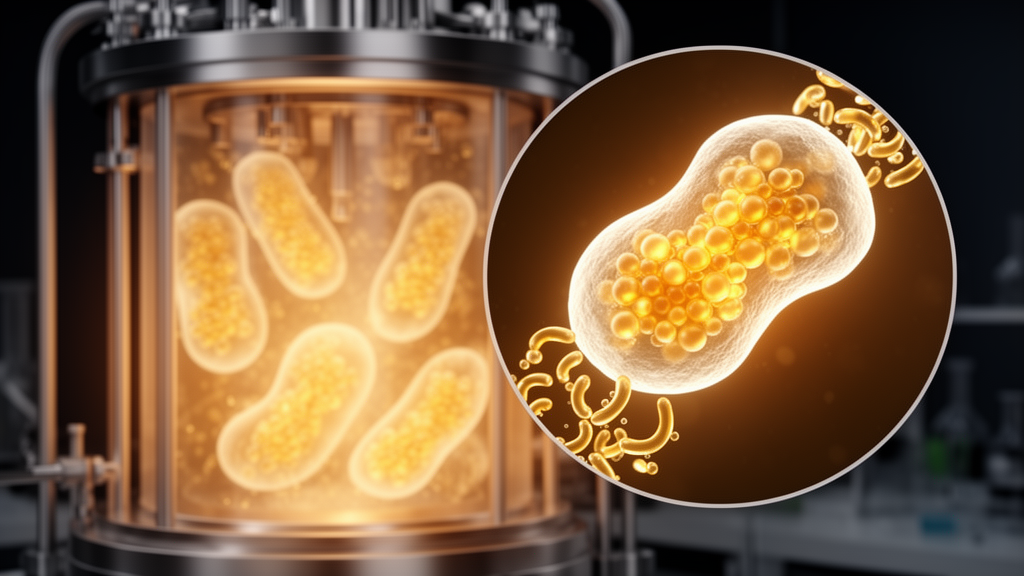
Gamma-linolenic acid, an omega-6 fatty acid prized for its anti-inflammatory properties, has long been squeezed out of seeds such as evening primrose and borage. A new review published in Bioresources and Bioprocessing argues that the future of this molecule may lie not in fields but in fermentation tanks, where oleaginous fungi, yeasts, and microalgae can be engineered to churn out GLA year-round, independent of weather, seasons, and long cultivation cycles.
The review, led by Jie Qiao and colleagues, synthesizes recent advances across the entire production chain, from strain engineering to lipid extraction. Its central claim is that microbial cell factories offer a sustainable and season-independent alternative to plant sources, whose yields are constrained by low GLA content and climatic instability. Even the highest-quality borage oil contains only 17 to 25 percent GLA, and extracting usable quantities from such dilute oils requires costly downstream fractionation.
GLA occupies a pivotal checkpoint in fatty acid metabolism. The body converts linoleic acid to GLA through a delta-6-desaturation step, and an enzyme called ELOVL5 then rapidly elongates GLA into dihomo-gamma-linolenic acid, or DGLA. From there, DGLA faces divergent fates: it can be desaturated further into arachidonic acid, generally a precursor of pro-inflammatory eicosanoids, or converted directly into series-1 prostaglandins such as PGE1 and thromboxane A1, along with 15-HETrE, which exert anti-inflammatory and vasodilatory effects and modulate platelet aggregation.
Those metabolic consequences underpin a wide range of investigated health applications. The review notes that GLA and its metabolites have been studied for effects on cardiovascular biomarkers, blood pressure in hypertensive rat models, serum lipid levels in hyperlipidemic mice, and nerve conduction deficits in diabetic rats, where co-administration with antioxidants showed synergistic benefit. In cancer models, GLA appears to kill tumor cells by raising reactive oxygen species and lipid peroxidation while impairing mitochondrial respiratory chain complexes and membrane potential, with reported selectivity toward hepatocellular carcinoma, breast cancer, and glioblastoma cells and relatively limited cytotoxicity toward normal cells under experimental conditions. Formulations containing GLA have also been investigated as adjuncts for rheumatoid arthritis, atopic dermatitis, and acute respiratory distress syndrome, where enteral nutrition with EPA and GLA was associated with reduced pulmonary inflammation and shorter stays in intensive care.
Nature has been making GLA in microbes for a long time. In 1948, Bernhard and Albrecht identified an octadecatrienoic acid from the fungus Phycomyces blakesleeanus as structurally identical to GLA, providing early evidence that filamentous fungi could serve as microbial sources. Colin Ratledge later screened more than 300 species and strains across 13 genera over six years, identifying Cunninghamella, Mucor, and Rhizopus as the most promising candidates, though with striking variability: within Mucor circinelloides, lipid contents ranged from 3 to 37 percent of biomass and GLA fractions from 8 to 32 percent of total fatty acids.
Industrial-scale production was pioneered by Idemitsu Kosan in Japan, building on Suzuki’s 1981 finding that Mucor isabellina could reach a total lipid content of 86.1 percent. But with GLA making up only about 10 percent of that fungus’s total fatty acids, the product could not compete economically with borage oil at roughly 23 percent GLA. The company’s optimization efforts shifted to M. circinelloides, and Idemitsu successfully commercialized the world’s first microbial GLA nutritional supplement, achieving a competitive GLA content of 28.3 percent. Yeasts, despite their genetic tractability, have so far lagged behind: an engineered Lipomyces kononenkoae accumulated GLA at roughly 1.2 percent of total fatty acids, while a recombinant Yarrowia lipolytica strain reached a titer of 71.6 milligrams per liter. Among cyanobacteria, Cohen and colleagues found GLA in 18 of 19 screened Arthrospira strains at 30 to 35 percent of total fatty acids, though microalgal platforms generally show lower total lipid productivity than oleaginous fungi.
The engineering toolkit described in the review operates on several fronts simultaneously. Because fatty acid synthesis is a reduction process consuming two NADPH molecules per two-carbon elongation cycle, plus another per desaturation step, researchers have targeted the enzymes that generate this reducing power. Overexpressing malic enzyme in M. circinelloides boosted lipid content 2.5-fold, and isoform-specific overexpression raised GLA yield by 16.73 and 46.76 percent depending on the isoform. In Mucor alpina, the two NADPH sources divide the labor: glucose-6-phosphate dehydrogenase primarily sustains fatty acid synthesis, while malic enzyme is specifically critical for the desaturation step that forms GLA. On the precursor side, overexpressing citrate transporter genes in M. circinelloides WJ11 increased lipid accumulation by 44 and 68 percent, and acetyl-CoA synthetase overexpression has delivered gains of 29.9 percent in biomass, 11.3 percent in lipid yield, and a 2.4-fold increase in triacylglycerol accumulation.
Equally important is what engineers remove. Deleting the glycogen synthase gene YlGSY1 in Y. lipolytica raised triacylglycerol content by 60 percent, and CRISPR-Cas9 disruption of ADP-glucose pyrophosphorylase in Tetraselmis yielded a 2.7- to 3.1-fold lipid increase. In Y. lipolytica, where excess carbon is often excreted as citric acid, overexpressing the diacylglycerol acyltransferases ylDGA1 and ylDGA2 redirected that flux into lipid synthesis, elevating lipid content from 18 to 55 percent. Combinatorial desaturase overexpression has proven particularly effective for GLA itself: co-overexpressing the delta-6, delta-9, and delta-12 desaturases in M. circinelloides produced a 1.9-fold increase in GLA titer. Fermentation conditions matter too. A two-stage temperature strategy, growing cells warm and then cooling to induce GLA synthesis, delivered a recombinant strain with 18.55 grams per liter dry cell weight and 71.6 milligrams per liter GLA, 60.9 percent more GLA than a constant-temperature control. Raising zinc ion concentration increased GLA content in Cunninghamella by 51.23 percent, and machine learning is now entering the field: a Gaussian process-driven framework optimized the bioconversion of corn stover to GLA, achieving a titer of 2.13 grams per liter against 1.82 grams per liter from conventional response surface methodology.
Getting the oil out of the cells remains a costly bottleneck, and the review devotes substantial attention to downstream processing. Conventional solvent methods such as Soxhlet, Folch, and Bligh and Dyer extraction remain benchmarks, but their consumption of toxic, volatile solvents raises environmental and safety concerns. Among greener options, a two-step hexane/ethanol extraction proved optimal for GLA from M. circinelloides with lower toxicity, while deep eutectic solvents outperformed ethyl acetate and dimethyl carbonate in extracting free fatty acids from Spirulina. Supercritical CO2, with its mild critical temperature of 31 degrees Celsius that preserves heat-sensitive PUFAs, achieved a 98 percent GLA extraction efficiency in a solid matrix-supported approach using diatomite, though it demands dry biomass and precise pressure control. Enzymatic hydrolysis of wet biomass avoids energy-intensive drying altogether, but high enzyme costs and the structural heterogeneity of fungal cell walls currently limit its commercial application.
The authors are candid that industrialization still faces a fundamental constraint: the limited GLA production capacity of existing strains, compounded by the genetic recalcitrance of most oleaginous species. M. circinelloides stands out as unusually amenable to manipulation, with established homologous recombination and CRISPR-Cas9 tools, while recent metabolic rewiring of Y. lipolytica enabled GLA production at 22.58 percent of total fatty acids, corresponding to a titer of 386.59 milligrams per liter. On the economics, the authors’ own techno-economic analysis, based on a Gaussian process-driven process simulation for GLA produced from corn stover, estimated a minimum selling price of 17,821 dollars per ton of GLA oil, with utility costs, feedstock prices, and enzyme costs identified as the primary economic drivers. Whether engineered microbes can finally outcompete the borage field will depend on coordinating strain engineering, cheap feedstocks, green extraction, and rigorous cost accounting into a single, integrated production platform.
Subject of Research: Metabolic engineering of microbial cell factories for gamma-linolenic acid production
Article Title: Microbial cell factories for gamma-linolenic acid biosynthesis: metabolic engineering, downstream processing, and future perspectives
Article References: Qiao, J., Wang, W., Duan, P., Zhang, Z., Yang, R., Cui, H., & Li, X. (2026). Microbial cell factories for gamma-linolenic acid biosynthesis: metabolic engineering, downstream processing, and future perspectives. Bioresources and Bioprocessing, 13(1), Article 152. https://doi.org/10.1186/s40643-026-01146-w
Image Credits: AI Generated
DOI: 10.1186/s40643-026-01146-w
Keywords: gamma-linolenic acid, microbial cell factories, oleaginous fungi, metabolic engineering, Mucor circinelloides, lipid extraction, NADPH supply, desaturases, fermentation optimization, machine learning, techno-economic analysis, polyunsaturated fatty acids
Cite Scienmag News
Denise Maddox. (October 28, 2026). Engineered Microbes Move Closer to Replacing Plant Oils as the Source of a Valued Anti-Inflammatory Fatty Acid. Scienmag. https://scienmag.com/engineered-microbes-move-closer-to-replacing-plant-oils-as-the-source-of-a-valued-anti-inflammatory-fatty-acid/
Denise Maddox. "Engineered Microbes Move Closer to Replacing Plant Oils as the Source of a Valued Anti-Inflammatory Fatty Acid." Scienmag, 28 October 2026, https://scienmag.com/engineered-microbes-move-closer-to-replacing-plant-oils-as-the-source-of-a-valued-anti-inflammatory-fatty-acid/. Accessed 28 October 2026.
Denise Maddox. "Engineered Microbes Move Closer to Replacing Plant Oils as the Source of a Valued Anti-Inflammatory Fatty Acid." Scienmag. October 28, 2026. https://scienmag.com/engineered-microbes-move-closer-to-replacing-plant-oils-as-the-source-of-a-valued-anti-inflammatory-fatty-acid/