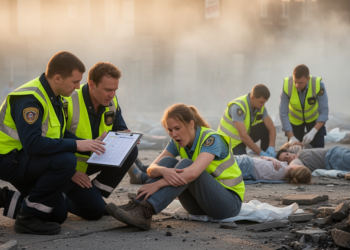
People who witness a traumatic event are often asked to remember it precisely, sometimes years later in a courtroom. A new study suggests that the mental health profile of a witness shapes memory in ways more complicated than researchers have assumed. Contrary to expectations drawn from earlier work, symptoms of posttraumatic stress disorder and the number of traumatic events a person had experienced showed no association with how strongly false details crept into memory after exposure to misleading information. Depression symptoms did matter, but only for a specific group of witnesses.
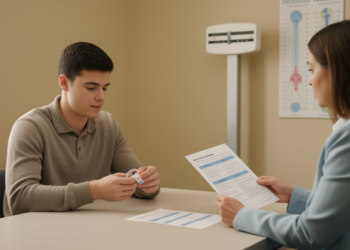
The study, published in Cognitive Research: Principles and Implications, was conducted by Lily C. Erner, Prerika R. Sharma, Laura Jobson and Kimberley A. Wade. The team recruited 327 community participants and measured symptoms of PTSD and depression along with lifetime exposure to traumatic events. Each participant then watched a film depicting a graphic car accident, received misinformation about what they had seen, and completed cued recall and recognition memory tests. This design allowed the researchers to separate overall memory accuracy from the misinformation effect, in which misleading suggestions contaminate what a person reports about an event.
The motivation came from a gap in the literature. Within the general population, roughly 6 percent of people will experience PTSD at some point in their lives and about 15 percent will experience depression. Yet, according to the authors, little has been known about how these conditions affect the ability to accurately report details of a witnessed traumatic event. There is growing evidence that findings from that paradigm may not generalise to real-world eyewitness scenarios, which makes witness-based studies like this one particularly valuable.
Theoretical accounts of false memory have often pointed to internal cognitive processes, particularly spreading activation. A comprehensive review published in 2017 suggested that people with more severe PTSD, depression, or trauma exposure might be more susceptible to misinformation about witnessed traumatic events than people with fewer symptoms. That possibility raised concerns for legal and forensic settings, where accurate recall of traumatic witnessed events is critical.
The new findings complicate that picture. Higher PTSD symptomology was associated with poorer overall memory performance, meaning witnesses with more severe symptoms remembered less accurately in general. However, the association between PTSD symptomology and the misinformation effect itself was not significant. In other words, PTSD symptoms appeared to degrade memory broadly, but they did not specifically increase the degree to which misleading information distorted what participants reported. Previous trauma exposure was also not significantly associated with the misinformation effect.
Depression told a different and more nuanced story. For participants who reported no prior exposure to a transportation accident, the misinformation effect decreased as depression symptom scores increased. Higher depression scores in this group were linked to lower susceptibility, not greater susceptibility, to the misleading details. By contrast, for participants who reported prior exposure to a transportation accident, the misinformation effect remained stable across depression symptom scores. The researchers treated the transportation accident as a marker of personal relevance, since the film depicted a graphic car crash. For those who deemed the target event personally relevant, there was no relationship between depression symptom severity and misinformation susceptibility.
According to the significance statement accompanying the paper, these results suggest that the relationships between psychopathology and susceptibility to misinformation in witnesses may be more nuanced than previous research has indicated. The authors argue that existing theoretical accounts, including associative activation theory, may not adequately explain the patterns in their data and may need further refining to better account for the complex associations between psychopathology and misinformation susceptibility.
The practical implications reach into clinical and forensic settings.
The article was shared early as a peer-reviewed accepted version subject to further edits before the final version of record.
Subject of Research: How PTSD, depression and trauma exposure symptoms relate to eyewitness susceptibility to misinformation about a filmed traumatic event
Article Title: Susceptibility to misinformation in witnesses with symptoms of posttraumatic stress disorder, depression, and trauma exposure
Article References: Erner, L. C., Sharma, P. R., Jobson, L., & Wade, K. A. (2026). Susceptibility to misinformation in witnesses with symptoms of posttraumatic stress disorder, depression, and trauma exposure. Cognitive Research: Principles and Implications. https://doi.org/10.1186/s41235-026-00761-7
Image Credits: AI Generated
DOI: 10.1186/s41235-026-00761-7
Keywords: eyewitness memory, misinformation effect, PTSD, depression, trauma exposure, false memory, associative activation theory, forensic psychology, cued recall, recognition memory, witness testimony, psychopathology
Cite Scienmag News
Glenn Wilkins. (October 28, 2026). Depression may curb misinformation effects in eyewitnesses, PTSD does not, study finds. Scienmag. https://scienmag.com/depression-may-curb-misinformation-effects-in-eyewitnesses-ptsd-does-not-study-finds/
Glenn Wilkins. "Depression may curb misinformation effects in eyewitnesses, PTSD does not, study finds." Scienmag, 28 October 2026, https://scienmag.com/depression-may-curb-misinformation-effects-in-eyewitnesses-ptsd-does-not-study-finds/. Accessed 28 October 2026.
Glenn Wilkins. "Depression may curb misinformation effects in eyewitnesses, PTSD does not, study finds." Scienmag. October 28, 2026. https://scienmag.com/depression-may-curb-misinformation-effects-in-eyewitnesses-ptsd-does-not-study-finds/