Saturday, October 31, 2026
Science
No Result
View All Result
  • Login
  • HOME
  • SCIENCE NEWS
  • CONTACT US
  • HOME
  • SCIENCE NEWS
  • CONTACT US
No Result
View All Result
Scienmag
No Result
View All Result
Home Science News Biology

RAG Transposon Co-Option Reshaped the Jawed Vertebrate Immune System

October 28, 2026
in Biology
Drew Townsend
By Drew Townsend Scienmag Editorial Profile - Cell Biology
Reading Time: 2 mins read
0
RAG Transposon Co-Option Reshaped the Jawed Vertebrate Immune System

RAG Transposon Co-Option Reshaped the Jawed Vertebrate Immune System

65
SHARES
587
VIEWS
Share on FacebookShare on Twitter
ADVERTISEMENT

A new review in the journal Immunogenetics, published on 28 October 2026, brings together the current state of comparative immunology and sets out updated hypotheses on how the immune system of jawed vertebrates came to be.

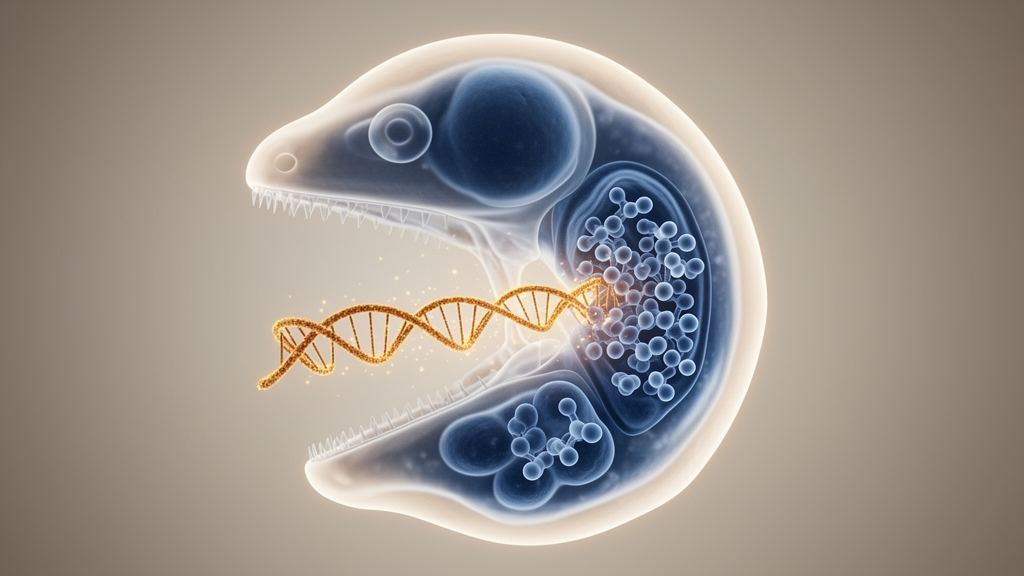
According to the review, this co-option is proposed to have unfolded in two major stages. In the first stage, the RAG transposon, together with other eukaryote-specific transposon families such as HAT, interacted with host genes in early eukaryotic ancestors, leading to the development of a new transposition mechanism. In the second stage, RAG and host genes were specifically incorporated into the V(D)J recombination system, an innovation the authors characterise as a major evolutionary step for jawed vertebrates.

The article then examines the wider consequences of this event for immune system evolution. It also reports that phylogenomic evidence indicates key immune components of jawed vertebrates, including MHC, T-cell receptors of both the alpha-beta and gamma-delta types, and immunoglobulins, existed in ancestors and later expanded through gene duplication, forming multigene families with diverse functions.

Those duplicated genes, the review explains, gave rise to proteins that interact with other immune molecules to regulate immune responses. Some proteins retained their original functions, while others acquired new functions through neo-functionalization. The authors conclude that the co-option of the RAG transposon played a critical role in shaping the immune system of jawed vertebrates by driving innovation in both adaptive and innate immunity. As a review article, the piece synthesises existing literature and presents hypotheses rather than reporting new experimental data, and its full content is available behind Springer’s subscription access.

Subject of Research: The role of RAG transposon co-option in the evolution of the jawed vertebrate immune system

Article Title: Impact of RAG transposon co-option on the evolution of the jawed vertebrate immune system

Article References: Pontarotti, P., & Keshri, V. (2026). Impact of RAG transposon co-option on the evolution of the jawed vertebrate immune system. Immunogenetics, 78(1), Article 22. https://doi.org/10.1007/s00251-026-01414-1

Image Credits: AI Generated

DOI: 10.1007/s00251-026-01414-1

Keywords: RAG transposon, V(D)J recombination, jawed vertebrates, adaptive immunity, MHC polymorphism, T-cell receptors, immunoglobulins, gene duplication, neo-functionalization, comparative immunology, transposons, evolution

Cite Scienmag News

Drew Townsend. (October 28, 2026). RAG Transposon Co-Option Reshaped the Jawed Vertebrate Immune System. Scienmag. https://scienmag.com/rag-transposon-co-option-reshaped-the-jawed-vertebrate-immune-system/

Drew Townsend. "RAG Transposon Co-Option Reshaped the Jawed Vertebrate Immune System." Scienmag, 28 October 2026, https://scienmag.com/rag-transposon-co-option-reshaped-the-jawed-vertebrate-immune-system/. Accessed 31 October 2026.

Drew Townsend. "RAG Transposon Co-Option Reshaped the Jawed Vertebrate Immune System." Scienmag. October 28, 2026. https://scienmag.com/rag-transposon-co-option-reshaped-the-jawed-vertebrate-immune-system/


Tags: adaptive immunitycomparative immunologyeukaryotic transposon families in immunityevolutionevolution of MHC and T-cell receptorsevolutionary mechanisms of immune receptor diversificationgene duplicationgene duplication in immune system evolutionimmune system structural and functional innovationsimmunoglobulin gene expansionimmunoglobulinsjawed vertebrate adaptive immunity originsjawed vertebratesMHC polymorphismneo-functionalizationphylogenomic analysis of immune componentsRAG transposonRAG transposon co-option in vertebrate immune system evolutionT-cell receptorstransposon-host gene interactionstransposon-mediated immune gene diversificationtransposonsV(D)J recombinationV(D)J recombination system development
Share26Tweet16
Previous Post

Computational mRNA vaccine design targets Puumala virus glycoprotein and nucleoprotein

Next Post

Flavonoids that bind DNA block a mutagen’s chemical fingerprints in lab tests

Related Posts

Microbial Sources and Stress Shape the Hidden Endophytes of an Invasive Plant
Biology

Microbial Sources and Stress Shape the Hidden Endophytes of an Invasive Plant

October 30, 2026
Firebreaks Leave Lasting Scars in Grasslands While Wildfire Heals Fast
Biology

Firebreaks Leave Lasting Scars in Grasslands While Wildfire Heals Fast

October 30, 2026
Hidden Peptides in Non-Coding RNAs Reshape Cardiovascular Biology
Biology

Hidden Peptides in Non-Coding RNAs Reshape Cardiovascular Biology

October 30, 2026
Phage K Holin’s C-Terminal Region Shapes Antibacterial Activity, Study Finds
Biotechnology

Phage K Holin’s C-Terminal Region Shapes Antibacterial Activity, Study Finds

October 30, 2026
Computational screen flags five natural compounds that bind a tuberculosis virulence enzyme
Chemistry

Computational screen flags five natural compounds that bind a tuberculosis virulence enzyme

October 30, 2026
Antifungal liver injury study pinpoints KDR as shared hepatotoxicity target
Biology

Antifungal liver injury study pinpoints KDR as shared hepatotoxicity target

October 30, 2026
Next Post
Flavonoids that bind DNA block a mutagen’s chemical fingerprints in lab tests

Flavonoids that bind DNA block a mutagen's chemical fingerprints in lab tests

  • Mothers who receive childcare support from maternal grandparents show more optimized

    Mothers who receive childcare support from maternal grandparents show more parental warmth, finds NTU Singapore study

    27656 shares
    Share 11059 Tweet 6912
  • University of Seville Breaks 120-Year-Old Mystery, Revises a Key Einstein Concept

    1061 shares
    Share 424 Tweet 265
  • Bee body mass, pathogens and local climate influence heat tolerance

    682 shares
    Share 273 Tweet 171
  • Researchers record first-ever images and data of a shark experiencing a boat strike

    546 shares
    Share 218 Tweet 137
  • Groundbreaking Clinical Trial Reveals Lubiprostone Enhances Kidney Function

    531 shares
    Share 212 Tweet 133
Science

Embark on a thrilling journey of discovery with Scienmag.com—your ultimate source for cutting-edge breakthroughs. Immerse yourself in a world where curiosity knows no limits and tomorrow’s possibilities become today’s reality!

RECENT NEWS

  • Trademarks Meet Patents in New Method to Spot Technology Opportunities
  • Reddit self-declarations offer auditable labels for demographic inference
  • Scots pine needles map trace element pollution in Polish industrial town
  • Dual-blockchain scheme secures vehicle handovers without pre-shared keys

Categories

  • Agriculture
  • Anthropology
  • Archaeology
  • Athmospheric
  • Biology
  • Biotechnology
  • Blog
  • Bussines
  • Cancer
  • Chemistry
  • Climate
  • Earth Science
  • Editorial Policy
  • Marine
  • Mathematics
  • Medicine
  • Pediatry
  • Policy
  • Psychology & Psychiatry
  • Science Education
  • Science News
  • Social Science
  • Space
  • Technology and Engineering

Subscribe to Blog via Email

Enter your email address to subscribe to this blog and receive notifications of new posts by email.

Join 5,150 other subscribers

© 2025 Scienmag - Science Magazine

Welcome Back!

Login to your account below

Forgotten Password?

Retrieve your password

Please enter your username or email address to reset your password.

Log In
No Result
View All Result
  • HOME
  • SCIENCE NEWS
  • CONTACT US

© 2025 Scienmag - Science Magazine

Discover more from Science

Subscribe now to keep reading and get access to the full archive.

Continue reading