Wednesday, October 28, 2026
Science
No Result
View All Result
  • Login
  • HOME
  • SCIENCE NEWS
  • CONTACT US
  • HOME
  • SCIENCE NEWS
  • CONTACT US
No Result
View All Result
Scienmag
No Result
View All Result
Home Science News Medicine

Fluorocellobiose PET tracer shows strongest signal in live Aspergillus fumigatus infection

October 28, 2026
in Medicine
Kristina Jarvis
By Kristina Jarvis Scienmag Editorial Profile - Infectious Disease Medicine
Reading Time: 2 mins read
0
Fluorocellobiose PET tracer shows strongest signal in live Aspergillus fumigatus infection

Fluorocellobiose PET tracer shows strongest signal in live Aspergillus fumigatus infection

65
SHARES
587
VIEWS
Share on FacebookShare on Twitter
ADVERTISEMENT

A head-to-head comparison of four carbohydrate-based PET tracers has identified 2-deoxy-2-[18F]fluorocellobiose (FCB) as the most promising candidate for imaging live Aspergillus fumigatus infection, according to an open-access original research article published in EJNMMI Research on 15 October 2026. In the study, FCB showed the highest uptake of the four tested tracers in A. fumigatus in vitro and delivered the highest target-to-non-target ratios in PET imaging of a murine A. fumigatus myositis model.

Invasive fungal infections remain a major health concern in immunocompromised patients, largely because diagnosis is often late and unspecific. Pathogen-specific PET radiotracers such as 2-deoxy-2-[18F]fluorocellobiose and 2-deoxy-2-[18F]fluorosorbitol (FDS) have previously shown potential to distinguish between different types of infection. Building on promising in vitro results with L-Rhamnose, the research team developed 2-deoxy-2-[18F]fluoro-L-Rhamnose (F-Rham) as a potential fungus-specific ligand. However, the authors note that direct comparisons across tracers have been limited because different institutions have used inconsistent experimental conditions, which is why the new study evaluated FCB, FDS, F-Rham and 2-deoxy-2-[18F]fluoro-D-glucose (FDG) in identical A. fumigatus animal models, and additionally compared FCB and FDS performance in identical bacterial animal models.

The comparison produced a clear separation between the tracers. Unlike FDG, FCB distinguished live infection from heat-killed inoculations in the murine model, a property the authors link to its potential for detecting metabolically active fungal infection. F-Rham, despite its promising in vitro origins, did not show specific accumulation at either the live or the heat-killed inoculation sites, meaning the newly developed candidate did not perform as hoped in vivo. When FDS and FCB were compared directly, FCB uptake was higher in A. fumigatus than in bacterial infections caused by Escherichia coli and Staphylococcus aureus, whereas FDS preferentially accumulated in E. coli, a pattern observed both in vitro and in vivo.

The authors conclude that FCB shows the highest accumulation in live A. fumigatus infection, while FDS was preferably taken up by E. coli, and that among the tested tracers FCB showed the most promise for successful detection of live A. fumigatus infection when translated to humans. The findings are limited to the preclinical models and tracer set described in the study, and the article is being shared early as a peer-reviewed, accepted version that is citable and carries a permanent DOI, subject to further edits before the final Version of Record. Within those boundaries, the work offers a standardized benchmark for carbohydrate-based fungal PET imaging, suggesting that FCB warrants further evaluation as a pathogen-specific imaging agent for invasive aspergillosis.

Subject of Research: Comparative evaluation of carbohydrate-based PET tracers for imaging Aspergillus fumigatus infection

Article Title: Comparative evaluation of carbohydrate-based PET tracers for Aspergillus fumigatus imaging

Article References: Lai, J., Shah, S., Martinez-Orengo, N., Peiravi, M., Conrad, B., Khan, A. M. A. M., Jones, P. M., Shi, J., Basuli, F., Swenson, R. E., & Hammoud, D. A. (2026). Comparative evaluation of carbohydrate-based PET tracers for Aspergillus fumigatus imaging. EJNMMI Research. https://doi.org/10.1186/s13550-026-01524-7

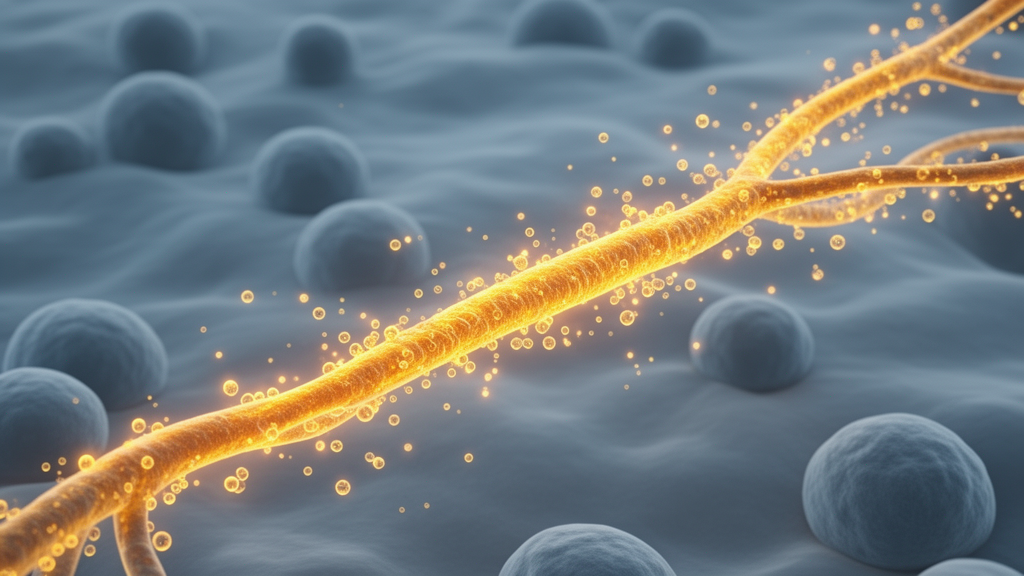
Image Credits: AI Generated

DOI: 10.1186/s13550-026-01524-7

Keywords: PET imaging, Aspergillus fumigatus, fluorocellobiose, fluorosorbitol, F-Rham, FDG, invasive fungal infection, radiotracers, murine myositis model, E. coli, Staphylococcus aureus, molecular imaging

Cite Scienmag News

Kristina Jarvis. (October 28, 2026). Fluorocellobiose PET tracer shows strongest signal in live Aspergillus fumigatus infection. Scienmag. https://scienmag.com/fluorocellobiose-pet-tracer-shows-strongest-signal-in-live-aspergillus-fumigatus-infection/

Kristina Jarvis. "Fluorocellobiose PET tracer shows strongest signal in live Aspergillus fumigatus infection." Scienmag, 28 October 2026, https://scienmag.com/fluorocellobiose-pet-tracer-shows-strongest-signal-in-live-aspergillus-fumigatus-infection/. Accessed 28 October 2026.

Kristina Jarvis. "Fluorocellobiose PET tracer shows strongest signal in live Aspergillus fumigatus infection." Scienmag. October 28, 2026. https://scienmag.com/fluorocellobiose-pet-tracer-shows-strongest-signal-in-live-aspergillus-fumigatus-infection/

Tags: 2-deoxy-2-[18F]fluorocellobioseAspergillus fumigatusAspergillus fumigatus infection imagingcarbohydrate-based PET tracersdifferentiation of live vs. dead fungiE. coliF-RhamFDGfluorocellobiosefluorocellobiose PET tracerfluorosorbitolfungal infection diagnosisfungal infection imaging in micefungal-specific radiotracersinfectious disease diagnosticsinvasive fungal infectionInvasive fungal infectionsmolecular imagingmurine myositis modelpathogen-specific PET radiotracersPET imagingPET imaging of Aspergillus fumigatusradiotracersStaphylococcus aureus
Share26Tweet16
Previous Post

Bernoulli’s Equation Reimagined Through the Thermodynamics of Fluid Flow

Next Post

Three genes tied to lactylation and lactate metabolism may flag prostate cancer recurrence risk

Related Posts

Heart MRI Without Contrast Dye Predicts Risk After Heart Attack
Medicine

Heart MRI Without Contrast Dye Predicts Risk After Heart Attack

October 28, 2026
Nurse-led programme modestly improves dementia risk profiles in Australian primary care trial
Medicine

Nurse-led programme modestly improves dementia risk profiles in Australian primary care trial

October 28, 2026
Fresh Green Banana Puree Boosts Fiber in Wheat Bread but Weakens Dough and Cuts Acceptability
Agriculture

Fresh Green Banana Puree Boosts Fiber in Wheat Bread but Weakens Dough and Cuts Acceptability

October 28, 2026
Skipping Serum in PBMC Workflows Holds Up in ELISpot Assays, Even After Two Years Frozen
Medicine

Skipping Serum in PBMC Workflows Holds Up in ELISpot Assays, Even After Two Years Frozen

October 28, 2026
NIH’s SPARC program spent a decade building the foundations of bioelectronic medicine
Medicine

NIH’s SPARC program spent a decade building the foundations of bioelectronic medicine

October 28, 2026
Treatment delays raise death risk in stage III breast cancer, Korean cohort finds
Cancer

Treatment delays raise death risk in stage III breast cancer, Korean cohort finds

October 28, 2026
Next Post
Three genes tied to lactylation and lactate metabolism may flag prostate cancer recurrence risk

Three genes tied to lactylation and lactate metabolism may flag prostate cancer recurrence risk

  • Mothers who receive childcare support from maternal grandparents show more optimized

    Mothers who receive childcare support from maternal grandparents show more parental warmth, finds NTU Singapore study

    27656 shares
    Share 11059 Tweet 6912
  • University of Seville Breaks 120-Year-Old Mystery, Revises a Key Einstein Concept

    1061 shares
    Share 424 Tweet 265
  • Bee body mass, pathogens and local climate influence heat tolerance

    682 shares
    Share 273 Tweet 171
  • Researchers record first-ever images and data of a shark experiencing a boat strike

    546 shares
    Share 218 Tweet 137
  • Groundbreaking Clinical Trial Reveals Lubiprostone Enhances Kidney Function

    531 shares
    Share 212 Tweet 133
Science

Embark on a thrilling journey of discovery with Scienmag.com—your ultimate source for cutting-edge breakthroughs. Immerse yourself in a world where curiosity knows no limits and tomorrow’s possibilities become today’s reality!

RECENT NEWS

  • Lightweight AI Models Show Promise for Breast Cancer Detection in Low-Resource Settings
  • AI-Generated Fake Weather Videos Teach Surveillance Models to See Better
  • Heart MRI Without Contrast Dye Predicts Risk After Heart Attack
  • Nurse-led programme modestly improves dementia risk profiles in Australian primary care trial

Categories

  • Agriculture
  • Anthropology
  • Archaeology
  • Athmospheric
  • Biology
  • Biotechnology
  • Blog
  • Bussines
  • Cancer
  • Chemistry
  • Climate
  • Earth Science
  • Editorial Policy
  • Marine
  • Mathematics
  • Medicine
  • Pediatry
  • Policy
  • Psychology & Psychiatry
  • Science Education
  • Science News
  • Social Science
  • Space
  • Technology and Engineering

Subscribe to Blog via Email

Enter your email address to subscribe to this blog and receive notifications of new posts by email.

Join 5,151 other subscribers

© 2025 Scienmag - Science Magazine

Welcome Back!

Login to your account below

Forgotten Password?

Retrieve your password

Please enter your username or email address to reset your password.

Log In
No Result
View All Result
  • HOME
  • SCIENCE NEWS
  • CONTACT US

© 2025 Scienmag - Science Magazine

Discover more from Science

Subscribe now to keep reading and get access to the full archive.

Continue reading