Wednesday, October 28, 2026
Science
No Result
View All Result
  • Login
  • HOME
  • SCIENCE NEWS
  • CONTACT US
  • HOME
  • SCIENCE NEWS
  • CONTACT US
No Result
View All Result
Scienmag
No Result
View All Result
Home Science News Biology

ECHS1 Linked to Hypoxia-Driven PGK1 Crotonylation in Prostate Cancer Models

October 28, 2026
in Biology
Nathaniel Bowman
By Nathaniel Bowman Scienmag Editorial Profile - Precision Oncology
Reading Time: 2 mins read
0
ECHS1 Linked to Hypoxia-Driven PGK1 Crotonylation in Prostate Cancer Models

ECHS1 Linked to Hypoxia-Driven PGK1 Crotonylation in Prostate Cancer Models

65
SHARES
587
VIEWS
Share on FacebookShare on Twitter
ADVERTISEMENT

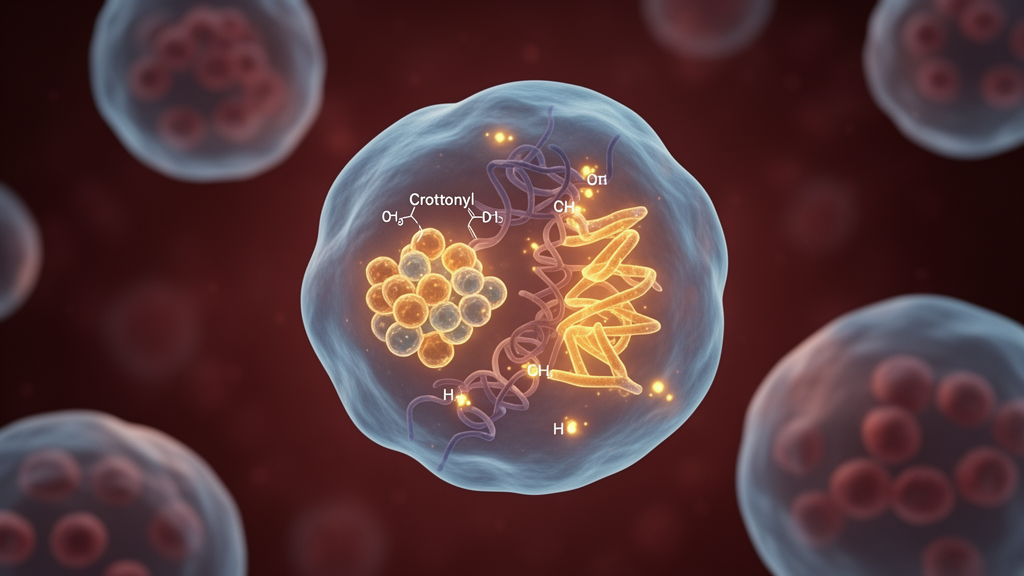
Hypoxia is a well-known driver of aggressive behavior in prostate cancer, prompting tumor cells to rewire their metabolism to survive low-oxygen conditions. A new study published in BMC Molecular and Cell Biology examined whether a metabolic enzyme called enoyl-CoA hydratase 1, or ECHS1, is connected to a chemical modification known as lysine crotonylation on the glycolytic enzyme phosphoglycerate kinase 1, or PGK1, and to malignant traits in prostate cancer models. The work, led by Xiangfu Meng, Song Zhang, Maoli Sun, Wencai Zhang and Chuang Li, was published as an open-access article on 15 October 2026.

The researchers first turned to The Cancer Genome Atlas to assess ECHS1 expression and its relationship with patient prognosis. They found that ECHS1 mRNA levels were higher in prostate tumors than in normal tissue, and that high expression of the gene was associated with shorter disease-free survival. This bioinformatic evidence set the stage for laboratory experiments probing what ECHS1 might be doing under hypoxic conditions.

In the experimental work, the team used two prostate cancer cell lines, PC-3 and LNCaP, and exposed them to 1 percent oxygen for up to 24 hours to mimic hypoxia. They measured protein crotonylation, ECHS1 and PGK1 using immunoblotting and immunoprecipitation, and also examined gene expression, lactate production, stemness-associated markers, migration and invasion. To test function, they used a PGK1 K131R construct, in which the lysine at position 131 was changed to arginine, as well as ECHS1 knockdown, and they evaluated xenografts established from ECHS1-depleted PC-3 cells in vivo.

The results pointed to a coordinated hypoxic response. Hypoxia increased a prominent 83-kDa signal detected by pan-crotonylation antibodies in whole-cell lysates and raised ECHS1 expression, but it reduced PGK1-associated crotonylation without materially changing total PGK1 protein. When the researchers introduced the K131R construct, which showed lower PGK1 crotonylation, the cells displayed lower lactate output and reduced readouts for the glycolytic genes HK2, LDHA and MCT4, along with lower levels of the stemness markers CD44, CD133 and Oct4. Those cells also showed fewer migrating and invading cells than the hypoxia control group.

Manipulating ECHS1 itself produced a strikingly different picture. When the team knocked down ECHS1, PGK1-associated crotonylation increased and HIF1A mRNA decreased relative to hypoxic conditions. In the in vivo experiments, xenografts established from ECHS1-depleted cells had smaller endpoint tumor volumes than control xenografts. Taken together, the authors conclude that ECHS1 was associated with hypoxia-responsive PGK1 crotonylation and with glycolytic and invasive phenotypes in these models, and that genetic ECHS1 depletion increased PGK1-associated crotonylation while reducing xenograft growth, supporting a functional contribution of ECHS1 within the tested systems.

Subject of Research: The role of ECHS1 in hypoxia-associated PGK1 crotonylation and malignant phenotypes in prostate cancer models

Article Title: ECHS1 modulates hypoxia-associated PGK1 crotonylation and malignant phenotypes in prostate cancer models

Article References: Meng, X., Zhang, S., Sun, M., Zhang, W., & Li, C. (2026). ECHS1 modulates hypoxia-associated PGK1 crotonylation and malignant phenotypes in prostate cancer models. BMC Molecular and Cell Biology. https://doi.org/10.1186/s12860-026-00605-8

Image Credits: AI Generated

DOI: 10.1186/s12860-026-00605-8

Keywords: prostate cancer, ECHS1, PGK1, crotonylation, hypoxia, glycolysis, The Cancer Genome Atlas, xenograft, HIF1A, lactate, cell migration, invasion

Cite Scienmag News

Nathaniel Bowman. (October 28, 2026). ECHS1 Linked to Hypoxia-Driven PGK1 Crotonylation in Prostate Cancer Models. Scienmag. https://scienmag.com/echs1-linked-to-hypoxia-driven-pgk1-crotonylation-in-prostate-cancer-models/


Nathaniel Bowman. "ECHS1 Linked to Hypoxia-Driven PGK1 Crotonylation in Prostate Cancer Models." Scienmag, 28 October 2026, https://scienmag.com/echs1-linked-to-hypoxia-driven-pgk1-crotonylation-in-prostate-cancer-models/. Accessed 28 October 2026.

Nathaniel Bowman. "ECHS1 Linked to Hypoxia-Driven PGK1 Crotonylation in Prostate Cancer Models." Scienmag. October 28, 2026. https://scienmag.com/echs1-linked-to-hypoxia-driven-pgk1-crotonylation-in-prostate-cancer-models/

Tags: bioinformatics in cancer researchcell migrationcrotonylationcrotonylation modification in cancerECHS1ECHS1 expression and prognosisECHS1 metabolic enzyme in cancerglycolysisHIF1Ahypoxiahypoxia-driven tumor metabolismhypoxia-induced protein modificationsinvasionlactatemetabolic rewiring in prostate cancerPGK1PGK1 lysine crotonylationprostate cancerprostate cancer cell line studiesProstate cancer hypoxiaThe Cancer Genome Atlastumor aggressiveness markerstumor glycolysis regulationxenograft
Share26Tweet16
Previous Post

Resilience shields vocational teachers against burnout, large German survey finds

Next Post

ChatGPT-3.5 Answers Teens’ Questions About Sex and Relationships in New Study

Related Posts

Computational predictions are not clinical evidence, researchers warn in CYLD variant dispute
Biotechnology

Computational predictions are not clinical evidence, researchers warn in CYLD variant dispute

October 28, 2026
New k-mer estimator cracks substitution rates in repetitive DNA
Biotechnology

New k-mer estimator cracks substitution rates in repetitive DNA

October 28, 2026
Hospital AI platform lifts brain bleed detection accuracy in three-month real-world trial
Biotechnology

Hospital AI platform lifts brain bleed detection accuracy in three-month real-world trial

October 28, 2026
Thermal-spring bacterium yields heat-stable amylase that thins porridge by 90%
Biology

Thermal-spring bacterium yields heat-stable amylase that thins porridge by 90%

October 28, 2026
Alx4 keeps its limb-building role even as its expression shifts across amniotes
Biology

Alx4 keeps its limb-building role even as its expression shifts across amniotes

October 28, 2026
Astrocyte Lipid Metabolism Emerges as a Central Player in ALS Progression
Biology

Astrocyte Lipid Metabolism Emerges as a Central Player in ALS Progression

October 28, 2026
Next Post
ChatGPT-3.5 Answers Teens’ Questions About Sex and Relationships in New Study

ChatGPT-3.5 Answers Teens' Questions About Sex and Relationships in New Study

  • Mothers who receive childcare support from maternal grandparents show more optimized

    Mothers who receive childcare support from maternal grandparents show more parental warmth, finds NTU Singapore study

    27656 shares
    Share 11059 Tweet 6912
  • University of Seville Breaks 120-Year-Old Mystery, Revises a Key Einstein Concept

    1061 shares
    Share 424 Tweet 265
  • Bee body mass, pathogens and local climate influence heat tolerance

    682 shares
    Share 273 Tweet 171
  • Researchers record first-ever images and data of a shark experiencing a boat strike

    546 shares
    Share 218 Tweet 137
  • Groundbreaking Clinical Trial Reveals Lubiprostone Enhances Kidney Function

    531 shares
    Share 212 Tweet 133
Science

Embark on a thrilling journey of discovery with Scienmag.com—your ultimate source for cutting-edge breakthroughs. Immerse yourself in a world where curiosity knows no limits and tomorrow’s possibilities become today’s reality!

RECENT NEWS

  • Femtosecond-Laser-Written Composite Grating Pushes Raman-Suppressed Fiber Laser to 9 Kilowatts
  • Buffalo breeding program delivers 450 billion rupees in milk gains
  • Computational predictions are not clinical evidence, researchers warn in CYLD variant dispute
  • New k-mer estimator cracks substitution rates in repetitive DNA

Categories

  • Agriculture
  • Anthropology
  • Archaeology
  • Athmospheric
  • Biology
  • Biotechnology
  • Blog
  • Bussines
  • Cancer
  • Chemistry
  • Climate
  • Earth Science
  • Editorial Policy
  • Marine
  • Mathematics
  • Medicine
  • Pediatry
  • Policy
  • Psychology & Psychiatry
  • Science Education
  • Science News
  • Social Science
  • Space
  • Technology and Engineering

Subscribe to Blog via Email

Enter your email address to subscribe to this blog and receive notifications of new posts by email.

Join 5,151 other subscribers

© 2025 Scienmag - Science Magazine

Welcome Back!

Login to your account below

Forgotten Password?

Retrieve your password

Please enter your username or email address to reset your password.

Log In
No Result
View All Result
  • HOME
  • SCIENCE NEWS
  • CONTACT US

© 2025 Scienmag - Science Magazine

Discover more from Science

Subscribe now to keep reading and get access to the full archive.

Continue reading