One half of the drug propranolol does most of the work against the blood vessel growth that drives infantile haemangioma, according to a new laboratory study of haemangioma-derived endothelial spheroids. The research, published on 15 October 2026 as an open access article, found that R-propranolol, the enantiomer with minimal beta-blocking activity, suppressed sprouting angiogenesis far more strongly than its mirror-image counterpart S-propranolol or the racemic mixture used clinically, while causing less cell death than the mixture.
Infantile haemangioma is the most common vascular tumour in infants, characterised by rapid vasculogenesis and proliferation in the first months of life followed by gradual regression that can continue over four to ten years. Approximately 10 to 15 percent of cases develop tissue distortion, functional impairment, scarring, ulcerations and permanent disfigurement. Since its serendipitous discovery in 2008, the beta-blocker propranolol, given as a racemic mixture of equal parts R(+) and S(-) enantiomers, has been the standard treatment, with dosing based on body weight and generally continued for up to six months. However, the mechanism of action is not clearly defined, long-term studies on infant development remain limited, and side effects including hypertension, hypoglycaemia, sleep disturbances and bradycardia have been reported in infants, sometimes leading to early discontinuation of treatment.
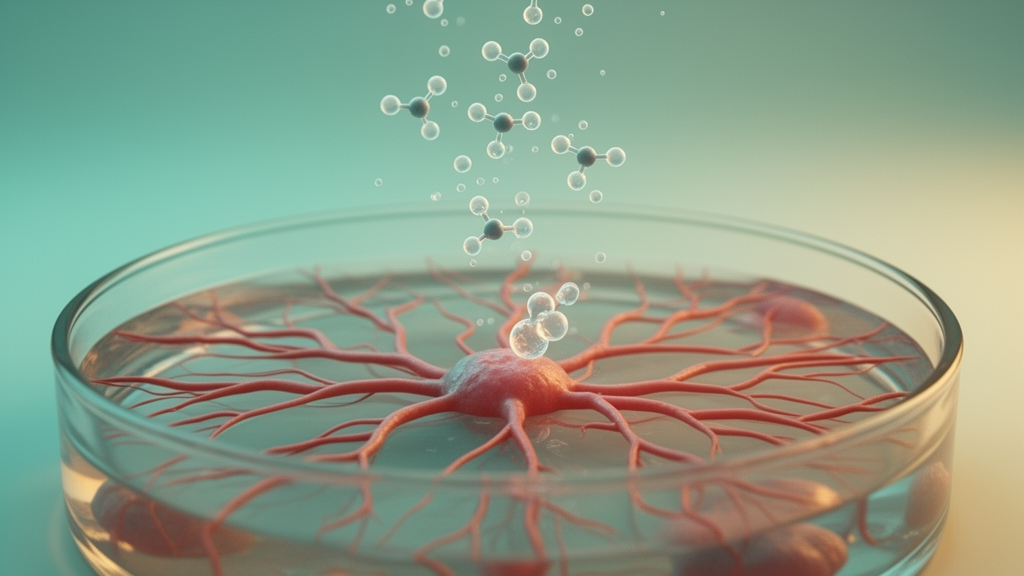
The research team, led by Raka Mitra and Clint Gray, cultured CD31-positive endothelial cells isolated from proliferating haemangioma tissue samples into three-dimensional spheroids, then embedded them in extracellular matrix hydrogel to induce sprouting angiogenesis. The cells were treated with R-, S- and RS-propranolol at concentrations of 20, 40 and 80 micromolar, and sprouting was monitored over 72 hours using live-cell imaging. The concentrations were chosen because propranolol has shown inhibitory effects at 50 to 200 micromolar in vitro, while increased cell death has been observed at concentrations of 100 micromolar or above in both two-dimensional and three-dimensional cultures.
The results showed a striking stereospecific difference. R-propranolol significantly decreased total sprouting area by over 96 percent relative to untreated spheroids after 72 hours at the highest dose compared with the lowest, whereas S-propranolol showed only a moderate reduction of about 20 percent, which was not statistically significant. Racemic RS-propranolol reduced sprout formation in a dose-dependent manner. R-propranolol demonstrated the most potent anti-angiogenic effect of the three formulations tested.
Cytotoxicity testing revealed a differential response between the formulations. RS-propranolol showed significant cytotoxicity at 80 micromolar, with no significant effect at lower concentrations, while both R- and S-propranolol showed no significant cytotoxicity compared with untreated spheroids at any concentration up to 80 micromolar. An Annexin V apoptosis assay showed non-significant increases in apoptosis-based cell death after treatment with the racemic mixture or either enantiomer. This suggests that R-propranolol suppresses angiogenic behaviour without killing the endothelial cells.
To probe the molecular consequences, the researchers analysed conditioned medium from treated spheroids using a human angiogenesis antibody array. R-propranolol-treated spheroids showed decreased expression of 39 out of 43 angiogenic proteins and cytokines compared with S-propranolol and the racemic mixture. The reduced factors included angiogenin, epidermal growth factor, basic fibroblast growth factor, VEGFR2, VEGFR3, monocyte chemoattractant protein-1, urokinase plasminogen activator surface receptor and transforming growth factor-beta1, all of which are associated with increased proliferation and blood vessel formation in infantile haemangioma. S-propranolol had minimal effects on these targets, while the racemic mixture showed an intermediate effect, decreasing TGF-beta1 and uPAR.
Mass spectrometry-based proteomic profiling of R-propranolol-treated spheroids identified 7858 proteins, of which 6486 were analysed for pathway enrichment. At 80 micromolar, R-propranolol significantly downregulated proteins involved in DNA repair, including components of the DNA damage response, mismatch repair, nucleotide excision repair, base excision repair and telomere maintenance, as well as regulation of TP53 activity, alongside reduced cell cycle checkpoints, DNA synthesis and RNA polymerase II transcription. At 40 micromolar, the treatment upregulated sphingolipid metabolism, the amino acid regulation of mTORC1 pathway, the CLEAR signalling pathway and fatty acid beta-oxidation, as well as extracellular matrix organisation.
Targeted validation by western blot showed that both RS- and R-propranolol significantly downregulated oxidative phosphorylation complexes II and III, with non-significant changes in complexes I, IV and V, while S-propranolol significantly decreased complexes II and IV. R-propranolol also reduced Na+/K+ ATPase and VDAC expression, with no change in AMPK. Quantitative PCR confirmed that R-propranolol significantly upregulated HMGCR and SREBF1, genes involved in cholesterol homeostasis, with a non-significant reduction of SOX18, while PROX1 and CLDN5 levels were elevated, which the authors interpret as suggesting a more quiescent endothelial phenotype rather than a cytotoxic response. S-propranolol had no effect on gene expression in cholesterol metabolism or endothelial integrity.
The authors note several important limitations. The concentrations tested, 20 to 80 micromolar, are 50 to 100 times higher than the measured serum concentrations seen in babies treated with propranolol, whose plasma levels are typically in the low nanomolar range, a discrepancy the authors describe as standard practice in most propranolol research over the last 15 years, citing plasma protein binding and the difficulty of modelling chronic dosing in vitro. The spheroid model is a monoculture that captures only the endothelial component and lacks the heterogeneous microenvironment of infantile haemangioma, including pericytes, immune cells and fibroblasts. The findings are limited to haemangioma endothelial spheroids and do not establish disease selectivity or an in vivo mechanism, and the authors state that direct measurements of cholesterol abundance, metabolic flux and mitochondrial function will be required to confirm the functional consequences of the observed molecular changes. In vivo testing will be essential to validate these metabolic dependencies and clarify the stereospecific contributions to therapeutic efficacy.
Because S-propranolol is the potent beta-adrenergic receptor antagonist yet showed the weakest anti-angiogenic effects, the authors suggest that beta-blockade alone may not be the primary driver of propranolol’s anti-angiogenic effects in infantile haemangioma. The study’s integrated evidence points instead toward molecular changes in pathways related to mTORC1-regulated lysosomal sensing and nutrient availability, sphingolipid metabolism, the CLEAR signalling pathway and dysregulated oxidative phosphorylation complexes. The authors propose that these findings may have therapeutic implications for vascular anomalies involving pathological angiogenesis, and that combining metabolic modulators such as statins with propranolol represents a promising avenue that warrants further investigation.
Subject of Research: Differential anti-angiogenic effects of propranolol enantiomers in haemangioma-derived endothelial spheroids
Article Title: Differential effects of propranolol enantiomers on haemangioma-derived endothelial spheroids
Article References: Mitra, R., Hale, T. K., Fitzsimons, H. L., & Gray, C. (2026). Differential effects of propranolol enantiomers on haemangioma-derived endothelial spheroids. Cell Signaling, Inflammation & Disease, 1(1), Article 8. https://doi.org/10.1186/s44505-026-00008-8
Image Credits: AI Generated
DOI: 10.1186/s44505-026-00008-8
Keywords: propranolol, R-propranolol, infantile haemangioma, angiogenesis, endothelial spheroids, proteomics, sphingolipid metabolism, CLEAR signalling, oxidative phosphorylation, cholesterol metabolism, beta-blocker, vascular anomalies
Cite Scienmag News
Drew Townsend. (October 27, 2026). R-propranolol shows strongest anti-angiogenic effect in infantile haemangioma cell model. Scienmag. https://scienmag.com/r-propranolol-shows-strongest-anti-angiogenic-effect-in-infantile-haemangioma-cell-model/
Drew Townsend. "R-propranolol shows strongest anti-angiogenic effect in infantile haemangioma cell model." Scienmag, 27 October 2026, https://scienmag.com/r-propranolol-shows-strongest-anti-angiogenic-effect-in-infantile-haemangioma-cell-model/. Accessed 29 October 2026.
Drew Townsend. "R-propranolol shows strongest anti-angiogenic effect in infantile haemangioma cell model." Scienmag. October 27, 2026. https://scienmag.com/r-propranolol-shows-strongest-anti-angiogenic-effect-in-infantile-haemangioma-cell-model/