A probiotic bacterium isolated from Hu lambs reduced the severity of chemically induced colitis in mice when given before disease onset, according to a study published in the journal Animal Microbiome. The strain, named Limosilactobacillus reuteri Z-621, was recovered from Hu sheep, a breed whose earlier performance in a dextran sulfate sodium (DSS) colitis model suggested unusually strong disease resistance. The researchers screened lactobacilli from these animals to identify microorganisms that might help protect the gut against inflammatory damage.
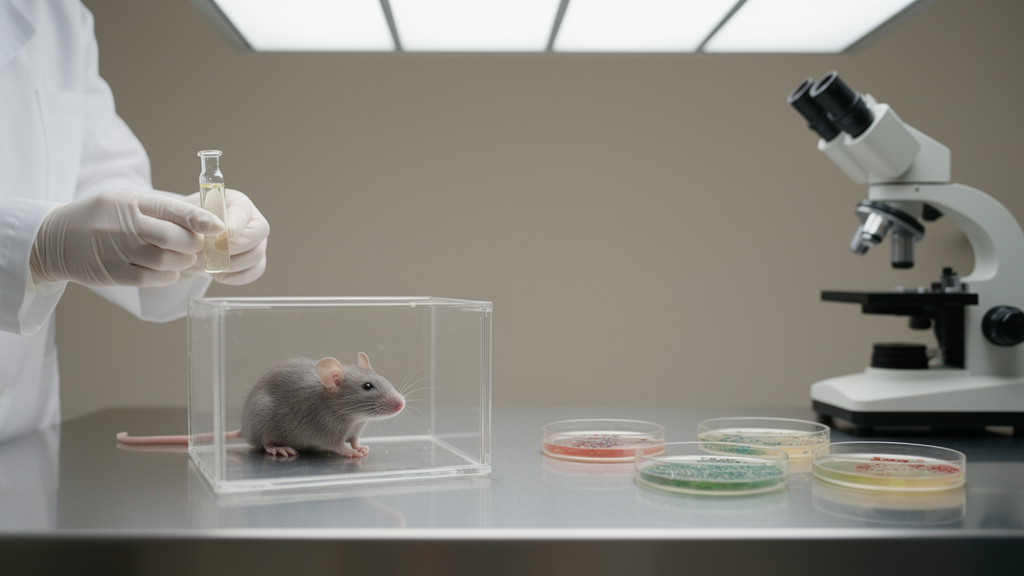
In the DSS-induced colitis mouse model, prophylactic supplementation with L. reuteri Z-621 produced measurable improvements across several clinical indicators. Mice that received the strain lost 3.13 percent of their body weight, compared with 11.54 percent weight loss in the untreated DSS group. The disease activity index, a composite score of weight loss, stool consistency and bleeding, reached 6 in the treated group versus 9.5 in the DSS group. Colon shortening, a hallmark of colonic inflammation, was also blunted: colons measured 5.20 centimeters in treated animals against 4.38 centimeters in the DSS controls, and histopathological examination showed less tissue damage.
The strain itself displayed a suite of traits considered favorable for a probiotic candidate. In laboratory testing, L. reuteri Z-621 showed antimicrobial activity, tolerance of acid and heat, moderate tolerance of bile salts, high cell-surface hydrophobicity and strong adhesion capacity. In vivo safety testing found the strain to be safe, and it remained susceptible to common antibiotics, an important consideration for any microorganism proposed for use in animals or humans.
Mechanistically, the study linked the protective effect to reinforcement of the intestinal barrier. Treated mice showed downregulation of the proinflammatory cytokines interleukin-1 beta, interleukin-6 and tumor necrosis factor-alpha, alongside increased levels of the anti-inflammatory cytokines interleukin-4 and interleukin-10, in both colon tissue and serum. Expression of the tight junction proteins ZO-1 and occludin, which seal the gaps between intestinal epithelial cells, was promoted by the probiotic. The treatment also increased goblet cell numbers and boosted production of mucin MUC2, the protective mucus layer component those cells secrete.
Multi-omics analyses extended the picture to the gut microbial community and its metabolic output. Pre-supplementation with Z-621 modulated microbiota composition in ways associated with reduced inflammation: the relative abundance of potentially pathogenic bacteria, including Clostridium, Segatella and Faecalibaculum, decreased, while beneficial Bifidobacterium increased. The strain also lowered levels of glycerylphosphorylethanolamine, a metabolite the authors identify as harmful and involved in lipid metabolism pathways, correcting metabolic disturbances seen in colitic mice.
Spearman correlation analysis tied these shifts together, highlighting significant interrelationships between the altered microbiota, the changed metabolites and the clinical indicators of colitis. This statistical layer suggests, though it does not prove, that the microbial and metabolic changes contributed to the observed protection rather than merely accompanying it.
The authors conclude that L. reuteri Z-621 alleviates DSS-induced colitis by restoring gut microbial homeostasis, regulating lipid metabolism and reinforcing intestinal barrier integrity, and they position the strain as a promising probiotic candidate. Their broader rationale is that screening core probiotic microorganisms from disease-resistant phenotypes, such as the Hu lamb, may offer new potential alternative prophylactic strategies for inflammatory bowel conditions.
Important caveats frame these findings. The work was conducted in a mouse model of chemically induced colitis, not in humans with ulcerative colitis, and the supplementation was prophylactic, meaning it was given before colitis was induced rather than as a treatment for established disease. Ulcerative colitis is a chronic, relapsing inflammatory bowel disease accompanied by intestinal microbiota imbalance and barrier damage, but whether a strain isolated from lambs can be safely and effectively translated to human patients remains untested. The article is published as open access research, shared early in a version subject to further edits before the final Version of Record.
Within those limits, the study adds a concrete example of how livestock-associated microbiota can yield candidate probiotics with defined mechanisms. By combining clinical scoring, histology, cytokine measurements, barrier protein analysis and multi-omics profiling in a single model, the work maps a plausible pathway from a single bacterial isolate to measurable protection of the gut lining, and it identifies specific microbial, metabolite and immune markers that future studies can test directly.
Subject of Research: A probiotic strain from Hu lambs that alleviates DSS-induced colitis in mice by modulating gut microbiota, lipid metabolism and intestinal barrier function.
Article Title: Limosilactobacillus reuteri Z-621 isolated from Hu lambs alleviates colitis by restoring intestinal barrier homeostasis and modulating the gut microbiota composition and lipid metabolism
Article References: Li, J., Li, J., Lin, M., Liu, M., Jian, Y., Li, J., Huang, S., Zhang, L., Li, S., & Jian, F. (2026). Limosilactobacillus reuteri Z-621 isolated from Hu lambs alleviates colitis by restoring intestinal barrier homeostasis and modulating the gut microbiota composition and lipid metabolism. Animal Microbiome. https://doi.org/10.1186/s42523-026-00641-x
Image Credits: AI Generated
DOI: 10.1186/s42523-026-00641-x
Keywords: Limosilactobacillus reuteri, probiotics, colitis, ulcerative colitis, gut microbiota, intestinal barrier, DSS mouse model, lipid metabolism, Hu lambs, cytokines, multi-omics, Animal Microbiome
Cite Scienmag News
Morgan Morrow. (October 29, 2026). Lamb-Derived Probiotic Strain Eases Colitis Symptoms in Mice Study Finds. Scienmag. https://scienmag.com/lamb-derived-probiotic-strain-eases-colitis-symptoms-in-mice-study-finds/
Morgan Morrow. "Lamb-Derived Probiotic Strain Eases Colitis Symptoms in Mice Study Finds." Scienmag, 29 October 2026, https://scienmag.com/lamb-derived-probiotic-strain-eases-colitis-symptoms-in-mice-study-finds/. Accessed 1 November 2026.
Morgan Morrow. "Lamb-Derived Probiotic Strain Eases Colitis Symptoms in Mice Study Finds." Scienmag. October 29, 2026. https://scienmag.com/lamb-derived-probiotic-strain-eases-colitis-symptoms-in-mice-study-finds/