Thursday, October 29, 2026
Science
No Result
View All Result
  • Login
  • HOME
  • SCIENCE NEWS
  • CONTACT US
  • HOME
  • SCIENCE NEWS
  • CONTACT US
No Result
View All Result
Scienmag
No Result
View All Result
Home Science News Biology

LOX-1 Emerges as a Promising but Unproven Target in Fibrotic Disease

October 27, 2026
in Biology
Drew Townsend
By Drew Townsend Scienmag Editorial Profile - Cell Biology
Reading Time: 3 mins read
0
LOX-1 Emerges as a Promising but Unproven Target in Fibrotic Disease

LOX-1 Emerges as a Promising but Unproven Target in Fibrotic Disease

65
SHARES
587
VIEWS
Share on FacebookShare on Twitter
ADVERTISEMENT

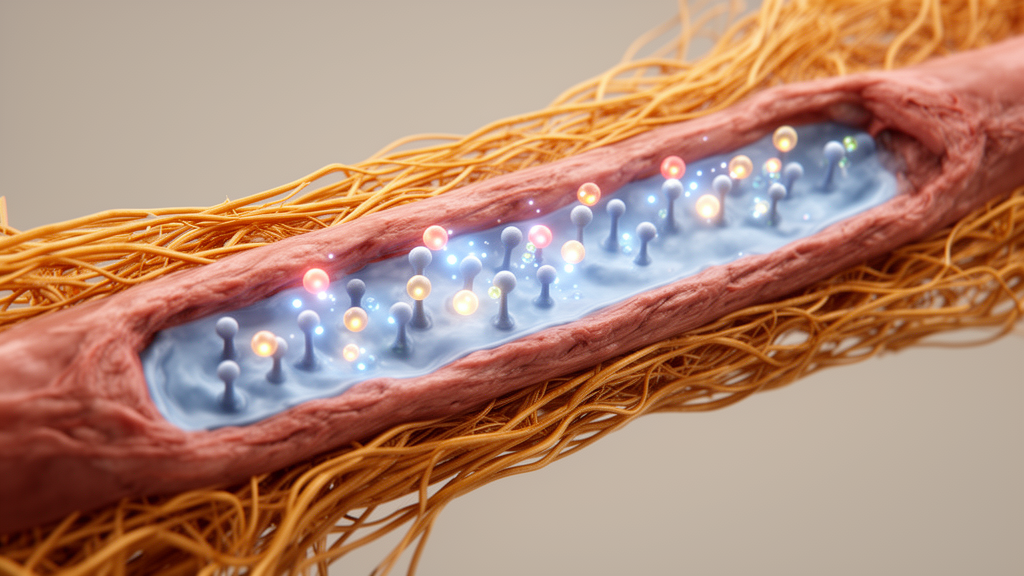
Fibrotic diseases, in which organs accumulate excessive extracellular matrix and progressively lose function, still lack therapies that can prevent, reverse or cure established scarring. A review published in Cell Biology and Toxicology examines one emerging candidate for closing that gap: lectin-like oxidized low-density lipoprotein receptor-1, known as LOX-1, and asks whether it can serve as both a biomarker and a therapeutic target in fibrosis.

The review, authored by Melkamu Tilahun, Mohammed Jemal and colleagues and published online on 27 October 2026 as an open-access article, brings together experimental and clinical evidence on LOX-1’s involvement in fibrotic remodeling across major organs. The authors emphasize from the outset that LOX-1’s contribution appears to vary across organs and disease contexts, and that the strength and mechanistic specificity of the evidence differ considerably among tissues and disease models.

According to the review, LOX-1 is associated with fibrotic remodeling through a set of interconnected mechanisms. These include oxidative stress, inflammation, injury to endothelial and epithelial cells, activation of fibroblasts and their contractile derivatives, myofibroblasts, dysregulated TGF-β/SMAD and related signaling pathways, and altered turnover of extracellular matrix.

The article also evaluates circulating soluble LOX-1, or sLOX-1, as a potential biomarker. The authors report that sLOX-1 shows promise as a complementary marker alongside established indicators in multimarker panels for assessing fibrosis. They are careful, however, to note that its specificity and clinical utility for fibrosis remain uncertain, meaning that elevated or altered levels cannot yet be relied upon to diagnose or monitor fibrotic disease in routine practice.

The review notes that several direct and indirect LOX-1-targeted therapeutic approaches are emerging, but the authors stress that their antifibrotic efficacy, safety and clinical applicability remain to be established. No LOX-1-targeted antifibrotic therapy has yet been validated in patients.

The overall conclusion is measured: LOX-1 represents a promising but incompletely validated biomarker and therapeutic target in fibrotic diseases. The review does not claim that blocking or measuring LOX-1 will change outcomes for patients today; rather, it maps where the evidence stands and where it falls short.

To move the field forward, the authors call for further cell- and tissue-specific mechanistic studies, multi-omics and spatial investigations, rigorous biomarker validation, and well-designed clinical trials. Only such work, they argue, can clarify LOX-1’s diagnostic, prognostic and therapeutic utility and its potential role in individualized antifibrotic treatment.

For readers following fibrosis research, the review’s message is that LOX-1 is a hypothesis worth testing rather than a proven answer. Its links to oxidative stress, inflammation, endothelial injury and myofibroblast activation make it biologically plausible across organs, but the variability of evidence between tissues, the uncertain specificity of soluble LOX-1 as a marker, and the untested safety and efficacy of targeted therapies all mean that clinical translation remains a future goal, not a present reality.

Subject of Research: The role of the oxidized low-density lipoprotein receptor LOX-1 in fibrotic diseases and its potential as a biomarker and therapeutic target.

Article Title: Mechanistic roles of oxidized low density lipoprotein receptor 1(LOX-1) in fibrotic diseases and its diagnostic and therapeutic implications

Article References: Tilahun, M., Adugna, A., Baylie, T., Yeneneh, N. A., Dessalegn, M., Amha, H., Abawa, E. D., Mekete, Y. S., Liyew, W. A., Ashenef, B., Abebaw, D., Asefa, B. L., & Jemal, M. (2026). Mechanistic roles of oxidized low density lipoprotein receptor 1(LOX-1) in fibrotic diseases and its diagnostic and therapeutic implications. Cell Biology and Toxicology. https://doi.org/10.1007/s10565-026-10314-9

Image Credits: AI Generated

DOI: 10.1007/s10565-026-10314-9

Keywords: fibrosis, LOX-1, oxidized LDL receptor, biomarker, sLOX-1, TGF-beta, extracellular matrix, myofibroblast, review, organ fibrosis, Mechanistic, roles

Cite Scienmag News

Drew Townsend. (October 27, 2026). LOX-1 Emerges as a Promising but Unproven Target in Fibrotic Disease. Scienmag. https://scienmag.com/lox-1-emerges-as-a-promising-but-unproven-target-in-fibrotic-disease/

Drew Townsend. "LOX-1 Emerges as a Promising but Unproven Target in Fibrotic Disease." Scienmag, 27 October 2026, https://scienmag.com/lox-1-emerges-as-a-promising-but-unproven-target-in-fibrotic-disease/. Accessed 29 October 2026.

Drew Townsend. "LOX-1 Emerges as a Promising but Unproven Target in Fibrotic Disease." Scienmag. October 27, 2026. https://scienmag.com/lox-1-emerges-as-a-promising-but-unproven-target-in-fibrotic-disease/
Tags: biomarkercirculating soluble LOX-1 as a biomarker for fibrosisextracellular matrixextracellular matrix turnover regulationfibroblast activation and myofibroblast transformationfibrosisLOX-1LOX-1 as a therapeutic target in fibrotic diseasesmechanisms of fibrotic remodeling involving LOX-1mechanisticmyofibroblastorgan fibrosisoxidative stress and inflammation in fibrosisoxidized LDL receptorpotential of LOX-1 inhibition in anti-fibrotic therapyreviewrole of LOX-1 in organ-specific fibrosisrolessLOX-1TGF-betaTGF-β/SMAD signaling pathways in fibrosis
Share26Tweet16
Previous Post

Fifteen Years of Subclavian Artery Occlusion Devices Have Not Yet Proven Better Outcomes

Next Post

Intensive Group Therapy Shows Promise for Children with Selective Mutism in Pilot Trial

Related Posts

Thalamus Remodeling May Drive Neuropathic Pain After Spinal Cord Injury
Biology

Thalamus Remodeling May Drive Neuropathic Pain After Spinal Cord Injury

October 29, 2026
AlphaFold 3 Structures Can Guide T-Cell Receptor Engineering, With Caveats
Biotechnology

AlphaFold 3 Structures Can Guide T-Cell Receptor Engineering, With Caveats

October 29, 2026
Hypergraph Embeddings Reveal How Metabolism Tracks Evolutionary Lineages
Biotechnology

Hypergraph Embeddings Reveal How Metabolism Tracks Evolutionary Lineages

October 29, 2026
Human Pluripotent Stem Cells Made from Umbilical Cord Cells Using Small Molecules
Biotechnology

Human Pluripotent Stem Cells Made from Umbilical Cord Cells Using Small Molecules

October 29, 2026
River Yamuna Bacterium Removes Most Amoxicillin in Lab Test
Biology

River Yamuna Bacterium Removes Most Amoxicillin in Lab Test

October 29, 2026
Prodigiosin Shields Stem Cells From Hypoxia Damage in Cell Study
Biology

Prodigiosin Shields Stem Cells From Hypoxia Damage in Cell Study

October 29, 2026
Next Post
Intensive Group Therapy Shows Promise for Children with Selective Mutism in Pilot Trial

Intensive Group Therapy Shows Promise for Children with Selective Mutism in Pilot Trial

  • Mothers who receive childcare support from maternal grandparents show more optimized

    Mothers who receive childcare support from maternal grandparents show more parental warmth, finds NTU Singapore study

    27656 shares
    Share 11059 Tweet 6912
  • University of Seville Breaks 120-Year-Old Mystery, Revises a Key Einstein Concept

    1061 shares
    Share 424 Tweet 265
  • Bee body mass, pathogens and local climate influence heat tolerance

    682 shares
    Share 273 Tweet 171
  • Researchers record first-ever images and data of a shark experiencing a boat strike

    546 shares
    Share 218 Tweet 137
  • Groundbreaking Clinical Trial Reveals Lubiprostone Enhances Kidney Function

    531 shares
    Share 212 Tweet 133
Science

Embark on a thrilling journey of discovery with Scienmag.com—your ultimate source for cutting-edge breakthroughs. Immerse yourself in a world where curiosity knows no limits and tomorrow’s possibilities become today’s reality!

RECENT NEWS

  • Thalamus Remodeling May Drive Neuropathic Pain After Spinal Cord Injury
  • Calf Gut Bacteria Show Strain-Specific Power Against Diarrhea-Causing Pathogens
  • 3D Facial Views Shift Perceived Severity of Orthodontic Cases Compared With 2D Photos, With Mixed Effects
  • Palestinian medical students report positive attitudes toward research but limited training and output

Categories

  • Agriculture
  • Anthropology
  • Archaeology
  • Athmospheric
  • Biology
  • Biotechnology
  • Blog
  • Bussines
  • Cancer
  • Chemistry
  • Climate
  • Earth Science
  • Editorial Policy
  • Marine
  • Mathematics
  • Medicine
  • Pediatry
  • Policy
  • Psychology & Psychiatry
  • Science Education
  • Science News
  • Social Science
  • Space
  • Technology and Engineering

Subscribe to Blog via Email

Enter your email address to subscribe to this blog and receive notifications of new posts by email.

Join 5,151 other subscribers

© 2025 Scienmag - Science Magazine

Welcome Back!

Login to your account below

Forgotten Password?

Retrieve your password

Please enter your username or email address to reset your password.

Log In
No Result
View All Result
  • HOME
  • SCIENCE NEWS
  • CONTACT US

© 2025 Scienmag - Science Magazine

Discover more from Science

Subscribe now to keep reading and get access to the full archive.

Continue reading