


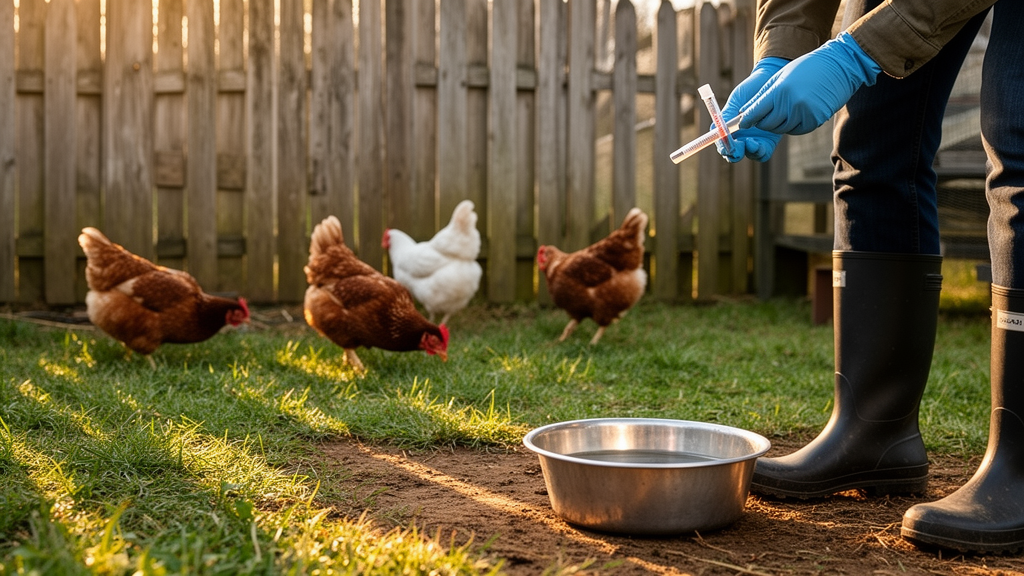
Between January and June 2024, the team collected 99 samples from 15 participating farms. The samples included 17 human nasopharyngeal swabs, 15 poultry fecal matter swabs, 12 poultry water bowl swabs, 14 soil samples, 10 poultry bedding samples, and 31 other environmental swabs.
The study focused on three common bacterial species: Salmonella, E. coli, and Campylobacter, and aimed to describe their antimicrobial resistance profiles among backyard hobby poultry owners and their flocks.
Using Kirby-Bauer disc diffusion analysis, the researchers found that 40 percent of samples, 40 of 99, tested positive for E. coli, while 46 percent, 46 of 99, tested positive for Campylobacter.
Resistance patterns were notable. Among the E. coli isolates, 32.5 percent, or 13 of 40, carried TEM, and among Campylobacter strains, 91.3 percent, or 42 of 46, exhibited resistance to erythromycin.
The authors note that an increasing number of households in the United States keep backyard poultry, including small hobby flocks, or purchase eggs from backyard poultry farmers, with concerns about rising grocery prices and growing interest in homesteading driving a surge in poultry-related sales.
While some research has examined zoonotic bacteria and antimicrobial resistance in backyard environments, the team argues that the expansion of backyard hobby flocks and increasing availability of chicken breeds mean more information is needed about these interactions at the human-animal interface.
According to the study, antimicrobial resistance in backyard hobby poultry settings could contribute to the spread of resistant strains, and harder-to-treat infections, in poultry and humans.
The authors suggest that future studies, including additional participants and serial environmental sampling, could help inform backyard hobby poultry-related public health interventions such as enhanced husbandry practices and biosecurity.
Subject of Research: Antimicrobial resistance profiles of bacteria found in backyard hobby poultry settings in Central North Carolina
Article Title: A One Health approach to antibiotic resistance profiles in backyard (hobby) poultry settings in Central North Carolina
Article References: Tong, S., Faulkner, G., Rhea, S., Greer, A., & Bailey, E. S. (2026). A One Health approach to antibiotic resistance profiles in backyard (hobby) poultry settings in Central North Carolina. PLOS Water, 5(10), e0000565. https://doi.org/10.1371/journal.pwat.0000565
Image Credits: AI Generated
DOI: 10.1371/journal.pwat.0000565
Keywords: backyard poultry, antimicrobial resistance, E. coli, Campylobacter, Salmonella, One Health, erythromycin resistance, zoonotic bacteria, North Carolina, public health, biosecurity, Health
Cite Scienmag News
William Thompson. (October 27, 2026). Antibiotic-Resistant Bacteria Found Around Backyard Poultry Flocks in North Carolina. Scienmag. https://scienmag.com/antibiotic-resistant-bacteria-found-around-backyard-poultry-flocks-in-north-carolina/
William Thompson. "Antibiotic-Resistant Bacteria Found Around Backyard Poultry Flocks in North Carolina." Scienmag, 27 October 2026, https://scienmag.com/antibiotic-resistant-bacteria-found-around-backyard-poultry-flocks-in-north-carolina/. Accessed 27 October 2026.
William Thompson. "Antibiotic-Resistant Bacteria Found Around Backyard Poultry Flocks in North Carolina." Scienmag. October 27, 2026. https://scienmag.com/antibiotic-resistant-bacteria-found-around-backyard-poultry-flocks-in-north-carolina/


