


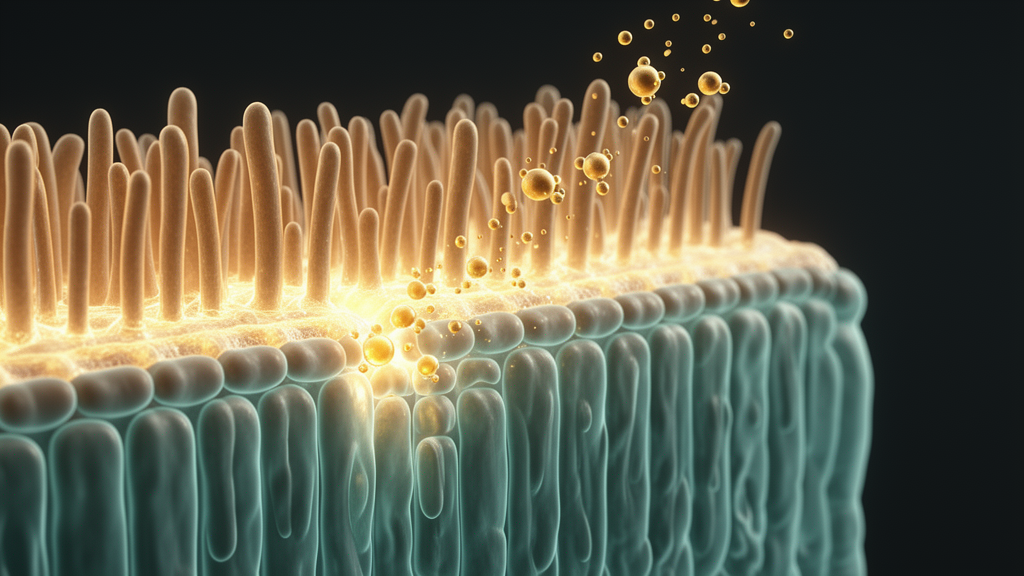
Salicylic acid, a phenolic acid common in edible plants, has emerged as the core systemically bioavailable constituent behind the gut-protective effects of Tiaoqi Daozhi Decoction (TQDZD), a traditional formulation of eight medicine-food homologous botanicals, in a rat model of constipation-predominant irritable bowel syndrome (IBS-C). Using ultra-performance liquid chromatography–tandem mass spectrometry, researchers identified 1,962 non-redundant compounds in the decoction’s aqueous extract, dominated by phenolic acids and flavonoids. In dosed rat serum, 257 systemically bioavailable components were detected, of which 150, or 58.4 percent, were prototype constituents absorbed unchanged.
Multi-criteria screening, requiring a treatment-to-control peak area ratio of at least 2, a top-20 abundance rank in the formula, a coefficient of variation below 30 percent, and Level 1 identification confidence, narrowed the field to four core prototypes: salicylic acid, N-acetyl-L-phenylalanine, L-valyl-L-phenylalanine, and L-phenylalanyl-L-hydroxyproline. Salicylic acid was prioritized for functional validation because of its natural abundance in plant-based foods and long history of safe dietary exposure.
The animal model of IBS-C was induced by ice-water enema, and a complementary in vitro model used lipopolysaccharide-stimulated Caco-2 monolayers to assess barrier function through FITC-dextran flux. Untargeted serum metabolomics coupled with orthogonal partial least-squares discriminant analysis revealed that IBS-C rats showed profound dysregulation of a lipid-inflammatory network, involving glycerophospholipid metabolism, linoleic acid metabolism, and sphingolipid signaling. TQDZD intervention remodeled this network in a dose-dependent manner, and notably, the metabolic trajectory of the high-dose group converged strikingly with that of the BTK modulator orelabrutinib, pointing to Bruton’s tyrosine kinase as a central mechanistic node.
In vivo, TQDZD significantly reduced intestinal permeability, restored colonic expression of the tight junction proteins ZO-1, Occludin, and Claudin-1, and suppressed mucosal and serum levels of the inflammatory mediators TNF-α, IL-6, IL-1β, and MCP-1, all with p values below 0.001. Mechanistic experiments showed that the decoction inhibited the BTK–SYK–PLCγ2–AKT axis, blocking IκBα phosphorylation and p65 nuclear translocation, the non-canonical NF-κB cascade that drives inflammatory cytokine release. BTK knockdown by siRNA potentiated these effects, whereas plasmid-mediated BTK overexpression abrogated them, confirming strict BTK dependence.
Salicylic acid alone fully reproduced the decoction’s phenotype both in vitro and in vivo, and its activity was likewise BTK-dependent. Beyond suppressing cytokine release, the compound attenuated mast cell degranulation and CD19+ B cell infiltration, while simultaneously upregulating tight junction proteins and reducing FITC-dextran permeability, thereby restoring intestinal epithelial barrier integrity. The authors conclude that these findings provide a mechanistic rationale for developing phenolic-acid-rich botanical blends as supportive dietary strategies for IBS-C and related barrier-centric gastrointestinal disorders, within a functional food framework rather than as a drug therapy.
Subject of Research: Identification of salicylic acid as the bioavailable constituent of Tiaoqi Daozhi Decoction that restores gut barrier function in constipation-predominant IBS via BTK signaling
Article Title: Salicylic Acid as a Food‐Derived Bioactive Constituent of Tiaoqi Daozhi Decoction: A Potential Functional Food Ingredient to Restoring Gut Barrier Function in Constipation‐Predominant IBS
Article References: Duan, M., Huang, L., Xu, Y., Huang, Y., & Yang, X. (2026). Salicylic Acid as a Food‐Derived Bioactive Constituent of Tiaoqi Daozhi Decoction: A Potential Functional Food Ingredient to Restoring Gut Barrier Function in Constipation‐Predominant IBS. Food Science & Nutrition, 14(11), Article e72483. https://doi.org/10.1002/fsn3.72483
Image Credits: AI Generated
DOI: 10.1002/fsn3.72483
Keywords: salicylic acid, Tiaoqi Daozhi Decoction, irritable bowel syndrome, IBS-C, gut barrier, BTK signaling, NF-kB, tight junctions, polyphenols, functional food, intestinal permeability, metabolomics
Cite Scienmag News
Alan Morgan. (October 27, 2026). Salicylic Acid Identified as Key Gut Barrier Compound in Traditional Decoction for IBS. Scienmag. https://scienmag.com/salicylic-acid-identified-as-key-gut-barrier-compound-in-traditional-decoction-for-ibs/
Alan Morgan. "Salicylic Acid Identified as Key Gut Barrier Compound in Traditional Decoction for IBS." Scienmag, 27 October 2026, https://scienmag.com/salicylic-acid-identified-as-key-gut-barrier-compound-in-traditional-decoction-for-ibs/. Accessed 27 October 2026.
Alan Morgan. "Salicylic Acid Identified as Key Gut Barrier Compound in Traditional Decoction for IBS." Scienmag. October 27, 2026. https://scienmag.com/salicylic-acid-identified-as-key-gut-barrier-compound-in-traditional-decoction-for-ibs/


