

Tuesday, October 27, 2026
Science
No Result
View All Result
  • Login
  • HOME
  • SCIENCE NEWS
  • CONTACT US
  • HOME
  • SCIENCE NEWS
  • CONTACT US
No Result
View All Result
Scienmag
No Result
View All Result
Home Science News Agriculture

New High-Yield Black Scented Rice Variety Developed Using Advanced Breeding Methods in Northeast India

October 27, 2026
in Agriculture
Alan Morgan
By Alan Morgan Scienmag Editorial Profile - Precision Agriculture
Reading Time: 3 mins read
0
New High-Yield Black Scented Rice Variety Developed Using Advanced Breeding Methods in Northeast India

New High-Yield Black Scented Rice Variety Developed Using Advanced Breeding Methods in Northeast India

65
SHARES
587
VIEWS
Share on FacebookShare on Twitter
ADVERTISEMENT

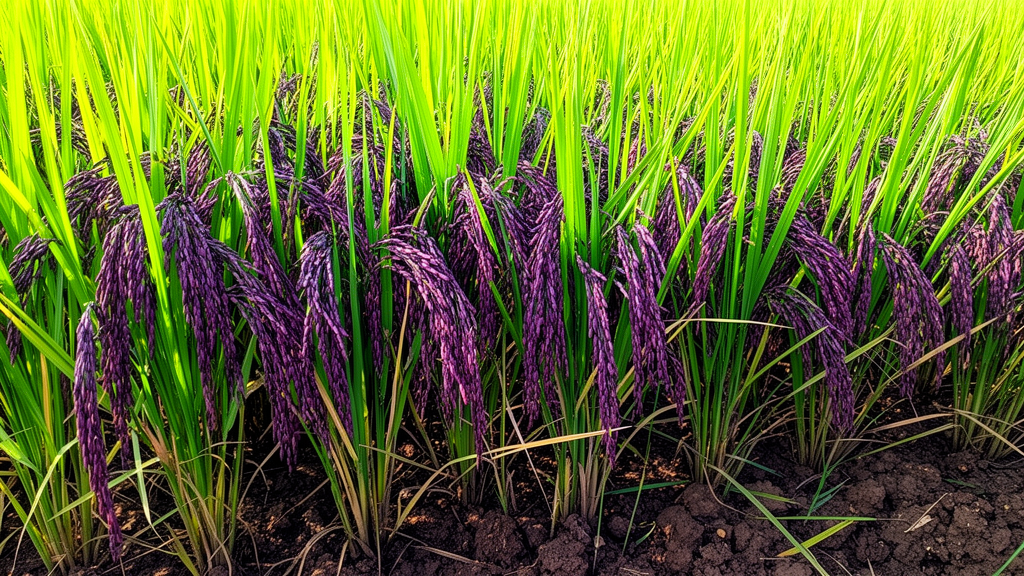
Researchers have successfully developed a high-yielding, semi-dwarf variety of ‘Chakhao,’ a black scented rice endemic to Manipur, India, by integrating advanced breeding methodologies such as Weighted Average of Average Seed-by-Generation (WAASB) and Multi-Gene Identification (MGIDI). This study, published in the Indian Journal of Genetics and Plant Breeding, addresses the traditional limitations of Chakhao, a variety prized for its mild, nutty flavor and distinctive aroma, which also exhibits a deep purple coloration upon cooking due to its high anthocyanin content. Traditionally, Chakhao varieties have been recognized for their unique sensory attributes but suffer from relatively low yields, typically ranging between 2000 and 2500 kilograms per hectare. The current research marks the first comprehensive attempt in India to breed a High Yield Variety (HYV) of scented Chakhao by systematically evaluating stability, performance across yield and yield-related traits, and geographical indication-related characteristics using these sophisticated analytical frameworks.

The resulting variety, designated RC Manichakhao 1, has demonstrated significant agronomic improvements over existing local cultivars. This semi-dwarf, HYV rice variety achieved a substantial yield increase of 56% when compared to Chakhao Poireiton and a 36% increase relative to Chakhao Amubi. Crucially, the development process ensured that the desirable quality traits of the original black scented rice were maintained alongside the yield gains. Specifically, the variety RC Manichakhao 1 exhibits an improved amylose content of 11% and an Amylose Segregation Value (ASV) of 5. Furthermore, the variety successfully preserves the characteristic aroma and the high anthocyanin content, which was measured at 326.48 milligrams per 100 grams, thereby aligning with the benefits associated with its Geographical Indication (GI) tag and meeting increasing market demands.

The potential impact of this development is substantial, as RC Manichakhao 1 offers a projected yield potential of 4500–5000 kilograms per hectare, effectively doubling the grain yield of traditional varieties. The application of WAASB and MGIDI methods was pivotal in this success, as these techniques allowed for a comprehensive evaluation of the genetic stability and performance of the developed lines across multiple generations, ensuring that the enhanced yield did not compromise the quality traits that define Chakhao.

The successful development of RC Manichakhao 1 represents a significant advancement in agricultural biotechnology within the region. The combination of semi-dwarf architecture, high yield potential, and the retention of critical quality markers like aroma and anthocyanin content positions this new variety as a vital resource for sustainable intensification of rice farming in Northeast India. This research underscores the effectiveness of integrating complex genomic and phenotypic evaluation tools, such as WAASB and MGIDI, into regional crop improvement programs to meet evolving market needs and enhance food security while preserving unique cultural and agricultural heritage.

Subject of Research: Development of a high-yielding variety of black scented rice (Chakhao) using WAASB and MGIDI breeding methods in Northeast India.

Article Title: Revolutionizing Northeast India’s Black Scented Rice, Chakhao (Oryza sativa L.) with MGIDI and WAASB Methods

Article References: Sarika, K., Singh, S. G., Devi, E. L., Devi, A. G., Verma, H., Umakanta, N., Singh, A. R., Kumar, A., Devi, C. P., & Singh, S. B. (2026). Revolutionizing Northeast India’s Black Scented Rice, Chakhao (Oryza sativa L.) with MGIDI and WAASB Methods. Indian Journal of Genetics and Plant Breeding. https://doi.org/10.1007/s44489-026-00057-6

Image Credits: AI Generated

DOI: 10.1007/s44489-026-00057-6

Keywords: Black Scented Rice, Chakhao, Rice Breeding, High Yield Variety, WAASB, MGIDI, Northeast India, Anthocyanins, Oryza sativa, Agricultural Biotechnology, Revolutionizing, Northeast

Cite Scienmag News

Alan Morgan. (October 27, 2026). New High-Yield Black Scented Rice Variety Developed Using Advanced Breeding Methods in Northeast India. Scienmag. https://scienmag.com/new-high-yield-black-scented-rice-variety-developed-using-advanced-breeding-methods-in-northeast-india/


Alan Morgan. "New High-Yield Black Scented Rice Variety Developed Using Advanced Breeding Methods in Northeast India." Scienmag, 27 October 2026, https://scienmag.com/new-high-yield-black-scented-rice-variety-developed-using-advanced-breeding-methods-in-northeast-india/. Accessed 27 October 2026.

Alan Morgan. "New High-Yield Black Scented Rice Variety Developed Using Advanced Breeding Methods in Northeast India." Scienmag. October 27, 2026. https://scienmag.com/new-high-yield-black-scented-rice-variety-developed-using-advanced-breeding-methods-in-northeast-india/

Tags: advanced plant breeding techniquesAgricultural biotechnologyanthocyaninsaromatic black rice cultivationBlack Scented RiceChakhaoChakhao rice varietyHigh Yield Varietyhigh-yield rice breedinghigh-yielding traditional rice varietiesIndia rice genetic improvementMGIDInortheastNortheast Indianortheast India rice researchnutraceutical benefits of anthocyanin-rich riceOryza sativapreservation of rice sensory and nutritional qualitiesRevolutionizingrice breedingsemi-dwarf rice varietiesWAASBWAASB and MGIDI in rice development
Share26Tweet16
Previous Post

Political Bias and Believability Shape How Users Report Deepfakes

Next Post

Rangers Triple Poacher Detection Rates With a Structured Search Framework in Malaysian Tiger Forest

Related Posts

Sequential Herbicide Application Boost Yield and Economics in Spring Maize Cultivation
Agriculture

Sequential Herbicide Application Boost Yield and Economics in Spring Maize Cultivation

October 27, 2026
Ryegrass Stem Rust Resistance Genes Mapped Through Combined GWAS and QTL Analysis
Agriculture

Ryegrass Stem Rust Resistance Genes Mapped Through Combined GWAS and QTL Analysis

October 27, 2026
Soft Rot Bacterium Pectobacterium brasiliense Identified on Mississippi Summer Squash for the First Time
Agriculture

Soft Rot Bacterium Pectobacterium brasiliense Identified on Mississippi Summer Squash for the First Time

October 27, 2026
Seed Strategies Shift With Elevation in Alpine Meadow Communities
Agriculture

Seed Strategies Shift With Elevation in Alpine Meadow Communities

October 27, 2026
Research report: Historical breeding reveals graph-based structure dynamics and intracellular DNA transfer in rice mitogenome
Agriculture

Research report: Historical breeding reveals graph-based structure dynamics and intracellular DNA transfer in rice mitogenome

October 27, 2026
Leaf-Canopy Decoupling: Why Healthy Leaves Can Still Mean Hungry Crops Under Nitrogen Stress
Agriculture

Leaf-Canopy Decoupling: Why Healthy Leaves Can Still Mean Hungry Crops Under Nitrogen Stress

October 27, 2026
Next Post
Rangers Triple Poacher Detection Rates With a Structured Search Framework in Malaysian Tiger Forest

Rangers Triple Poacher Detection Rates With a Structured Search Framework in Malaysian Tiger Forest

  • Mothers who receive childcare support from maternal grandparents show more optimized

    Mothers who receive childcare support from maternal grandparents show more parental warmth, finds NTU Singapore study

    27656 shares
    Share 11059 Tweet 6912
  • University of Seville Breaks 120-Year-Old Mystery, Revises a Key Einstein Concept

    1061 shares
    Share 424 Tweet 265
  • Bee body mass, pathogens and local climate influence heat tolerance

    682 shares
    Share 273 Tweet 171
  • Researchers record first-ever images and data of a shark experiencing a boat strike

    546 shares
    Share 218 Tweet 137
  • Groundbreaking Clinical Trial Reveals Lubiprostone Enhances Kidney Function

    531 shares
    Share 212 Tweet 133
Science

Embark on a thrilling journey of discovery with Scienmag.com—your ultimate source for cutting-edge breakthroughs. Immerse yourself in a world where curiosity knows no limits and tomorrow’s possibilities become today’s reality!

RECENT NEWS

  • Rangers Triple Poacher Detection Rates With a Structured Search Framework in Malaysian Tiger Forest
  • New High-Yield Black Scented Rice Variety Developed Using Advanced Breeding Methods in Northeast India
  • Political Bias and Believability Shape How Users Report Deepfakes
  • Climate Model Predict Skill for Marine Heat Waves in Coral Reefs

Categories

  • Agriculture
  • Anthropology
  • Archaeology
  • Athmospheric
  • Biology
  • Biotechnology
  • Blog
  • Bussines
  • Cancer
  • Chemistry
  • Climate
  • Earth Science
  • Editorial Policy
  • Marine
  • Mathematics
  • Medicine
  • Pediatry
  • Policy
  • Psychology & Psychiatry
  • Science Education
  • Science News
  • Social Science
  • Space
  • Technology and Engineering

Subscribe to Blog via Email

Enter your email address to subscribe to this blog and receive notifications of new posts by email.

Join 5,151 other subscribers

© 2025 Scienmag - Science Magazine

Welcome Back!

Login to your account below

Forgotten Password?

Retrieve your password

Please enter your username or email address to reset your password.

Log In
No Result
View All Result
  • HOME
  • SCIENCE NEWS
  • CONTACT US

© 2025 Scienmag - Science Magazine

Discover more from Science

Subscribe now to keep reading and get access to the full archive.

Continue reading