


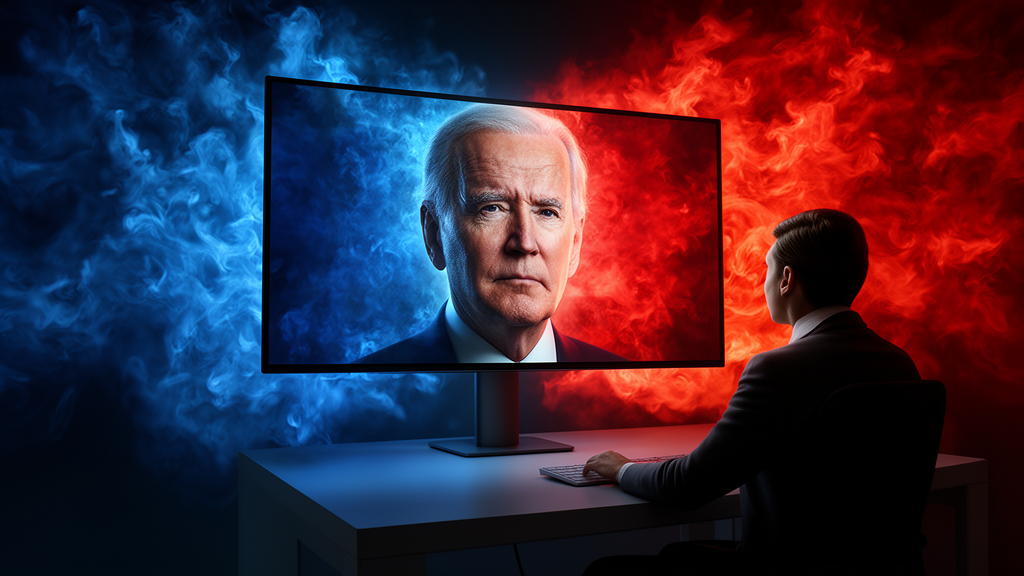
A recent study published in Information Systems Frontiers investigates the complex interplay between political alignment, perceived believability, and user reporting intentions when encountering synthetic media on social platforms. The research specifically addresses whether online users can effectively distinguish between authentic videos and sophisticated political deepfakes, and how these perceptions subsequently influence their willingness to report the content. The findings reveal that the heuristic realism of AI-generated videos is not the sole determinant of credibility, suggesting that political context plays a critical role in shaping user beliefs and subsequent actions within polarized digital environments.
The researchers conducted an online experiment involving participants who viewed both deepfake and real videos featuring two prominent presidential candidates during the early stages of the 2024 US presidential election. This experimental setup allowed the team to observe user reactions and reporting behaviors under controlled conditions. The results provided empirical evidence that political deepfakes are significantly more likely to be reported than genuine videos. This phenomenon suggests a critical disconnect: while deepfakes are engineered to appear realistic, their synthetic nature often leads to a perception of lower believability among users, thereby triggering reporting mechanisms.
Furthermore, the study uncovered a nuanced pattern related to political affiliation. Users demonstrated superior discernment and a stronger intention to report content when the video was politically aligned with their own views. This observation points toward the possibility that political alignment serves as a catalyst for increased cognitive engagement. By aligning content with existing ideological frameworks, users appear more motivated to scrutinize and act upon the media, even if the content is politically charged.
To interpret these findings, the researchers utilized the Elaboration Likelihood Model (ELM) as an interpretive lens. The ELM helps explain why political alignment might effectively narrow the perceived gap between believability and reporting behavior in highly polarized digital landscapes. In essence, when a piece of media resonates with a user’s political identity, the cognitive effort required to process and report it is heightened, regardless of whether the media is technically realistic or not. This suggests that political identity acts as a powerful heuristic, guiding users’ judgments and actions in the complex ecosystem of online political discourse.
Subject of Research: An experiment investigating how political alignment and perceived believability influence social media users' reporting intentions regarding AI-generated political videos.
Article Title: Deepfake or Real? How Political Alignment and Believability Influence Reporting on Social Media
Article References: Feng, M., Lioliou, E., Dickert, S., & Panzarasa, P. (2026). Deepfake or Real? How Political Alignment and Believability Influence Reporting on Social Media. Information Systems Frontiers. https://doi.org/10.1007/s10796-026-10833-0
Image Credits: AI Generated
DOI: 10.1007/s10796-026-10833-0
Keywords: Deepfakes, Social Media, Political Bias, Cognitive Engagement, Elaboration Likelihood Model, AI Media, Misinformation, Digital Media, Deepfake, Real, Political, Alignment
Cite Scienmag News
Denise Maddox. (October 27, 2026). Political Bias and Believability Shape How Users Report Deepfakes. Scienmag. https://scienmag.com/political-bias-and-believability-shape-how-users-report-deepfakes/
Denise Maddox. "Political Bias and Believability Shape How Users Report Deepfakes." Scienmag, 27 October 2026, https://scienmag.com/political-bias-and-believability-shape-how-users-report-deepfakes/. Accessed 27 October 2026.
Denise Maddox. "Political Bias and Believability Shape How Users Report Deepfakes." Scienmag. October 27, 2026. https://scienmag.com/political-bias-and-believability-shape-how-users-report-deepfakes/


