


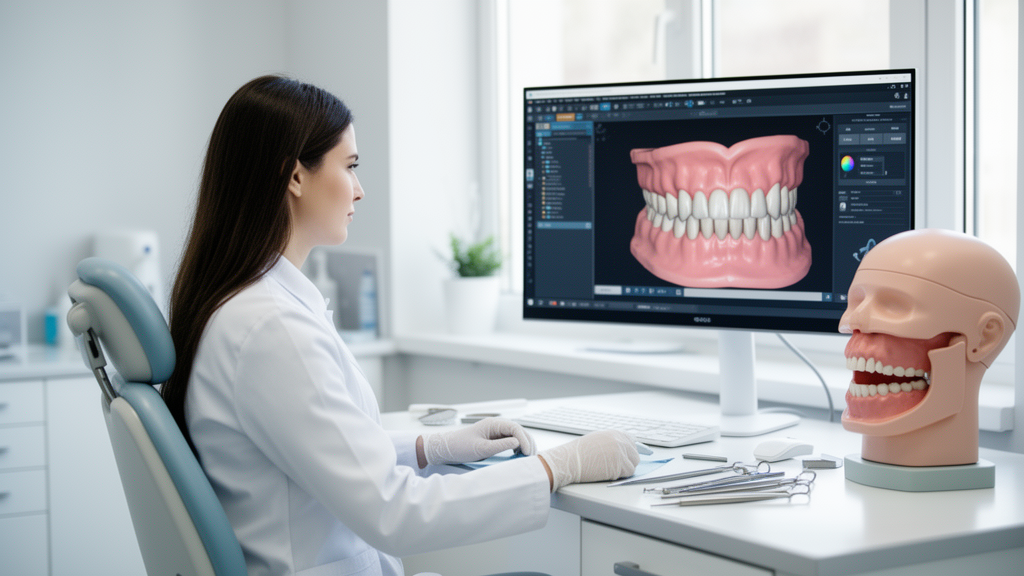
A systematic review published in Frontiers in Digital Health has synthesized the current evidence on artificial intelligence in dental education, covering undergraduate, postgraduate, and continuing education. The review, conducted according to PRISMA guidelines, searched Scopus, PubMed, and IEEE Xplore for studies published between 2020 and 2025 that evaluated AI applications in dental education using predefined PICO criteria.
The included literature showed a shift in the technologies being studied. Earlier work focused on machine learning, deep learning, and computer vision systems evaluated mainly for diagnostic support, while more recent studies have examined generative AI platforms, including large language models and retrieval-augmented generation systems. Educational outcomes assessed across the studies included knowledge acquisition, diagnostic accuracy, clinical reasoning, procedural skills, learner engagement, and perceptions of AI-assisted learning.
Across the included studies, AI applications were frequently associated with favorable diagnostic and examination performance, and in selected educational contexts with supportive findings related to clinical reasoning, technical competency, feedback, and self-directed learning. The review’s authors caution, however, that the evidence base was predominantly built on technical performance assessments and observational or cross-sectional designs, which limits what can be concluded about educational effectiveness.
The review describes AI as an increasingly explored complementary educational resource, with potential applications including interactive tutoring, adaptive learning, and support for clinical reasoning. It emphasizes that heterogeneous methodologies and limited longitudinal evidence mean the field needs standardized educational evaluation and responsible curricular integration. The authors conclude that AI shows potential as a complementary resource in dental education, but that its integration should remain pedagogically guided and ethically supervised while future research establishes its educational effectiveness through standardized and longitudinal evaluation.
Subject of Research: A systematic review of artificial intelligence applications in dental education
Article Title: Artificial intelligence in odontology education
Article References: Morales-Cevallos, M. B., Ma Lam, C. B., Serrano Avalos, K. V., Concha Guailla, M. J., & Vique Lopez, D. F. (2026). Artificial intelligence in odontology education. Frontiers in Digital Health, 8, 1965185. https://doi.org/10.3389/fdgth.2026.1965185
Image Credits: AI Generated
DOI: 10.3389/fdgth.2026.1965185
Keywords: artificial intelligence, dental education, systematic review, machine learning, generative AI, large language models, clinical reasoning, diagnostic accuracy, PRISMA, curriculum, Artificial, intelligence
Cite Scienmag News
Courtney Benton. (October 27, 2026). AI shows promise as a complementary tool in dental education, review finds. Scienmag. https://scienmag.com/ai-shows-promise-as-a-complementary-tool-in-dental-education-review-finds/
Courtney Benton. "AI shows promise as a complementary tool in dental education, review finds." Scienmag, 27 October 2026, https://scienmag.com/ai-shows-promise-as-a-complementary-tool-in-dental-education-review-finds/. Accessed 27 October 2026.
Courtney Benton. "AI shows promise as a complementary tool in dental education, review finds." Scienmag. October 27, 2026. https://scienmag.com/ai-shows-promise-as-a-complementary-tool-in-dental-education-review-finds/


