

Tuesday, October 27, 2026
Science
No Result
View All Result
  • Login
  • HOME
  • SCIENCE NEWS
  • CONTACT US
  • HOME
  • SCIENCE NEWS
  • CONTACT US
No Result
View All Result
Scienmag
No Result
View All Result
Home Science News Biology

Glutamine-aspartate tradeoff shapes cancer cell growth and flexibility

October 27, 2026
in Biology
Nathaniel Bowman
By Nathaniel Bowman Scienmag Editorial Profile - Precision Oncology
Reading Time: 2 mins read
0
Glutamine-aspartate tradeoff shapes cancer cell growth and flexibility

Glutamine-aspartate tradeoff shapes cancer cell growth and flexibility

65
SHARES
587
VIEWS
Share on FacebookShare on Twitter
ADVERTISEMENT

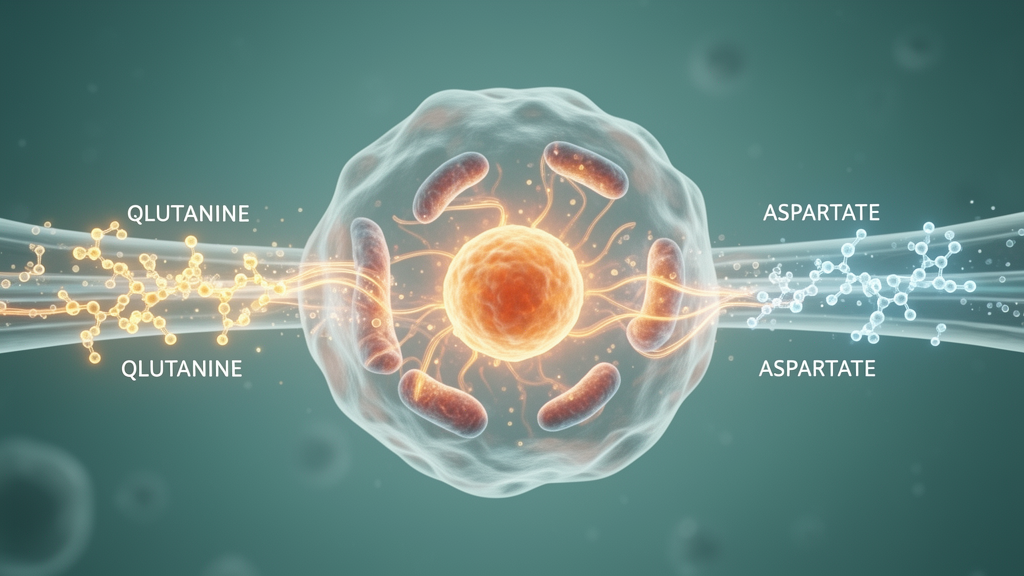
Cancer cells often become hooked on specific nutrients, and glutamine is one of the most notorious. A new study in Genome Biology offers a systematic way to map such dependencies, using extracellular glutamine dependence as a test case. Researchers led by Karin Ortmayr, Meret Ringwald and Mattia Zampieri measured the rates at which 54 cancer cell lines exchanged metabolites with their surroundings, comparing lines with different degrees of reliance on glutamine.

They combined this with metabolic profiling of human stem-cell differentiation to ask how normal and malignant cells handle the same chemistry differently. The central discovery is a tissue-associated split in how cells make glutamate, a central metabolic intermediate. Some cell types lean on glutamine as the source, while others preferentially use aspartate.

This difference is not arbitrary: the two strategies are linked to a trade-off between rapid proliferation and metabolic flexibility. Cells built for fast growth exploit one route heavily, which makes them efficient but vulnerable when their preferred nutrient disappears, while cells that keep both routes open grow less explosively but tolerate changing nutrient conditions better. To probe what happens when the fuel is removed, the team performed time-resolved intracellular metabolomics following glutamine withdrawal.

This shared bottleneck shows why glutamine is so deeply woven into the machinery of proliferation, and it demonstrates the power of the framework to pinpoint which specific metabolic reactions a nutrient dependency constrains. Yet the purine shortage was only part of the story. The researchers found that this metabolic limitation alone was insufficient to explain glutamine dependency, meaning that additional regulatory responses to glutamine deprivation must contribute to the growth arrest that follows.

The inclusion of human stem-cell differentiation data adds an important dimension. By comparing cancer cell lines with differentiating stem cells, the study ties the glutamine-versus-aspartate preference to tissue-associated metabolic states rather than to malignancy alone. The broader significance lies in the framework itself.

Rather than testing one nutrient and one cell line at a time, the approach links measured metabolite exchange rates across many lines to the degree of nutrient dependence, then validates the resulting hypotheses with time-resolved metabolomics. The authors report that the method coordinates the established functions of glutamine, aspartate and asparagine across diverse cancer cell types, and they argue it can be extended to characterize and pharmacologically target metabolic dependencies beyond glutamine addiction. Important caveats remain.

The findings rest on cultured cancer cell lines and stem-cell differentiation models, so how the trade-off plays out in living tumors, with their fluctuating nutrient environments, will require further study. The regulatory mechanisms behind the growth arrest also remain unidentified.

Subject of Research: Glutamine and aspartate metabolism in cancer cell nutrient dependency

Article Title: The glutamine-aspartate metabolic tradeoff between fast growth and metabolic flexibility

Article References: Ortmayr, K., Ringwald, M., Schuhknecht, L., Dubuis, S., Panoussis, E., Blaesi, M., Jehanno, C., Grieder, S. D., Bentires-Alj, M., Mall, M., & Zampieri, M. (2026). The glutamine-aspartate metabolic tradeoff between fast growth and metabolic flexibility. Genome Biology. https://doi.org/10.1186/s13059-026-04314-5

Image Credits: AI Generated

DOI: 10.1186/s13059-026-04314-5

Keywords: glutamine, aspartate, glutamate biosynthesis, cancer metabolism, metabolic flexibility, purine biosynthesis, nutrient dependency, metabolomics, cancer cell lines, stem-cell differentiation, Genome Biology, glutamine-aspartate

Cite Scienmag News

Nathaniel Bowman. (October 27, 2026). Glutamine-aspartate tradeoff shapes cancer cell growth and flexibility. Scienmag. https://scienmag.com/glutamine-aspartate-tradeoff-shapes-cancer-cell-growth-and-flexibility/

Nathaniel Bowman. "Glutamine-aspartate tradeoff shapes cancer cell growth and flexibility." Scienmag, 27 October 2026, https://scienmag.com/glutamine-aspartate-tradeoff-shapes-cancer-cell-growth-and-flexibility/. Accessed 27 October 2026.

Nathaniel Bowman. "Glutamine-aspartate tradeoff shapes cancer cell growth and flexibility." Scienmag. October 27, 2026. https://scienmag.com/glutamine-aspartate-tradeoff-shapes-cancer-cell-growth-and-flexibility/


Tags: aspartatecancer cell linescancer cell metabolismcancer cell vulnerability to nutrient deprivationcancer metabolismextracellular metabolite exchange in cancerGenome Biologyglutamate and aspartate in tumor growthglutamate biosynthesisglutamineglutamine dependence in cancerglutamine-aspartatemetabolic flexibilitymetabolic flexibility in cancer cellsmetabolic profiling of cancer cell linesMetabolomicsnutrient dependencynutrient trade-offs in cancer proliferationnutrient withdrawal effects on cancerpurine biosynthesisrapid cancer cell growth strategiesstem cell differentiationstem cell differentiation and metabolismtissue-specific metabolic pathways
Share26Tweet16
Previous Post

Fitness and Body Fat Shape Heat Strain in Female and Male Wildland Firefighters

Next Post

Bacterial Morphogen Thallusin Detected for the First Time in Coastal Seawater

Related Posts

Two New Scorpionfly Species Discovered in China’s Mountain Forests
Biology

Two New Scorpionfly Species Discovered in China’s Mountain Forests

October 27, 2026
Genome Sequencing of Four Gastric Biopsies Flags Shared Gene Annotations in H. pylori Infection
Biology

Genome Sequencing of Four Gastric Biopsies Flags Shared Gene Annotations in H. pylori Infection

October 27, 2026
Seaweed fiber fucoidan reshapes gut microbiota and protects mice from fatty liver disease
Biology

Seaweed fiber fucoidan reshapes gut microbiota and protects mice from fatty liver disease

October 27, 2026
Hydrogels That Time Antibiotics and Growth Factors Could Reshape Infected Bone Repair
Biology

Hydrogels That Time Antibiotics and Growth Factors Could Reshape Infected Bone Repair

October 27, 2026
Traditional Chinese Formula Shields Stomach From Alcohol Damage by Reshaping Gut Bacteria
Biology

Traditional Chinese Formula Shields Stomach From Alcohol Damage by Reshaping Gut Bacteria

October 27, 2026
Invasive fungal infections linked to sharply higher risks of death and graft failure after kidney transplantation
Biology

Invasive fungal infections linked to sharply higher risks of death and graft failure after kidney transplantation

October 27, 2026
Next Post
Bacterial Morphogen Thallusin Detected for the First Time in Coastal Seawater

Bacterial Morphogen Thallusin Detected for the First Time in Coastal Seawater

  • Mothers who receive childcare support from maternal grandparents show more optimized

    Mothers who receive childcare support from maternal grandparents show more parental warmth, finds NTU Singapore study

    27656 shares
    Share 11059 Tweet 6912
  • University of Seville Breaks 120-Year-Old Mystery, Revises a Key Einstein Concept

    1061 shares
    Share 424 Tweet 265
  • Bee body mass, pathogens and local climate influence heat tolerance

    682 shares
    Share 273 Tweet 171
  • Researchers record first-ever images and data of a shark experiencing a boat strike

    546 shares
    Share 218 Tweet 137
  • Groundbreaking Clinical Trial Reveals Lubiprostone Enhances Kidney Function

    531 shares
    Share 212 Tweet 133
Science

Embark on a thrilling journey of discovery with Scienmag.com—your ultimate source for cutting-edge breakthroughs. Immerse yourself in a world where curiosity knows no limits and tomorrow’s possibilities become today’s reality!

RECENT NEWS

  • Two New Scorpionfly Species Discovered in China’s Mountain Forests
  • IMO’s Shipping Climate Rules Promise Justice but Leave the Money Rules Unwritten
  • From Fighting Disease to Building Health: Salutogenesis Reshapes Public Health Thinking
  • Feeling Like a Professional May Drive How Childcare Trainees Rate Their Own Caregiving Skills

Categories

  • Agriculture
  • Anthropology
  • Archaeology
  • Athmospheric
  • Biology
  • Biotechnology
  • Blog
  • Bussines
  • Cancer
  • Chemistry
  • Climate
  • Earth Science
  • Editorial Policy
  • Marine
  • Mathematics
  • Medicine
  • Pediatry
  • Policy
  • Psychology & Psychiatry
  • Science Education
  • Science News
  • Social Science
  • Space
  • Technology and Engineering

Subscribe to Blog via Email

Enter your email address to subscribe to this blog and receive notifications of new posts by email.

Join 5,151 other subscribers

© 2025 Scienmag - Science Magazine

Welcome Back!

Login to your account below

Forgotten Password?

Retrieve your password

Please enter your username or email address to reset your password.

Log In
No Result
View All Result
  • HOME
  • SCIENCE NEWS
  • CONTACT US

© 2025 Scienmag - Science Magazine

Discover more from Science

Subscribe now to keep reading and get access to the full archive.

Continue reading