


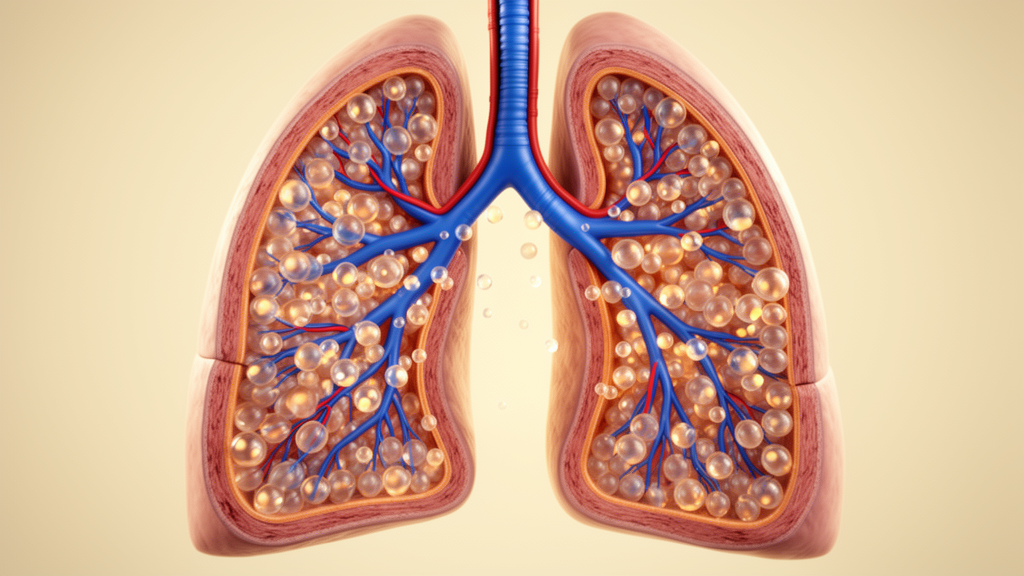
Researchers in China report that tacrolimus, an immunosuppressant drug best known for preventing organ transplant rejection, significantly reduced pulmonary hypertension and lung fibrosis in a rat model of the combined disease. The study, published in Frontiers in Pharmacology, showed that daily subcutaneous injections of low-dose tacrolimus lowered right ventricular systolic pressure, improved right heart function, and eased the vascular wall thickening that drives this devastating complication of idiopathic pulmonary fibrosis.
Pulmonary hypertension complicating idiopathic pulmonary fibrosis, known as IPF-PH, is one of the most feared outcomes of the fibrotic lung disease. According to the researchers, roughly 8 to 15 percent of IPF patients already have a mean pulmonary arterial pressure of at least 25 mmHg at initial diagnosis, a proportion that climbs to 30 to 50 percent in advanced stages and exceeds 60 percent in end-stage disease. The condition worsens symptoms, reduces exercise capacity, and sharply shortens survival, ultimately leading to right heart failure.
Treatment options for this composite disease remain strikingly limited. Anti-fibrotic agents such as pirfenidone, nintedanib, and the newly approved PDE4B inhibitor nerandomilast can slow lung function decline in IPF, but there is insufficient evidence that they delay the development of associated pulmonary hypertension, and some studies suggest nintedanib may even be linked to PH progression in IPF-PH patients. On the pulmonary hypertension side, endothelin receptor antagonists and soluble guanylate cyclase stimulators have failed clinical trials in IPF-PH due to lack of efficacy or increased mortality, leaving only inhaled treprostinil with preliminary evidence of benefit.
The research team, led by investigators at Nankai University and Peking Union Medical College Hospital, built their study around a bleomycin-induced rat model that reproduces both the interstitial fibrosis and the pulmonary vascular disease seen in patients. Male Sprague Dawley rats received bleomycin directly into the trachea, and one week later treatment began: tacrolimus at 0.05 milligrams per kilogram per day subcutaneously for 21 days, with treprostinil as a positive control. The team then measured right ventricular systolic pressure by right heart catheterization, assessed cardiac function by echocardiography, and examined lung and heart tissue by histology, immunohistochemistry, quantitative PCR, and Western blot.
The results were clear across multiple endpoints. Tacrolimus-treated rats showed significantly reduced right ventricular systolic pressure compared with untreated model animals, along with improved pulmonary artery acceleration time ratios on echocardiography and reduced right ventricular wall thickness. Lung tissue staining with H&E, Masson’s trichrome, and Sirius red revealed that the drug attenuated the fibrotic changes induced by bleomycin, and the expression of fibrosis markers Fn1 and Col1a1 was significantly downregulated. Immunohistochemistry for alpha-SMA, a smooth muscle cell marker, confirmed that tacrolimus reduced the muscularization and wall thickening of small pulmonary vessels, the hallmark of vascular remodeling.
To dissect the cellular mechanisms, the researchers turned to cell culture experiments. In mouse vascular endothelial cells (C166) and primary rat pulmonary arterial endothelial cells, bleomycin suppressed the formation of capillary-like tube structures and reduced the expression of phosphorylated VEGFR2 and VE-cadherin, proteins central to endothelial integrity and angiogenic capacity. Tacrolimus reversed these effects, restoring tube formation and endothelial marker expression. The drug also shifted the apoptotic balance in endothelial cells: bleomycin elevated pro-apoptotic Bax, cleaved caspase-9, and cleaved caspase-3 while suppressing anti-apoptotic Bcl-2, and tacrolimus treatment restored these levels, as confirmed by flow cytometry showing reduced apoptosis in both cell types.
Oxidative stress emerged as another key target. Bleomycin drove overproduction of reactive oxygen species in endothelial cells while depleting the antioxidant defenses superoxide dismutase and glutathione. Tacrolimus reduced intracellular ROS measured by flow cytometry and the DCFH-DA probe, restored SOD and GSH levels, and normalized the Keap1-HO-1 oxidative stress pathway in both lung tissue and cultured cells. In parallel, the drug suppressed the activation of the MAPK signaling pathway, including JNK, ERK, and p38 phosphorylation, and the PI3K/AKT pathway, changes observed consistently in lung tissue and in endothelial cells exposed to bleomycin.
The third pillar of the vascular remodeling story concerns smooth muscle cells. When mouse vascular smooth muscle cells (MOVAS) were stimulated with TGF-beta1, they proliferated and migrated vigorously, but tacrolimus significantly inhibited both responses and reduced expression of the proliferation marker Ki67. The authors note that this direct anti-proliferative action on vascular smooth muscle, combined with endothelial protection, distinguishes tacrolimus from purely vasodilatory therapies such as treprostinil, which lowers pressure but does not reverse structural remodeling and often requires continuous infusion.
The authors are careful to spell out the limitations of their work. The animal experiments used only a single tacrolimus dose, so no dose-response relationship could be established. The smooth muscle cell findings rest on a mouse aortic cell line rather than primary pulmonary arterial smooth muscle cells, and the in vitro experiments lacked a positive control compound. The team also acknowledges that reduced fibrosis itself may have contributed to the hemodynamic improvement, meaning the study does not prove that the vascular benefits of tacrolimus are independent of its antifibrotic effects. The immunomodulatory contributions of the drug, given its nature as a calcineurin inhibitor, were not systematically explored.
Looking toward translation, the researchers propose that inhaled delivery could be the most promising path forward. Systemic tacrolimus carries well-known risks including nephrotoxicity, hyperglycemia, and increased infection susceptibility, but recent evidence suggests its antifibrotic and vascular effects may be partly independent of the classical calcineurin/NFAT immunosuppressive pathway. Nebulized delivery to the lungs could theoretically achieve high local concentrations in the pulmonary vasculature while keeping blood levels low. With inhaled pirfenidone and inhaled treprostinil already demonstrating the feasibility of this approach, the authors argue that tacrolimus deserves development as an inhaled agent for IPF-PH patients with prominent vascular remodeling, pending further preclinical safety evaluation and prospective clinical studies.
Subject of Research: Preclinical evaluation of tacrolimus in a rat model of pulmonary hypertension associated with pulmonary fibrosis
Article Title: Tacrolimus ameliorates pulmonary hypertension associated with pulmonary fibrosis via modulation of vascular remodeling
Article References: Liu, X., Chen, Q., Hu, Y., Liu, Z., Yang, Z., Yu, J., Li, H., Chen, R., Shao, C., Wang, S., Yang, C., Li, X., & Huang, H. (2026). Tacrolimus ameliorates pulmonary hypertension associated with pulmonary fibrosis via modulation of vascular remodeling. Frontiers in Pharmacology, 17, Article 1880903. https://doi.org/10.3389/fphar.2026.1880903
Image Credits: AI Generated
DOI: 10.3389/fphar.2026.1880903
Keywords: pulmonary hypertension, idiopathic pulmonary fibrosis, tacrolimus, vascular remodeling, endothelial cells, smooth muscle cells, MAPK pathway, PI3K/AKT pathway, oxidative stress, apoptosis, bleomycin model, preclinical study
Cite Scienmag News
Ophelia Keating. (October 27, 2026). Tacrolimus Eases Fibrosis-Linked Pulmonary Hypertension in Rats by Targeting Vascular Remodeling. Scienmag. https://scienmag.com/tacrolimus-eases-fibrosis-linked-pulmonary-hypertension-in-rats-by-targeting-vascular-remodeling/
Ophelia Keating. "Tacrolimus Eases Fibrosis-Linked Pulmonary Hypertension in Rats by Targeting Vascular Remodeling." Scienmag, 27 October 2026, https://scienmag.com/tacrolimus-eases-fibrosis-linked-pulmonary-hypertension-in-rats-by-targeting-vascular-remodeling/. Accessed 27 October 2026.
Ophelia Keating. "Tacrolimus Eases Fibrosis-Linked Pulmonary Hypertension in Rats by Targeting Vascular Remodeling." Scienmag. October 27, 2026. https://scienmag.com/tacrolimus-eases-fibrosis-linked-pulmonary-hypertension-in-rats-by-targeting-vascular-remodeling/


