

Monday, October 26, 2026
Science
No Result
View All Result
  • Login
  • HOME
  • SCIENCE NEWS
  • CONTACT US
  • HOME
  • SCIENCE NEWS
  • CONTACT US
No Result
View All Result
Scienmag
No Result
View All Result
Home Science News Cancer

SERINC2 protein emerges as potential target for preventing brain metastasis

October 26, 2026
in Cancer
Nathaniel Bowman
By Nathaniel Bowman Scienmag Editorial Profile - Precision Oncology
Reading Time: 3 mins read
0
SERINC2 protein emerges as potential target for preventing brain metastasis

SERINC2 protein emerges as potential target for preventing brain metastasis

65
SHARES
587
VIEWS
Share on FacebookShare on Twitter
ADVERTISEMENT

A research team led by Mikhail Nikiforov, PhD, Professor of Pathology at Duke University School of Medicine, has identified a molecular mechanism that helps cancer cells migrate, invade surrounding tissue, and establish new tumors in the brain. The work, published on September 22, 2026, in the journal Cell Reports, points to a protein called SERINC2 as a central regulator of this process and suggests it could serve as a target for future therapies aimed at slowing or preventing metastatic disease.

Brain metastases are among the most challenging complications of cancer, often leading to poor outcomes and limited treatment options. In the study, titled “SERINC2-Mediated Phosphatidylserine Remodeling Activates Protrusion-Localized AXL Signaling to Promote Brain Metastasis,” the researchers investigated how tumor cells gain the ability to move, invade, and colonize the brain environment.

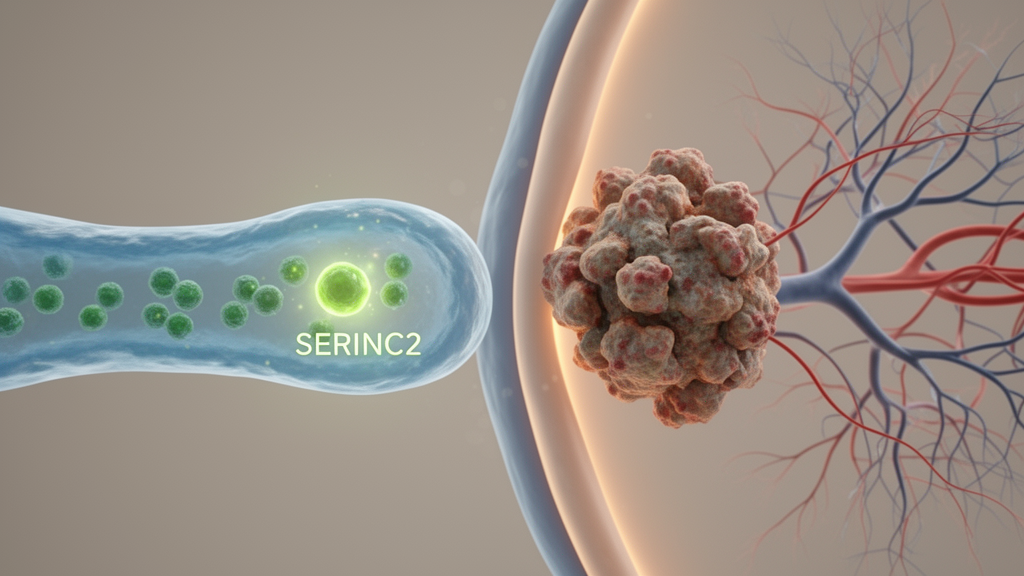
The team found that SERINC2 promotes the accumulation of phosphatidylserine, a lipid normally found in cell membranes, within specialized cellular extensions that cancer cells use for movement and invasion. This localized lipid remodeling activates AXL, a signaling protein already known to regulate cancer cell motility and metastatic behavior.

In effect, SERINC2 concentrates a membrane lipid at the leading edge of migrating cells, where it can energize the receptor signaling that drives invasion. The findings go beyond the tumor cell itself. The team uncovered a second role for SERINC2 in shaping the tumor microenvironment: by promoting the accumulation and release of phosphatidylserine, the protein helps cancer cells communicate with immune cells in the brain, changing those cells’ behavior in ways that support tumor growth.

This dual function, one acting on the tumor cell’s own invasive machinery and the other on its surroundings, positions SERINC2 as an influential node in the metastatic cascade. The researchers demonstrated experimentally that lowering SERINC2 levels made cancer cells less invasive and slowed brain tumor growth in animal models, providing direct evidence that the protein’s activity is functionally required for these processes.

“These findings provide important new insights into the biological mechanisms that drive brain metastasis,” said Nikiforov. “By identifying SERINC2 as a key regulator of both cancer cell invasion and interactions with the brain microenvironment, this work highlights a potential new therapeutic target for slowing or preventing metastatic disease.”

The research was conducted as an experimental study with cells as the primary subject of investigation, complemented by animal models of brain metastasis. As with all preclinical work, the results establish a mechanism and a candidate target rather than a validated treatment; translating the findings into therapies for patients will require further investigation, including the development of agents capable of modulating SERINC2 or the pathways it controls.

The authors and the institution frame the work as a foundation for future studies into therapies that target SERINC2 and related signaling pathways, rather than as an immediate clinical advance. By concentrating phosphatidylserine in the protrusions that cancer cells extend as they move, SERINC2 appears to couple the cell’s lipid geography to its signaling state, ensuring that AXL activation occurs where motility is initiated. The same lipid redistribution, when released from the cell surface, reaches immune cells in the brain and alters their behavior in a manner favorable to tumor expansion.

Duke School of Medicine describes the work as part of its commitment to translational research that can inform the development of future therapies for patients with advanced cancer while deepening scientific understanding of how cancers spread and interact with their surrounding environment. As researchers continue to seek more effective treatments for metastatic disease, the study provides a basis for future investigations into therapies that target SERINC2 and the signaling pathways it regulates.

Subject of Research: SERINC2-mediated phosphatidylserine remodeling and AXL signaling in brain metastasis

Article Title: Duke pathology research identifies potential new target for preventing brain metastasis

Article References: Duke pathology research identifies potential new target for preventing brain metastasis. Original publication (Bibliographic details unavailable.)

Image Credits: AI Generated

DOI: Not provided

Keywords: brain metastasis, SERINC2, phosphatidylserine, AXL signaling, cancer cell invasion, tumor microenvironment, Cell Reports, Duke University, experimental study, metastatic cancer, lipid remodeling, therapeutic target

Cite Scienmag News

Nathaniel Bowman. (October 26, 2026). SERINC2 protein emerges as potential target for preventing brain metastasis. Scienmag. https://scienmag.com/serinc2-protein-emerges-as-potential-target-for-preventing-brain-metastasis/


Nathaniel Bowman. "SERINC2 protein emerges as potential target for preventing brain metastasis." Scienmag, 26 October 2026, https://scienmag.com/serinc2-protein-emerges-as-potential-target-for-preventing-brain-metastasis/. Accessed 26 October 2026.

Nathaniel Bowman. "SERINC2 protein emerges as potential target for preventing brain metastasis." Scienmag. October 26, 2026. https://scienmag.com/serinc2-protein-emerges-as-potential-target-for-preventing-brain-metastasis/

Tags: AXL signalingAXL signaling in metastasisbrain metastasisbrain metastasis prevention strategiescancer brain metastasiscancer cell invasioncancer cell motility and invasion mechanismsCell ReportsDuke Universityexperimental studylipid remodelinglipid remodeling in tumor progressionmetastatic cancermolecular mechanisms of cancer cell migrationmolecular targets for preventing brain tumor spreadphosphatidylserinephosphatidylserine remodeling in cancer invasionrole of SERINC2 in cancer metastasisSERINC2SERINC2 protein as therapeutic targettargeting lipid signaling pathways in cancer therapytherapeutic targettumor cell invasion and invasion mechanismstumor microenvironment
Share26Tweet16
Previous Post

Malaysia’s Blended Learning Research Boom Revealed in Decade-Long Bibliometric Map

Next Post

Research report: Measuring change in mathematics enjoyment: longitudinal invariance, local dependence of negatively worded items, and complex-sample inference

Related Posts

Tissue Around Breast Microcalcifications Outshines the Calcium Itself in Micro-CT Study
Cancer

Tissue Around Breast Microcalcifications Outshines the Calcium Itself in Micro-CT Study

October 26, 2026
Silent soil bacteria genes yield new compounds targeting cancer-linked enzyme
Cancer

Silent soil bacteria genes yield new compounds targeting cancer-linked enzyme

October 26, 2026
Organoids and assembloids reshape how researchers model glioblastoma
Cancer

Organoids and assembloids reshape how researchers model glioblastoma

October 26, 2026
Orbital Mantle Cell Lymphoma Often Presents as Eyelid Swelling, 15-Year Study Finds
Cancer

Orbital Mantle Cell Lymphoma Often Presents as Eyelid Swelling, 15-Year Study Finds

October 26, 2026
International tumor board weighs personalized options for colon cancer with no measurable disease
Cancer

International tumor board weighs personalized options for colon cancer with no measurable disease

October 26, 2026
RNF152 Tags PD-L1 for Destruction and Curbs Immune Evasion in Kidney Cancer
Cancer

RNF152 Tags PD-L1 for Destruction and Curbs Immune Evasion in Kidney Cancer

October 26, 2026
Next Post
Research report: Measuring change in mathematics enjoyment: longitudinal invariance, local dependence of negatively worded items, and complex-sample inference

Research report: Measuring change in mathematics enjoyment: longitudinal invariance, local dependence of negatively worded items, and complex-sample inference

  • Mothers who receive childcare support from maternal grandparents show more optimized

    Mothers who receive childcare support from maternal grandparents show more parental warmth, finds NTU Singapore study

    27656 shares
    Share 11059 Tweet 6912
  • University of Seville Breaks 120-Year-Old Mystery, Revises a Key Einstein Concept

    1061 shares
    Share 424 Tweet 265
  • Bee body mass, pathogens and local climate influence heat tolerance

    682 shares
    Share 273 Tweet 171
  • Researchers record first-ever images and data of a shark experiencing a boat strike

    546 shares
    Share 218 Tweet 137
  • Groundbreaking Clinical Trial Reveals Lubiprostone Enhances Kidney Function

    531 shares
    Share 212 Tweet 133
Science

Embark on a thrilling journey of discovery with Scienmag.com—your ultimate source for cutting-edge breakthroughs. Immerse yourself in a world where curiosity knows no limits and tomorrow’s possibilities become today’s reality!

RECENT NEWS

  • Research report: Measuring change in mathematics enjoyment: longitudinal invariance, local dependence of negatively worded items, and complex-sample inference
  • SERINC2 protein emerges as potential target for preventing brain metastasis
  • Malaysia’s Blended Learning Research Boom Revealed in Decade-Long Bibliometric Map
  • New glassfrog species surprises scientists in central Peru after field mix-up

Categories

  • Agriculture
  • Anthropology
  • Archaeology
  • Athmospheric
  • Biology
  • Biotechnology
  • Blog
  • Bussines
  • Cancer
  • Chemistry
  • Climate
  • Earth Science
  • Editorial Policy
  • Marine
  • Mathematics
  • Medicine
  • Pediatry
  • Policy
  • Psychology & Psychiatry
  • Science Education
  • Science News
  • Social Science
  • Space
  • Technology and Engineering

Subscribe to Blog via Email

Enter your email address to subscribe to this blog and receive notifications of new posts by email.

Join 5,151 other subscribers

© 2025 Scienmag - Science Magazine

Welcome Back!

Login to your account below

Forgotten Password?

Retrieve your password

Please enter your username or email address to reset your password.

Log In
No Result
View All Result
  • HOME
  • SCIENCE NEWS
  • CONTACT US

© 2025 Scienmag - Science Magazine

Discover more from Science

Subscribe now to keep reading and get access to the full archive.

Continue reading